



Iran has said it will “irreversibly destroy” essential infrastructure across the Middle East if the US attacks its energy sites, hours after Donald Trump threatened to “obliterate” the country’s power plants if the strait of Hormuz was not opened within two days.
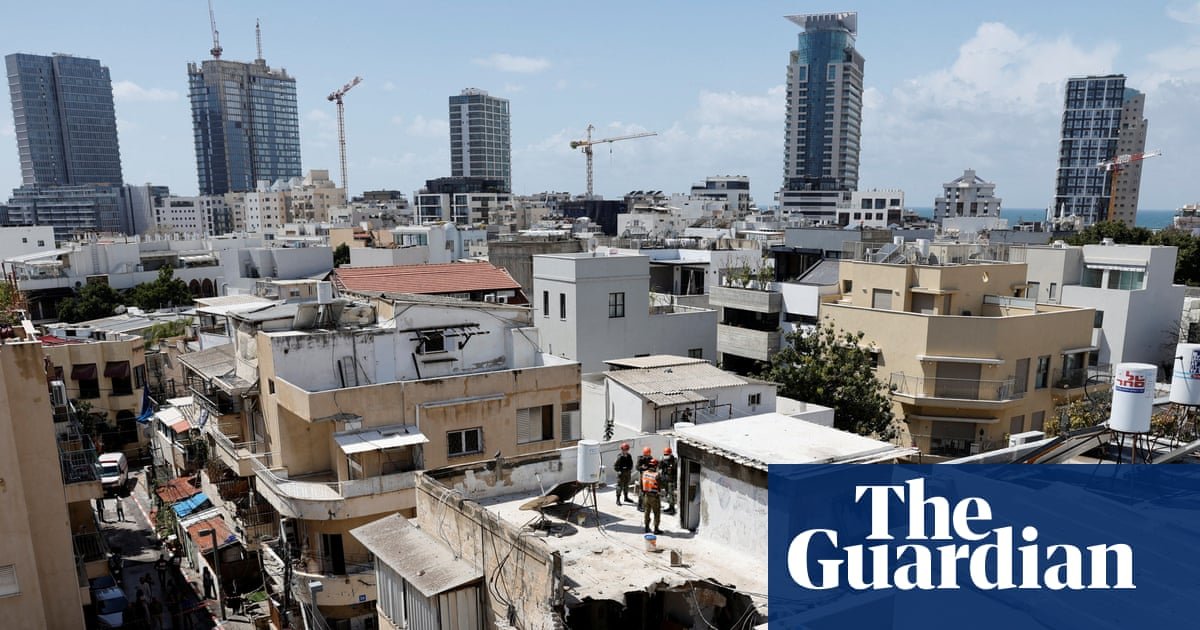
As Iranian missiles struck two southern Israeli cities overnight, injuring dozens and shattering apartment buildings, the developments signalled a dangerous potential escalation of the war in the Middle East, which is now in its fourth week.
Mohammad Bagher Ghalibaf, the speaker of the Iranian parliament, said on Sunday that “vital infrastructure as well as energy and oil infrastructure” across the region would become “legitimate targets” as soon as his country’s own was attacked.
A statement on state media cited an Iranian military spokesperson as saying any strike on Iran’s energy facilities would prompt attacks on US and Israeli energy and assets across the region, specifically information technology and desalination facilities.
On Saturday, the US president gave Iran 48 hours – until shortly before midnight GMT on Monday – to open the strait of Hormuz, a vital pathway for the oil flows, or the US would “hit and obliterate” Iranian power plants “starting with the biggest one first”.
Ali Mousavi, Iran’s representative to the International Maritime Organisation, said on Sunday the strait was open to all shipping except vessels linked to “Iran’s enemies”, with passage possible by coordinating security arrangements with Tehran.
Iranian attacks have effectively closed the narrow strait, which carries about a fifth of global oil and liquefied natural gas supplies, causing the world’s worst oil crisis since the 1970s and sending European gas prices surging as much as 35% last week.
More than 2,000 people have been killed since 28 February when the US and Israel began their attacks on Iran, with Tehran in turn striking targets in Israel and the Gulf states. Lebanon was drawn in after Iran-backed Hezbollah attacked Israel.
Air raid sirens sounded across Israel from the early hours of Sunday morning, warning of incoming missiles from Iran, after scores of people were injured overnight in two separate attacks on the southern Israeli towns of Arad and Dimona.
The Israeli army said on Sunday morning that it would strike Tehran in retaliation. Benjamin Netanyahu, the Israeli prime minister, said during a visit to Arad that senior commanders of Iran’s Revolutionary Guards would be “personally” pursued.
“We’re going after the regime. We’re going after the IRGC, this criminal gang,” Netanyahu said. “We’re going after them personally, their leaders, their installations, their economic assets.”
Israel’s military said it had not been able to intercept the missiles that hit Dimona and Arad, the nearest large cities to the country’s Negev Desert nuclear centre, which houses what is widely believed to be the Middle East’s only nuclear arsenal.
Israel has never admitted to possessing nuclear weapons, insisting that the site is for research. The strikes marked the the first time that Iranian missiles had penetrated Israel’s air defence systems in the area.
The strikes wounded about 200 people, including a 12-year-old boy and a five-year-old girl, both reported to be in a serious condition. The Israeli broadcaster Channel 13 reported early indications of possible deaths but there was no official confirmation.
Iran said the attacks had been launched in response to a strike on its main nuclear enrichment facility at Natanz on Saturday. Israel denied responsibility for that attack; and in Washington, the Pentagon declined to comment.
In Tel Aviv, 15 more people were injured on Sunday morning in a separate attack involving a cluster bomb. The attacks are adding to mounting pressure on Israel’s air defence systems, with Iranian strikes increasingly testing their limits.
The World Health Organization said that the war was at a “perilous stage” and called for restraint. “Attacks targeting nuclear sites create an escalating threat to public health and environmental safety,” Tedros Adhanom Ghebreyesus said.
Tehran also fired long-range missiles for the first time on Saturday, the Israeli military chief, Eyal Zamir, said. Two ballistic missiles with a range of 4,000km (2,500 miles) were fired at the US-British Indian Ocean military base at Diego Garcia, Zamir said.
A British cabinet minister, Steve Reed, said one missile “fell short” while another missile was “intercepted”, saying there was no assessment backing claims that Iran was planning to strike Europe.
The Israel Defense Forces had said Iran had missiles “that can reach London, Paris or Berlin”. But Reed said he was not aware of any assessment at all that they are even trying to target Europe, “let alone that they could if they tried”.
He added in a separate interview Trump was “speaking for himself” when he threatened to “obliterate” Iran’s power plants.
Analysts said Trump’s threat had placed “a 48-hour ticking time bomb of elevated uncertainty” over energy and financial markets, with a “Black Monday” of plunging stock markets and surging energy prices unless it was rowed back.
At least six overnight attacks targeted a US diplomatic and logistics centre at Baghdad airport, Iraqi officials said; while Saudi Arabia said three missiles had been detected over Riyadh, and the UAE said it had responded to Iranian missile and drone attacks.
In southern Lebanon, Israel said its military raided Hezbollah sites on Sunday and killed 10 of the group’s fighters. Hezbollah said it attacked several border areas in northern Israel. One person was killed in an Israeli kibbutz, emergency services said.
Three Turkish nationals, including a serviceman, and three Qatari servicemen were killed after a helicopter crashed in Qatar’s territorial waters, the Gulf country’s defence ministry said on Sunday.


