



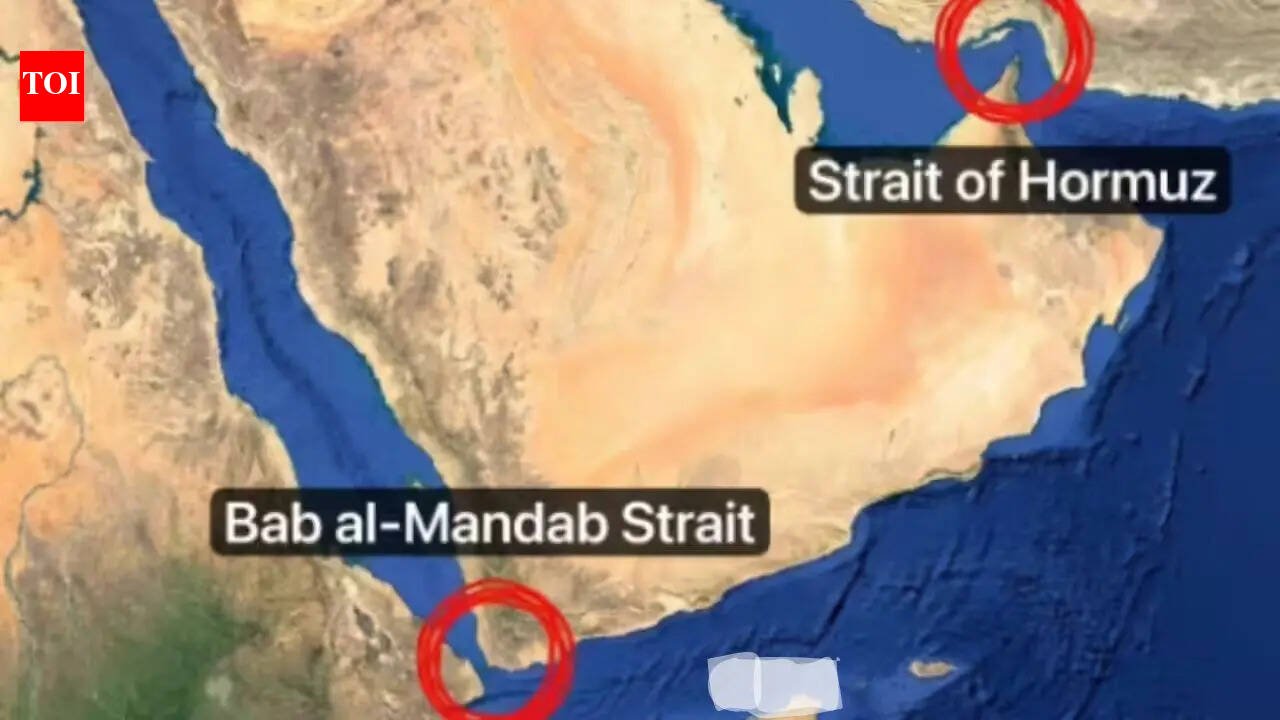
Amid an ongoing maritime blockade in the Strait of Hormuz, Speaker of the Parliament of Iran Mohammad Bagher Ghalibaf has indicated that Iran could consider expanding pressure to another critical global chokepoint — the Bab el-Mandeb Strait.In a series of posts on social media platform X, Ghalibaf raised questions about the global dependence on the route, signalling a possible shift in Tehran’s strategic thinking.
“What share of global oil, LNG, wheat, rice, and fertiliser shipments transits the Bab el-Mandeb Strait?” he asked.“Which countries and companies account for the highest transit volumes through the strait?”His remarks come at a time when disruptions in the Strait of Hormuz are already affecting global energy flows, shipping routes, and insurance costs. The suggestion of extending pressure to Bab el-Mandeb points to a broader strategy of leveraging maritime chokepoints.
What is Bab el-Mandeb and why is it crucial
The Bab el-Mandeb Strait, often referred to as the “Gate of Tears”, is one of the world’s most strategically important waterways. It lies between Yemen on the Arabian Peninsula and Djibouti and Eritrea in the Horn of Africa, connecting the Red Sea to the Gulf of Aden.This narrow passage serves as a vital link in the Suez Canal corridor, enabling ships to move between Europe and Asia without taking the longer route around Africa’s Cape of Good Hope.Typically, an estimated 10–12 per cent of global seaborne trade passes through this strait. It also carries a substantial share of global oil shipments, along with liquefied natural gas, fertilisers, agricultural commodities, and manufactured goods.Any disruption here can immediately impact global supply chains, increase freight costs, and push up energy prices.
Hormuz pressure shifting focus to another chokepoint
Iran’s signalling comes as the Strait of Hormuz remains under pressure, with shipping disruptions already affecting global markets. Hormuz handles roughly a fifth of global oil trade, making it the world’s most critical energy chokepoint.With risks rising in Hormuz, global attention has increasingly shifted to Bab el-Mandeb as the next vulnerable link in the energy and trade chain.The two chokepoints are interconnected. Oil and goods passing through Hormuz often continue via Bab el-Mandeb and the Red Sea towards Europe. Disruption in both simultaneously could severely strain global logistics.
Role of regional actors and allied groups
The risk to Bab el-Mandeb is not theoretical. Armed groups aligned with Iran, particularly the Houthi movement in Yemen, have previously demonstrated the ability to target vessels in the Red Sea.Between late 2023 and early 2025, more than 100 attacks were reported on commercial shipping in the region using drones and missiles. These incidents forced major shipping companies to reroute vessels, often opting for the longer route around Africa.The Houthis control significant stretches of Yemen’s Red Sea coastline, placing them in a strategic position to influence traffic through Bab el-Mandeb without directly controlling the strait.Statements from Iranian-linked sources have also suggested that new fronts could be opened if the conflict escalates further.
Impact on global trade and energy markets
Disruptions in Bab el-Mandeb have immediate global consequences. The Suez Canal–Red Sea route is the fastest and most efficient link between Asia and Europe. Blocking or threatening this corridor adds significant time and cost to global shipping.Rerouting vessels around the Cape of Good Hope can add 10 to 15 days to journeys. This increases fuel consumption, freight rates, and insurance premiums, all of which are eventually passed on to consumers.Energy markets are particularly sensitive. Even partial disruptions can lead to sharp increases in oil prices. Reports have indicated that crude prices could rise significantly if both Hormuz and Bab el-Mandeb face sustained disruptions.Beyond oil, the strait is also critical for transporting food supplies, fertilisers, coal, and manufactured goods. Any blockage can trigger broader supply chain disruptions and inflationary pressures worldwide.
Why this matters for India
India is directly exposed to developments in Bab el-Mandeb due to its trade and energy links with Europe and West Asia.A significant portion of India’s exports to Europe — including engineering goods, pharmaceuticals, textiles, and chemicals — moves through the Suez–Red Sea corridor via this strait.The European Union accounts for a notable share of India’s exports, and any disruption along this route can delay shipments, increase costs, and affect trade volumes.On the energy front, while much of India’s crude imports pass through the Strait of Hormuz, shipments from regions such as North Africa rely on the Red Sea route. Disruptions in Bab el-Mandeb could therefore impact both energy supply chains and pricing.Higher freight and insurance costs could translate into increased fuel prices domestically, adding pressure on inflation and the currency.
Battlefield escalation alongside maritime signalling
The maritime signalling by Iran comes alongside a broader escalation in the conflict. According to state broadcaster Press TV, Iranian and allied forces have launched “Wave 93” under “Operation True Promise 4”, targeting Israeli military positions.The Islamic Revolutionary Guard Corps said the strikes were carried out using a mix of missile systems and drones.The operation reportedly targeted locations including Western Galilee, Haifa, Kafr Kanna, and Krayot. The IRGC described the strikes as a coordinated effort aimed at degrading military capabilities.The military command said the operations would continue, stating that launches “will continue continuously, uninterruptedly, and shot after shot.”Iran has framed these actions as a response to earlier attacks, including those that resulted in the deaths of senior leaders and civilians.The IRGC said the strikes had “inflicted heavy losses” and demonstrated the limitations of US and Israeli military pressure in the region.
A widening conflict with global implications
Iran’s indication that it could extend pressure from the Strait of Hormuz to Bab el-Mandeb reflects a potential shift from a regional confrontation to one with wider economic implications.Both chokepoints are critical to global trade and energy flows. Any coordinated disruption could amplify the impact beyond the Middle East, affecting economies across Asia, Europe, and beyond.Ghalibaf’s remarks suggest that Tehran is evaluating how maritime routes can be used as leverage in the ongoing conflict, particularly against countries and companies dependent on these corridors.With tensions already high and multiple actors involved, the Bab el-Mandeb Strait is increasingly being viewed as a potential flashpoint in the evolving crisis.


