



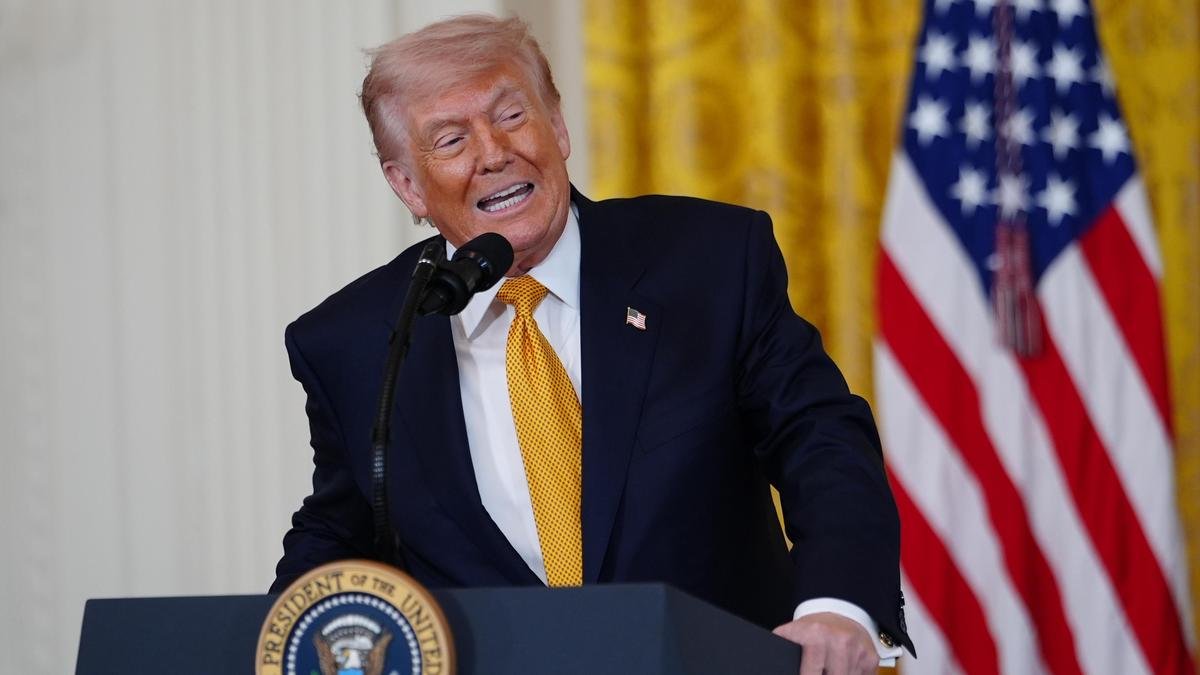
Iran denied on Thursday (May 7, 2026) attacking a South Korean cargo ship in the Strait of Hormuz this week, as U.S. President Donald Trump said a deal to end the war was “very possible” but warned Washington would resume bombing if talks failed.
Also read: West Asia war updates on May 7, 2026
Tehran’s embassy in Seoul said it “firmly rejects and categorically denies” allegations that its armed forces were behind a blast aboard the Panama-flagged HMM Namu, which caught fire on Monday (May 4, 2026) while transiting the strategic waterway with 24 crew members on board.
Mr. Trump later claimed Iran had “taken some shots” at the vessel and urged South Korea to join U.S.-led efforts to restore shipping through the strait.
The war, launched by the United States and Israel in late February, saw Iran respond with attacks across West Asia and impose a chokehold on the Strait of Hormuz, rattling global energy markets.
Despite Mr. Trump’s optimism, Iran has yet to respond to a new US proposal, with its chief negotiator warning that Washington was seeking to force the Islamic republic’s “surrender.”
Signs that the foes could return to the table after weeks of deadlock grew after Mr. Trump halted a short-lived military operation to reopen the strait, citing hopes for a deal.
Trump on peace deal
“We’ve had very good talks over the last 24 hours, and it’s very possible that we’ll make a deal,” Mr. Trump told reporters Wednesday (May 6, 2026).
But he had warned earlier that if Iran did not honour what had been agreed, bombing would resume “at a much higher level and intensity”.
Iran’s Foreign Ministry spokesman Esmaeil Baqaei said the U.S. proposal remained “under review” and Tehran would communicate its position to mediator Pakistan “after finalising its views”.
Parliament speaker Mohammad Bagher Ghalibaf, who has led Iran’s negotiations, warned that Washington sought “through a naval blockade, economic pressure and media manipulation, to destroy the country’s cohesion in order to force us to surrender”.
U.S. news outlet Axios, citing two officials, reported both sides were close to agreement on a one-page memorandum of understanding to end the war and set a framework for nuclear negotiations.
Pakistani Prime Minister Shehbaz Sharif, a key figure in initial talks in Islamabad, said he was “very hopeful that the current momentum will lead to a lasting agreement that secures durable peace and stability for the region and beyond”.
Macron presses Tehran
French President Emmanuel Macron, meanwhile, told his Iranian counterpart Masoud Pezeshkian in a phone call Wednesday that attacks on UAE civilian infrastructure and ships near the strait were “unjustified”, urging all parties to lift their dual blockade in the waterway “without delay and without conditions”.
Pezeshkian told Macron that any full reopening of the strait required the lifting of the US naval blockade, adding that “excessive demands, threatening statements, and failure to adhere to necessary frameworks by the United States have further complicated the path of diplomacy”, according to the Iranian presidency.
The call came as France’s aircraft carrier Charles de Gaulle transited the Suez Canal en route to the southern Red Sea, where it will pre-position for a possible multinational mission to restore navigation in the strait.
Mr. Macron and British Prime Minister Keir Starmer are leading the initiative, which more than 40 countries have joined in military planning.
Israel-Lebanon
On the Lebanese front, Israel struck Beirut’s southern suburbs on Wednesday (May 6, 2026) in the first such attack in nearly a month, killing a senior Hezbollah commander from its elite Radwan force, a source close to the Iran-backed group told AFP.
At least 11 others were killed in strikes across the country’s south and east, Lebanon’s Health Ministry said.
The Israeli military said in a statement Thursday that an “explosive drone impact” had wounded four of its soldiers — one severely — in southern Lebanon the previous day.
Published – May 07, 2026 12:25 pm IST


