



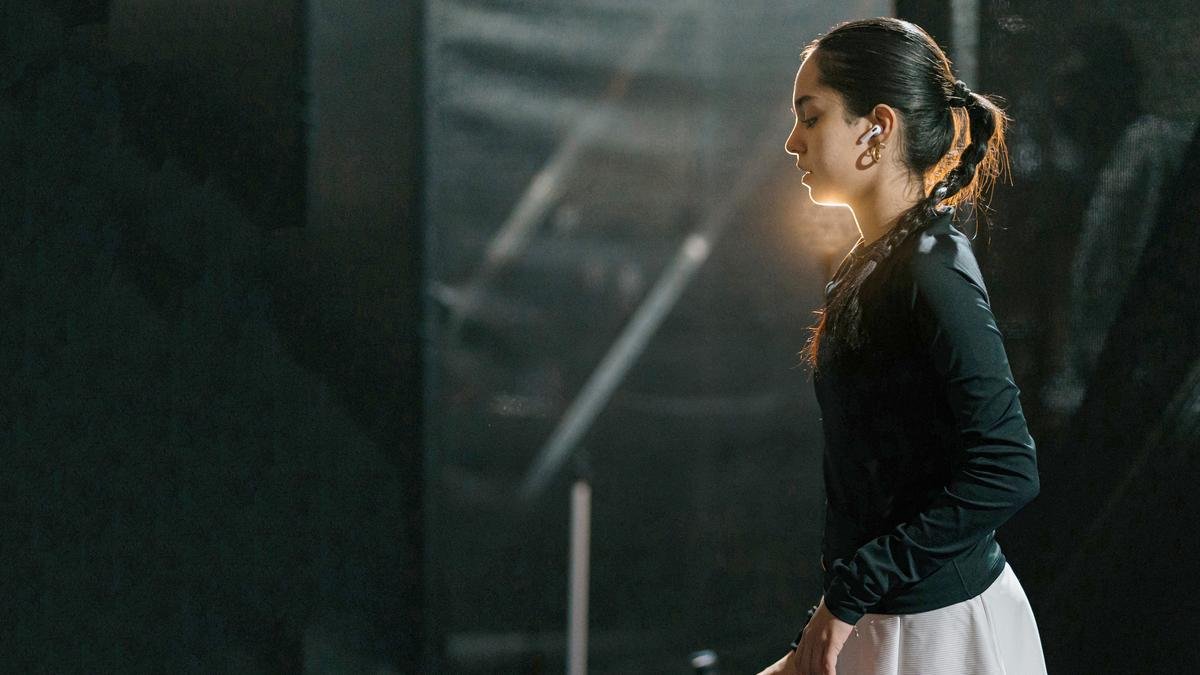
Anahat Singh set the squash stage on fire in Washington last month. Competing at the Squash on Fire Open, the teenager produced a simmering exhibition of skill and composure against some of the world’s finest players. By clinching her maiden PSA World Tour Bronze title, Anahat sky-rocketed into the world’s top-20, becoming the youngest Asian to achieve the feat in recent times.
What stood out was not only the results but also her approach — especially in the final against Georgina Kennedy. An explosive player with some of the quickest movements on court, Kennedy is a formidable presence on the Tour. Yet, Anahat matched her pace with poise, playing the long rallies with calmness and not rushing to finish points. To defeat the top-seeded 28-year-old from England in straight games (12-10, 11-5, 11-7) was a statement in no uncertain terms.
At 18, Anahat, who clinched the JSW Indian Open women’s title in Mumbai last week, is aware that sterner tests lie ahead. Among them is the long road to the 2028 Summer Olympics, where squash will make its debut. She is determined to reach that stage.
In this interview, she speaks about her goals for the World Junior Squash Championships and British Open later this year, not being able to play the senior World Championships, and her burning desire to win the women’s singles gold medal at the Asian Games and take a decisive step towards Los Angeles 2028. Excerpts:
This season you did really well, reaching the world’s top-20. You became the youngest Asian to do so in recent times by winning your first PSA World Tour bronze title in the Squash On Fire Open. How does it feel?
Yeah, I was, of course, really, really happy going into the tournament. No one really expected me to win. Even now, if I think about it, it’s like, I still can’t believe it happened. And yeah, it’s just something that was unexpected. And I didn’t really think about my rankings because I didn’t calculate it for the fact that I was going to win the tournament. So I thought that I’d only go a few places up and maybe go to like World Ranking 23 or 24. When I woke up and I saw posts [on social media] saying that I was in the top-20, I was really happy.
What kind of perspective did your first big crown bring to your game?
I think mainly it’s about the fact that I know that I can beat the top players. Before, I’d have maybe some close games with them but I’d never be able to convert and win the match. Playing a tournament like this and being able to win three really good back-to-back matches… those were matches that weren’t supposed to go my way. Just winning a tournament like that made me believe that it’s possible for upsets like this to happen. And that if I’m playing a good game and if I believe in the fact that I can win the tournament, it’s definitely possible. I’m trying to win every tournament that I play and trying to learn as much as I can through it, whether it’s a win or a loss.
If you look at the previous season (2024-25), you had won nine PSA titles. This season, too, has been good for you as you managed to win your first major PSA World Bronze World Tour title in Washington. Will you opt to play in more bigger events such as Platinum, Gold in the coming months?
I think, yeah, that will be my first step. I’ve lost in the pre-quarters and a five-setter (to World No. 7 Satomi Watanabe of Japan in the round-of-16 in the Tournament of Champions in January 2026 and to Tinne Gilis in the Windy City Open in February) in both my last Platinum events. Taking it one step at a time and reaching the quarters and doing better and better. That’s the only way out because there’s no other way out. Playing the bigger events and getting a chance to reach the later rounds, maybe the quarters, semis.
You have a bunch of elite coaches in the form of India’s Saurav Ghosal (former World No. 10), France’s Gregory Gaultier (former World No. 1) and Italy’s Stephane Galifi (former World No. 5). How much part have they played in improving your skillsets?
I train with Galifi and Gaultier. They both are my main coaches. And then there’s Saurav, who’s more of my mentor outside the court, where he helps me with what I should do for training and tournaments. If I didn’t have the team that I have now, I don’t think I would be where I am now. And getting to be with three of them — I don’t think I could get a better team than this. They’ve all been top players in their time. I am getting to be around them and learning so much from them because they understand exactly what it’s like to be at this level — all the challenges, all the ups and downs. Them being my coaches is something that I’m really, really grateful for.
My game has only gone up since I’ve started working with them and hopefully, I can keep working like that. Having three of them on my side, even if I don’t believe I can win, the three of them, no matter who I’m playing against, even if it’s a World No. 1 or World No. 2, they really believe that I can win. I also have that certain amount of confidence and belief that I can do really well. And I mean, that’s really shown and paid off in the last couple of months.
Apart from the Asian Games which is a major qualifying tournament for the 2028 Los Angeles Olympics, there is the World Championships in Giza, Egypt, from May 8 to 16. What are your thoughts on playing in the Worlds?
I’m not playing that because I have my Std. XII Board exams. I mean, definitely, it is something that I knew I wasn’t going to play as soon as my exam schedule came out.
There are so many other events that happen in the year after the Worlds. There’s the British Open that’s happening from May 30 to June 7. My main aim for this year is to win the World Juniors, which is happening in Canada from July 20 to 31. As of now, mainly these are the two events in the next couple of months.
Asian Games is the biggest event this year. In the last edition of the Games, you won women’s team bronze, and mixed doubles bronze (with Abhay Singh). This time, the singles winner will qualify for the 2028 Olympics…
I’m really, really looking forward to it. The last time that happened, we did really well as a team. And yeah, it was my first time playing and getting two medals was really amazing. But I think this time it’s also a qualifying tournament for the Los Angeles Olympics — whoever wins the singles event qualifies automatically for the quadrennial event in 2028. Going into the Asian Games this time is going to be a lot different than any other tournament because if I win this event, I will have an automatic selection for the Olympics, which is everyone’s dream. I’m going to push as much as I can and train as hard as I possibly can to try to get gold.
How do you prioritise your tournaments leading up to the Olympics?
I think initially it was a lot harder because I wasn’t really getting into all the big tournaments. It was hard to pick and select which ones I’m getting into. Now that my ranking has gone up, I can play every single tournament now. It’s a lot easier to pick because you just end up playing in 11 to 15 PSA tournaments in a year. You end up playing all of the big events like the Platinum and Gold events. It’s up to you to pick as to where you think you’re going to go and do well.
Breaking into the top-20 is done. What is your next objective?
Of course, the next step would be to get into the world’s top-10. As you go up in the rankings, it gets harder to climb even one spot up. It’s going to be quite hard. But yeah, I think if I do well in the upcoming tournaments, I can speed up my ranking process and climb higher as quickly as possible.
Do you play any other sport to unwind. What are your hobbies?
It’s tough to get time between squash and school. Whenever I get time off from both, I like to paint. Even my dad really likes it. He’s really good at it as well. I’ve been doing it since my childhood. It’s something that I really enjoy doing as well. My most recent one (painting) was, basically about my identity. I made a mix of squash with pictures of Delhi.
Published – March 25, 2026 12:03 am IST


