


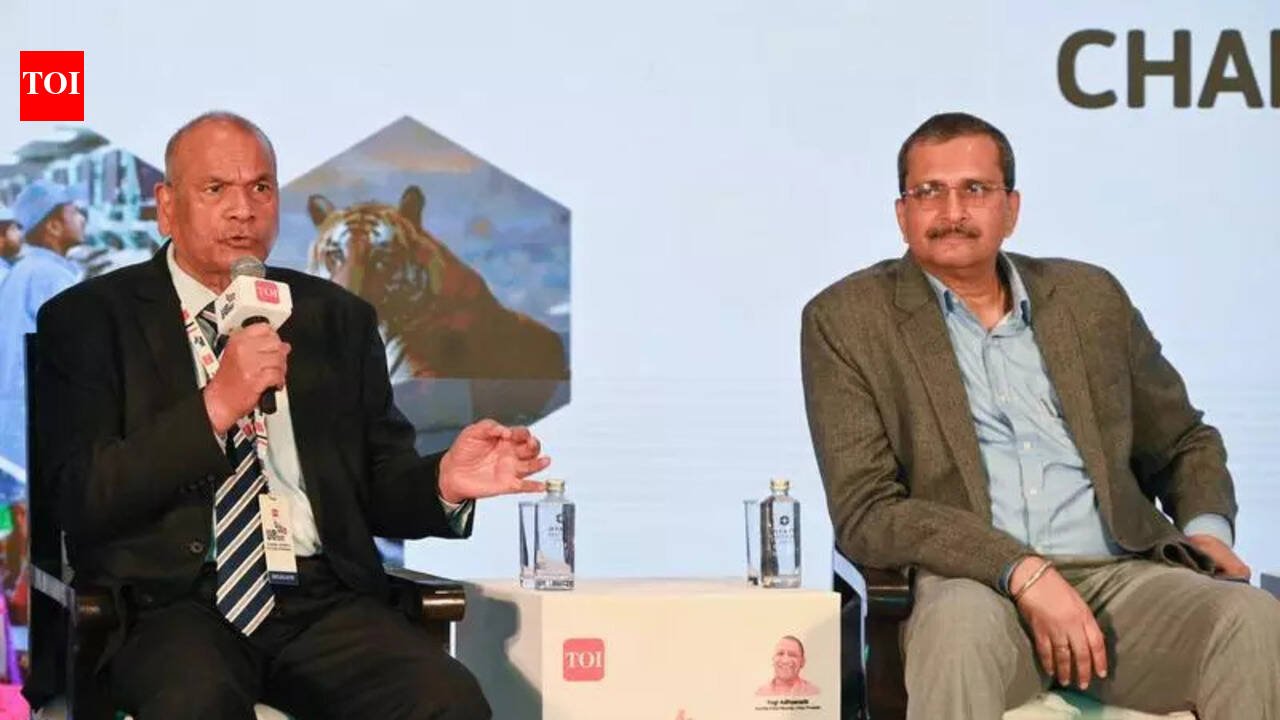
Lucknow: In India’s most populous state, innovation is no longer confined to urban tech corridors as Uttar Pradesh is attempting systemic transformation across policing, governance, skilling, rural finance and healthcare — with a clear focus on scale, accountability and inclusion.Speaking at a session on ‘Innovation at Scale: Shaping Uttar Pradesh’s Future’, former DGP Vikram Singh said that institutional reform is the foundation of innovation.“What worked yesterday will not work today,” he said, recalling a time when policing depended largely on physical force and rudimentary methods. “Today, the force is technology driven. Emergency response systems like 112, digitised recruitment processes and strengthened cyber units have transformed policing standards. A recent recruitment drive of 1.6 lakh personnel was completed without a single complaint — a significant shift from earlier controversy-ridden processes,” he said.Singh also highlighted how constables are being trained in AI and cyber security, reflecting a deep cultural change within the force.Another panelist, former additional chief secretary Nitin Ramesh Gokarn, said Uttar Pradesh’s nearly Rs 9 lakh crore budget is now backed by digital traceability systems.“Every public works road has a unique digital ID, allowing officials to track ownership, repair history and fund allocation,” he said. During his tenure, overseeing GST, Gokarn deployed an AI-based mismatch detection system costing Rs 18 lakh that helped recover Rs 4,000 crore in one year — demonstrating how technology can directly boost revenue efficiency.Maj Gen SB Asthana emphasised the demographic dimension. “If Uttar Pradesh were a country, it would rank sixth globally by population. But demographic strength must translate into per capita productivity,” he said. He stressed AI-led skilling across sectors — from manufacturing to healthcare — to bridge productivity gaps with global economies. Without skill-based empowerment, demographic dividend could not be realized, he said.Shikha Tripathi, former DGM at Nabard, described how rural women were functioning as banking correspondents, operating digital payment systems and conducting financial transactions independently. “These women, once confined to their homes, are now training officials across states and linking village enterprises to urban markets. Entrepreneurship training, market access and digitisation have turned participation into transformation,” she said.Healthcare innovation is following a similar outreach model. Maj Gen (Dr) Vibha Dutta, executive director of AIIMS Gorakhpur, highlighted the expansion of over 22,000 Ayushman Health and Wellness Centres across the state.“These centres provide non-communicable disease screening, elderly care and preventive diagnostics. Mobile medical units and hospital-on-wheels initiatives are bringing patient-centred services to remote villages,” Dr Dutta said.


