






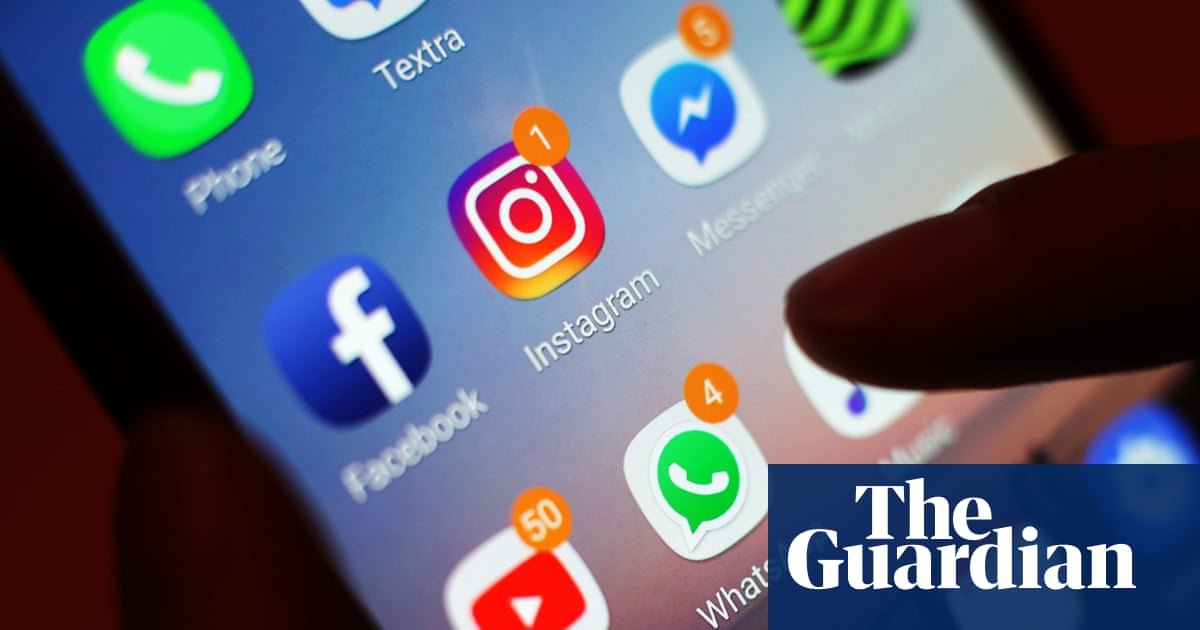
Instagram’s chief executive has said users will have a worse experience in an algorithm-free world, seeing more brand-related content, and spend less time on the app.
The comments come as the Australian government plans to give users the option to opt out of algorithms, with the prime minister, Anthony Albanese, announcing plans on Tuesday to require social media platforms to prompt users to choose between a feed of algorithm-recommended content or a reverse chronological feed of the pages users follow. Labor also plans to introduce a range of measures designed to address online harm on the sites.
In a briefing with journalists on Thursday to launch the company’s Algo Confessions series in Australia, Instagram’s chief executive, Adam Mosseri, did not comment directly on the Albanese government proposal but said Instagram had a range of algorithms in operation. Those include ranking which friends’ stories you see more often, or which users come up first in message suggestions based on interactions, as well as the algorithm that determines the content people see in their feeds.
The launch of the series in Australia is the first outside the US. It features celebrities and influencers detailing how Instagram determines what content ends up in a user’s feed, and how the user can have some control over that by adding or removing tags in their settings.
Mosseri said just a “very vocal minority” wants social media to go back to reverse chronological feeds, which he said would just incentivise people to post more.
“What ends up happening is the best way to get more reach is just to post more often and those who can afford to post the most often do and then therefore get the most reach,” he said.
“And it turns out your friends post a lot less than creators, who post a lot less than brands and companies.”
He said people would be “overwhelmed” with content from brands, and creators and friends would be drowned out.
“What happens is people become a bit less interested in the experience and they use it a lot less, which then means that there’s less reach to go around and people start to get more and more mad about the fact that their reach is going down because the overall pie gets smaller.”
He said engagement and user satisfaction goes down.
“It’s this interesting tension between what an individual might want and what happens when you actually explode that to the entire community,” he said.
“That’s not to say that ranking is perfect, it’s not, we make mistakes – one of the things that frustrates me about ranking is that we end up over-optimising for things that we can measure and undervaluing things that are more difficult to measure.”
after newsletter promotion
Mosseri said Instagram’s ranking algorithm “feels like a black box” but was something Instagram was trying to give users more control over by opting out of certain topics in their recommendations.
He said in the future, Meta’s AI models could eventually allow users to talk to the app to understand why they are seeing certain types of content.
Mosseri said he did not believe the app to be the clinical definition of “addictive”.
“I don’t believe Instagram is addictive – I know that is controversial to say – I do think we often in English anyway conflate the way we colloquially use the word addicted … like ‘I’m addicted to this show and I’m binge watching it, which is not good for me’.”
He said clinically defined addictions have withdrawal symptoms, while social media does not have that effect, and “those things are different”.
Mosseri has made this claim before. Research has found some users can have an impulse to use a platform without being fully aware of it, and evidence shows frequent engagement with algorithms “alters dopamine pathways” that fosters dependency that is “analogous to substance addiction”.
In the landmark US court case centred on the addictive nature of Meta’s products, the company’s lawyer last month conceded to the court that it was “no dispute” people can struggle with social media, but the company has tools to address that. Meta later settled the case for US$18bn while denying any wrongdoing.


