






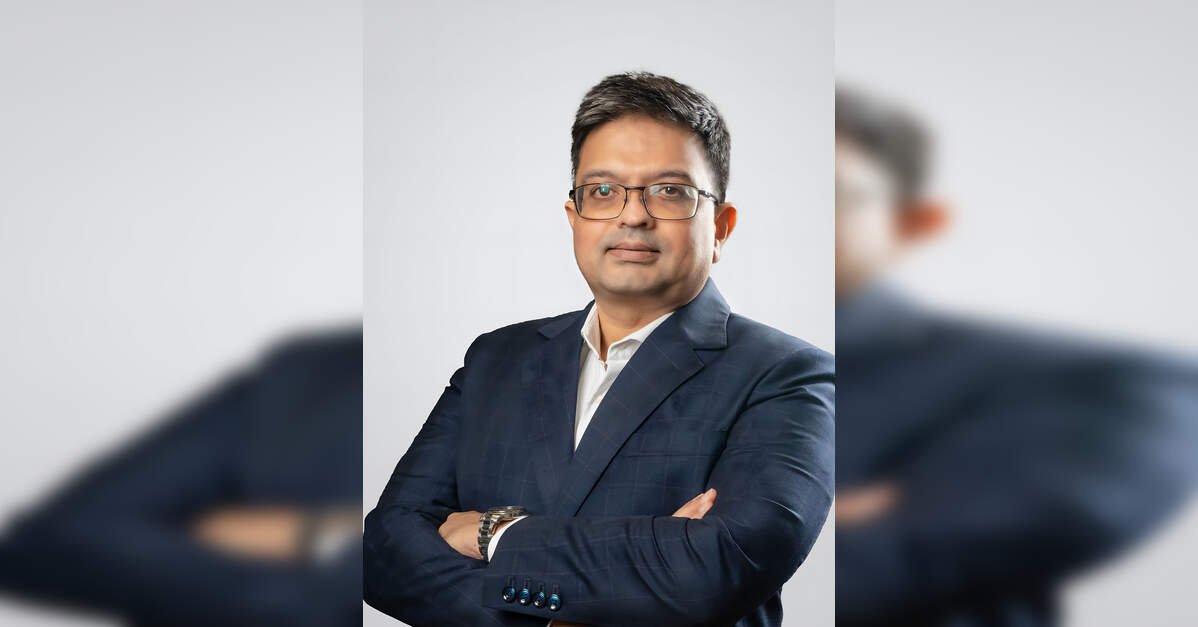
In conversation with ETLegalWorld, Anuraag Kothari, Head of Legal and Assistant General Counsel at The Lubrizol Corporation, shares his perspective on balancing legal risk with business objectives, navigating regulatory complexity across India, the Middle East and Africa, and the growing role of Legal in helping businesses respond to interconnected contractual, compliance and geopolitical risks. He also discusses how AI is reshaping legal work and why General Counsels are increasingly expected to serve as strategic business partners.
ETLegalWorld: What is your approach to balancing legal risk with business objectives, and what are the key challenges in doing so?
Anuraag Kothari: The approach is centered on close collaboration with commercial teams to help achieve business objectives, strengthen relationships, and manage risk responsibly.
Not every risk needs to be eliminated. The key is to understand the risk, calibrate it against business reality, and ensure that internal clients and leaders are making informed decisions. We provide clear options, explain the consequences of each option, and help the business choose a path that is commercially practical and legally defensible. This enables the organization to pursue opportunities confidently while remaining aligned with its values, standards, and overall risk appetite.
Often, the objective is to find a path to “Yes,” while ensuring compliance with applicable laws, corporate policies, and ethical standards. Where a proposed approach may present legal or regulatory concerns, Legal’s role is to engage constructively with the business, clearly explain the considerations involved, and help identify practical alternatives that can achieve the intended commercial outcome.
In today’s dynamic business environment, agility and early collaboration are particularly important. An effective Legal function engages with the business from the outset, understands the commercial objective and broader context, anticipates potential legal and regulatory considerations, and provides pragmatic guidance.
Key challenges
- Pace of change: The business needs to rapidly sense the market and customer shifts, make fast informed decisions, and iterate based on results. Legal needs to keep pace with such demands.
- Regulatory complexity: Evolving laws and enforcement expectations require rapid, practical legal analysis.
- Emerging risk areas: Data, AI, sanctions and sustainability are creating new considerations for both business strategy and legal oversight.
- Dealing with ambiguity: Legal teams must help leaders make informed decisions when the external environment is uncertain.
ETLegalWorld: With responsibility across India, the Middle East and Africa, what key regulatory and legal challenges arise from operating across such diverse jurisdictions?
Anuraag Kothari: One of the things I have learned from working across India, the Middle East and Africa (IMEA) is that there is little commonality in the regulatory environment. From a business perspective, IMEA is often viewed as one region, but the reality is far more diverse, with each country having its own legal system, regulatory priorities, culture of conducting business, and stage of economic development.
That diversity creates both opportunities and challenges. What works in one jurisdiction may not work in another, and assumptions that hold true in one market can quickly prove incorrect elsewhere. As lawyers and compliance professionals, we have to be constantly aware of those differences and adapt our approach accordingly.
Even within the Middle East, the regulatory landscape can vary significantly. In Saudi Arabia, for example, something as routine as failing to update the articles of association can bring business operations to a halt.
For a multinational company, the challenge is finding the right balance. We want to maintain consistent global standards and a strong culture of ethics and compliance, while also recognizing that local requirements and business realities matter. In my experience, the most effective approach is to start with clear global principles and then tailor their implementation to the specific needs of each jurisdiction. That is why local expertise is so important. Regulatory developments, compliance risks, and business challenges do not always stop at national borders, and having visibility across the region often helps us identify and address issues before they become larger problems.
ETLegalWorld: What contractual, compliance, and geopolitical risks are businesses overlooking today?
Anuraag Kothari: The risk that concerns me today is what I would call an interconnected risk. Earlier in my career, companies tended to look at contractual risk, compliance risk, and supply chain risk as separate issues. Increasingly, I do not think that is possible. What I see now is that a problem in one area can quickly cascade into several others.
For example, a global or geopolitical event can disrupt a key supplier. What starts as a supply chain issue can very quickly become a contractual challenge, create sanctions of exposure, increase logistics costs, and ultimately affect a company’s ability to meet its commitments to customers. That interconnectedness is something I believe organizations need to pay much closer attention to than they did in the past.
When I look at cross-border transactions today, I spend as much time thinking about the broader risk environment as I do the transaction itself. Sanctions and export controls, third-party due diligence, beneficial ownership, anti-bribery and corruption risks, data transfers, force majeure provisions, business continuity, and the concentration of critical suppliers have all become increasingly important considerations.
One lesson from recent global events is how quickly circumstances can change. If someone had asked me a year ago whether businesses operating in the Middle East would need to reassess geopolitical assumptions, many would probably have viewed the risk differently. Yet recent developments have reminded us that even relatively stable operating environments can change rapidly. As a result, we have spent much more time examining contracts through the lens of sanctions exposure, force majeure provisions, and questions around contract performance. For me, this has changed the role of Legal. It is no longer just about reviewing individual contracts or identifying legal issues in isolation. The real value comes from understanding the broader ecosystem around a transaction, anticipating how different risks may interact, and helping the business navigate that complexity before it becomes a problem.
ETLegalWorld: How is technology, including generative AI and legal-tech tools, changing your legal team?
Anuraag Kothari: AI will probably be a topic of discussion for the next few years, whether with outside counsel, business leaders, or members of my own legal team. Having worked through previous waves of technological change, I remember how quickly the legal profession adapted to email, the internet, and digital research tools. Looking back, those changes transformed how we worked. What I am seeing with AI feels more profound than any technology I have encountered in my career.
What excites me most is that AI is not simply another productivity tool. I believe it has the potential to fundamentally reshape how legal work is performed, how knowledge is managed, and where lawyers focus their time and expertise.
I am already seeing meaningful opportunities across contract review and management as part of a contract lifecycle management system, legal research and analysis, and knowledge management. Used responsibly, generative AI can help legal professionals review and compare large volumes of information far more efficiently and identify patterns, inconsistencies, and risks that might otherwise require significant manual effort.
What I find particularly interesting about AI in the legal profession is that we could end up sitting on both sides of the discussion. We are users of the technology, but we are also responsible for helping our organizations understand and manage the risks that come with it. In my view, that means asking the right questions about confidentiality, intellectual property, cybersecurity, data privacy, accuracy, legal privilege, and, above all, the role of human oversight. One thing I have become increasingly convinced of is that the most effective use of AI is not about replacing human judgment, but about enhancing it.
AI is unlikely to replace lawyers’ intelligence; rather, it is expected to change where and how legal professionals create value. By reducing the time spent on repetitive, administrative, and process-driven tasks, AI can enable legal teams to focus more on strategic advice, complex negotiations, problem-solving, and meaningful partnership with the business.
The discussion is therefore shifting from whether AI is here to replace lawyers to how AI can just be another tool to that can be adopted effectively and responsibly. The key is to leverage the benefits of technology while maintaining the judgment, trust, confidentiality, accountability, and professional standards that are fundamental to the legal profession.
ETLegalWorld: Looking ahead, what are the biggest priorities for General Counsels in emerging markets, and how will the legal function evolve?
Anuraag Kothari: One of the most significant changes over the years has been the evolution of the General Counsel’s role. Traditionally, Legal was largely viewed as the behind-the-scenes function responsible for contracts, disputes, and compliance matters. While these responsibilities remain fundamental, the expectations of the Legal function have broadened considerably.
Business leaders increasingly expect the General Counsel to serve as a strategic partner, rather than solely as a legal adviser. Today, the role often extends well beyond purely legal matters to include business strategy, government affairs, supply chain challenges, regulatory developments, and emerging risks. The question is increasingly less about “What does the law say?” and more about “How can the organization achieve its objective responsibly?”
This shift is particularly evident across the IMEA region, where many countries have become increasingly important destinations for investment and growth. India, in particular, has assumed a more strategic role in global business and supply chains, with this trend accelerating significantly following the COVID pandemic. These developments have created considerable opportunities while also contributing to a more complex operating environment. Organizations today must navigate an evolving range of trade and competition law considerations, stakeholder expectations, regulatory developments, and geopolitical factors.
As a result, the breadth of matters handled by Legal teams continues to expand. On any given day, a member of the legal team may be supporting a strategic transaction, addressing a labour and employment matter, evaluating a regulatory or compliance issue, engaging with government stakeholders, or helping the business respond to an emerging risk. The diversity and complexity of these issues are also what make the role increasingly dynamic and impactful.
This evolution has also influenced how effective Legal teams are built. While strong legal expertise remains foundational, qualities such as curiosity, commercial awareness, adaptability, and a genuine interest in understanding the business have become equally important. Lawyers who make the greatest impact are often those who can translate legal advice into practical business solutions, communicate complex issues clearly, and build trusted relationships across the organization.
An equally important aspect of the General Counsel’s role is the ability to ask difficult questions, challenge assumptions constructively, and stress-test strategic initiatives. Positioned at the intersection of law and business, the General Counsel helps the organization balance strategy, opportunity, and risk while remaining aligned with its values and responsibilities.
Ultimately, it is this combination of independent judgment, commercial understanding, constructive challenge, and strategic partnership and above all a trusted advisor, which makes the General Counsel an increasingly valued contributor to business leadership.
[The views and opinions expressed in this interview are solely those of the interviewee in their personal capacity and do not necessarily reflect the views of their organization, ETLegalWorld, or its affiliates.]


