



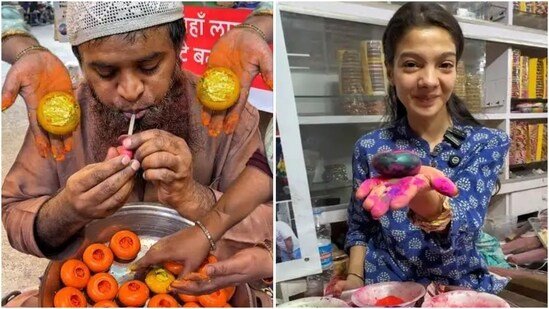
Holi, the vibrant festival of colours, is celebrated in countless ways across India, reflecting the country’s rich diversity in language, food, and culture. From Dhulandi in Haryana to Lathmar Holi in Uttar Pradesh, each region has its own unique twist on the festivities. Amid all this colour and joy, some age-old traditions continue to shine, like Jaipur’s gulal gota, delicate lac balls filled with vibrant gulal powder. These tiny, handcrafted shells, once a royal custom, add a dash of history and craftsmanship to Holi, reminding us that the festival is not just about throwing colours, but also about preserving traditions and celebrating heritage. (Also read: Chef Sanjeev Kapoor shares his signature thandai recipe for colourful Holi 2026 celebration: See easy step-by-step guide )


What is gulal gota?
Gulal gota is a centuries-old practice from Jaipur, Rajasthan. These small spherical containers made of lac are filled with dry gulal powder and used to play Holi. Unlike modern water balloons, colours are thrown using these delicate lac balls.
Content creator Ashish Wadhwani shared a video on Instagram on March 2, 2025, showcasing the meticulous process of making gulal gotas. Watching molten lac transform into fragile, colour-filled shells is mesmerising, a testament to the skill and effort behind something meant to last only for a fleeting burst of colour.
The process is similar to making traditional lac bangles, but far more challenging. Handling molten lac often leaves artisans with bruised hands, making this craft both physically demanding and precise.
Step-by-step process:
- Lac is heated until soft.
- While warm, it is carefully shaped into thin, hollow shells using a blowing pipe.
- The shells are cooled in water to harden.
- Each shell is filled by hand with dry gulal powder, carefully calibrated to burst easily without causing harm.
- The opening is sealed with colourful paper cuttings.
Nothing is rushed or mass-produced. Every gulal gota is crafted by skilled hands, carrying generations of knowledge and care. A month before Holi, Manihar homes and workshops transform into quiet spaces of preparation. Though the festival may not belong to their religion, the artisans’ dedication has made this a tradition passed down through generations.
What is the history
According to Wikipedia, gulal gotas trace their origins back 300–400 years to the Jaipur royal family, who favoured this elegant way of celebrating Holi. The Manihar community, Muslim artisans in Jaipur, have kept this tradition alive for centuries. Today, the Indian government supports these craftsmen with “artisan cards,” giving them access to welfare schemes. There is also a push to grant Gulal Gota a Geographical Indication (GI) tag to preserve its unique regional identity and craftsmanship.
How are Gulal Gotas celebrated today
As Holi approaches, Jaipur markets come alive with the handcrafted ‘Rajwadi gulal gota’, originally made for royalty. Artisan Nusrat Jahan told ANI that these lightweight, soft lac balls filled with gulal are now enjoyed by everyone, making the festival safer and more fun. Each gota is handmade with precision, and with limited daily production, demand surges weeks before Holi, with orders pouring in from across India and even abroad.
Artisan Mohammad Sabir adds that this 280-year-old craft has been passed down through generations of Muslim families. More than a festive accessory, Gulal Gota symbolises Jaipur’s Ganga-Jamuni culture, celebrating shared traditions across communities.
Over the past decade, this royal custom has gained popularity, thanks in large part to social media, with numerous reels and videos circulating on Instagram, YouTube, and X, introducing the wider public to Jaipur’s rich heritage and the enduring artistry of its craftsmen.


