



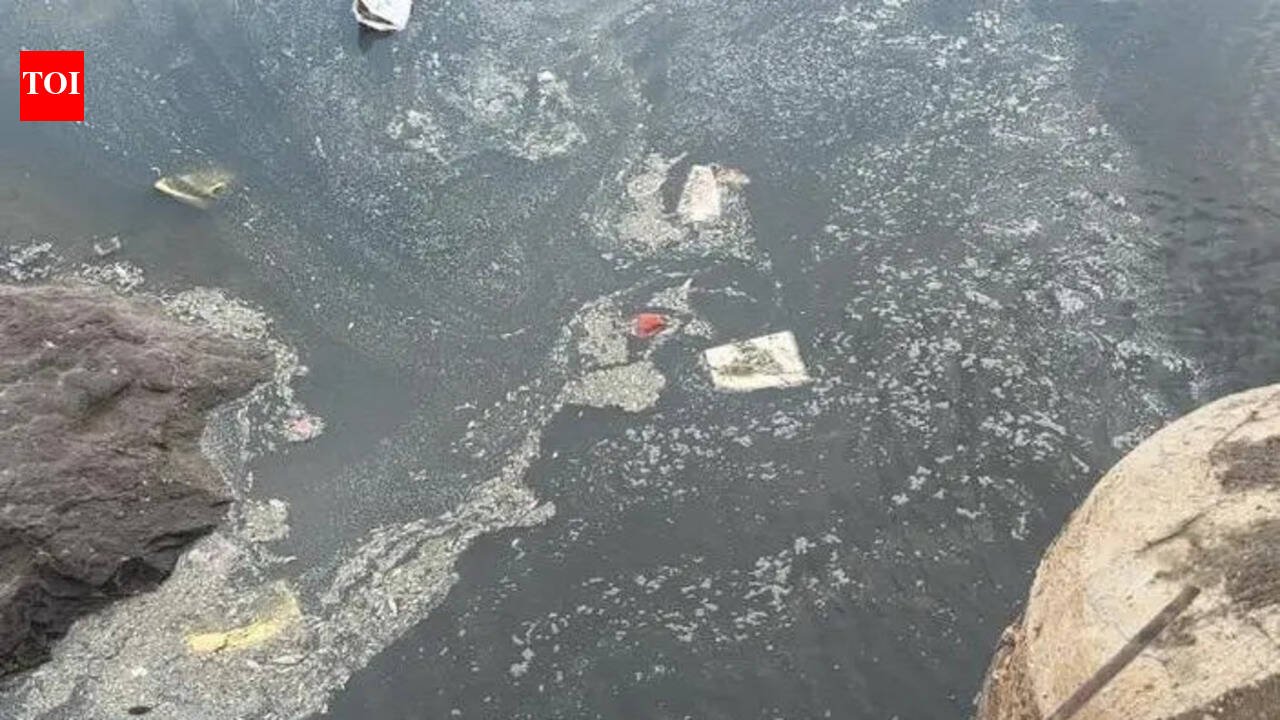
Pune: The discovery of a large number of dead fish in the Nira river over the last two days has sparked widespread concern among villagers of Baramati tehsil. Preliminary findings are pointing to industrial pollution, prompting villagers to accuse the Maharashtra Pollution Control Board (MPCB) of failing to act despite repeated warnings.A team from MPCB’s Baramati office conducted a survey along the affected stretches over the weekend and collected water samples for analysis.Kartikeya Langote, who heads the sub-regional MPCB office in Baramati, said early indications suggest the discharge of untreated industrial effluents into the river. “Samples have been collected from multiple locations of Korhale Khurd village. Prima facie, the fish deaths appear to be linked to industrial discharge. The exact source and level of pollution will be confirmed once we get test reports in the coming days,” Langote told TOI.The incident has triggered sharp reactions from villagers, who depend on the Nira river for irrigation and daily use.Residents from nearly 20 villages said the latest episode is part of a recurring pattern of pollution that has steadily degraded the river over the years.“This is not a one-off incident. It is the result of years of negligence,” said local activist Yuvraj Khomne, adding, “The MPCB only issues notices. There is no real enforcement, no fear among polluters. They have completely failed to protect this river.”Farmers alleged that prolonged exposure to polluted water has severely impacted agricultural productivity.”We used to drink water from this river 15 years ago. Today, even our cattle cannot consume it,” said a farmer from a village along the riverbank. “Our land is turning infertile because of chemical-laced water. Who will take responsibility for these losses?”Villagers have blamed nearby sugar factories and industrial units, including some in neighbouring Satara district, for releasing untreated waste into the river. They alleged that despite repeated complaints, authorities have not taken stringent action against violators.“If the MPCB had imposed heavy fines or filed criminal cases against factory managements, the situation would not have reached this level,” Khomne said. “Instead, they keep sending notices, which make no difference on the ground.”Environmental experts warned that such pollution incidents pose a serious threat not only to aquatic life but also to human health and the wider ecosystem. Industrial effluents typically contain toxic substances such as heavy metals like mercury, lead and cadmium, along with ammonia, nitrates and phosphates. These chemicals reduce oxygen levels in water, leading to fish deaths, while also contaminating soil and groundwater when used for irrigation. Long-term exposure can result in declining soil fertility, reduced crop yields and health risks for humans and livestock, they said.“The river ecosystem is under severe stress,” said an environmental researcher, preferring anonymity. “If industrial discharge continues unchecked, the damage could become irreversible in many stretches.”The issue of pollution in the Nira river has been raised in the past as well. Late deputy chief minister Ajit Pawar had conducted inspections and directed authorities to implement long-term measures to improve water quality. However, villagers said little has changed on the ground.“What is needed is strict action. Shut illegal discharge points, dismantle pipelines and penalise repeat offenders,” said another resident. “Until that happens, these incidents will continue.”Officials from the MPCB’s Pune office said authorities in Satara district have been alerted to identify pollution sources and initiate action.The Nira river originates in the Western Ghats in Bhor tehsil, and flows through Purandar and Baramati tehsils in Pune district. It ultimately meets the Bhimariverbasin atNiraNarsingpur near Akluj in Solapur district. It is one of the main rivers for Pune, Satara and Solapur districts.The farmers from Murum, Limbut, Hole, Korhale Khurd and Sangvi villages in Baramati tehsils are at the receiving end of the latest crisis. They claimed that they are unable to use thewaterfor domestic purposes and their farming is badly affected.Goraksha Khomne, sarpanch of Korhale Khurd village, told TOI, “The MPCB has done nothing to address our concerns. They only collect samples and send notices to industrial plants. But what about the health of hundreds of villagers? Why can’t they seal some industrial plants to send out a strong message? Our health is increasingly at stake and for years, things have only gotten worse.”


