



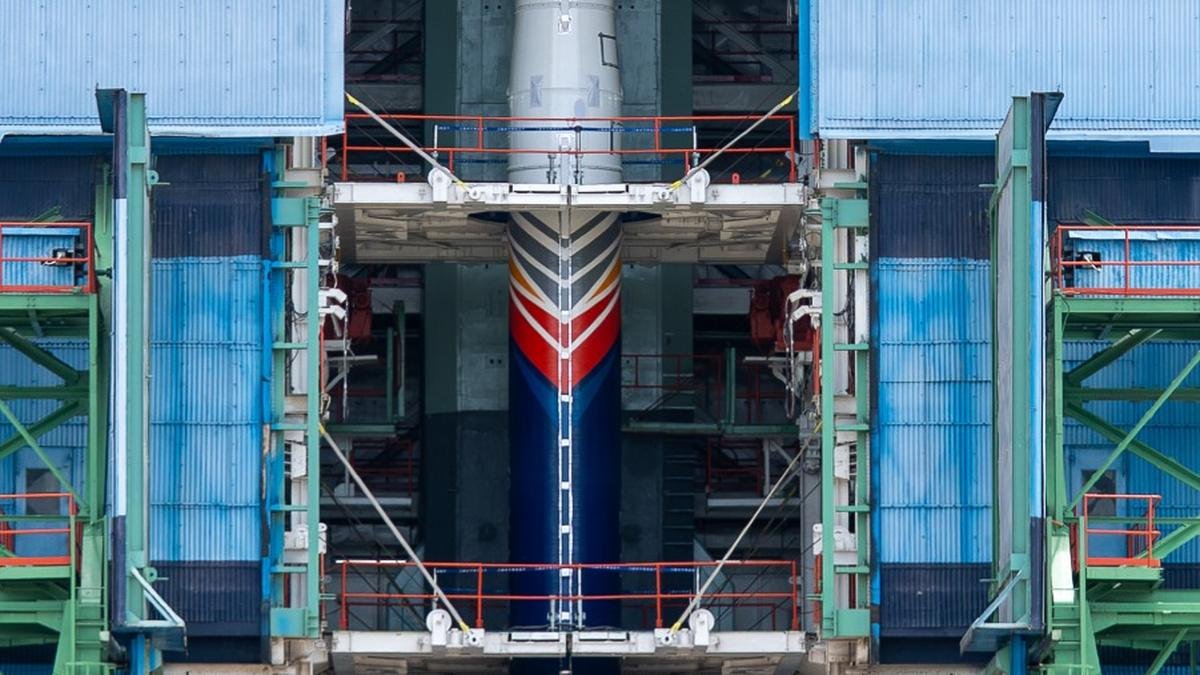
India’s first privately developed orbital-class rocket is all set for its maiden launch.
On July 2, private space launch company Skyroot Aerospace, based in Hyderabad, announced that the launch window for Vikram-1’s first test flight, named Mission Aagaman, is between July 12 and August 4.
It said that Test Flight-1 is targeted for no earlier than July 12, subject to the completion of assembly and testing operations at the launch site in Satish Dhawan Space Centre at Sriharikota, and weather, safety, range clearance, and that the window extends till August 4.
“The moment Vikram-1 lifts off, India’s private space industry will cross a threshold it has never crossed before”Pawan Kumar ChandanaCo-founder & CEO, Skyroot Aerospace
Skyroot Aerospace said that Mission Aagaman, meaning ‘the arrival’, marks its second mission following the successful suborbital flight of Vikram-S, the first private rocket to reach space from Indian soil, on November 18, 2022.
India’s first private rocket Vikram-S, built by Skyroot Aerospace, lifts off from a launch pad at the Satish Dhawan Space Centre in Sriharikota on November 18, 2022.
It said that this will be a partially commercial flight, with the company planning to commence full commercial flights after one or two successful demonstrations to orbit.
“Joining the test flight is a mix of domestic and international customers,” according to Skyroot Aerospace.
All stages of Skyroot’s Vikram-1 have been successfully integrated and stacked at the launch pad. The mission will gather critical data across propulsion, stage separation, guidance, navigation, control and overall vehicle performance, supporting the evolution of Skyroot into a commercially operational launch company.
About the spacecraft
Vikram-1 is a seven-storey-tall, multi-stage orbital launch vehicle built with an all-carbon composite structure, and powered by in-house developed propulsion systems, including 3D-printed engines and high-thrust solid-fuel rocket boosters.
Designed to carry small satellites weighing up to 350 kg to Low Earth Orbit (LEO), Vikram-1’s maiden mission will target an orbit at an altitude of 450 km with a 60-degree orbital inclination.
Built with an all-carbon composite structure and powered by in-house developed solid and liquid propulsion systems, including 3D-printed engines, the rocket is engineered for rapid manufacturing and high launch cadence. The flight-ready rocket was unveiled by Prime Minister Narendra Modi in November 2025.
“The single most important objective of Mission Aagaman is to capture real in-flight performance data from every system on Vikram-1. We want to understand how the vehicle performs from lift-off through every phase of ascent. This data cannot be fully replicated through ground testing. It will help us validate our designs, and inform subsequent vehicle development as we build a reliable, high-cadence commercial launch programme. The moment Vikram-1 lifts off, India’s private space industry will cross a threshold it has never crossed before,” said Pawan Kumar Chandana, co-founder & CEO, Skyroot Aerospace.
Published – July 02, 2026 01:41 pm IST


