






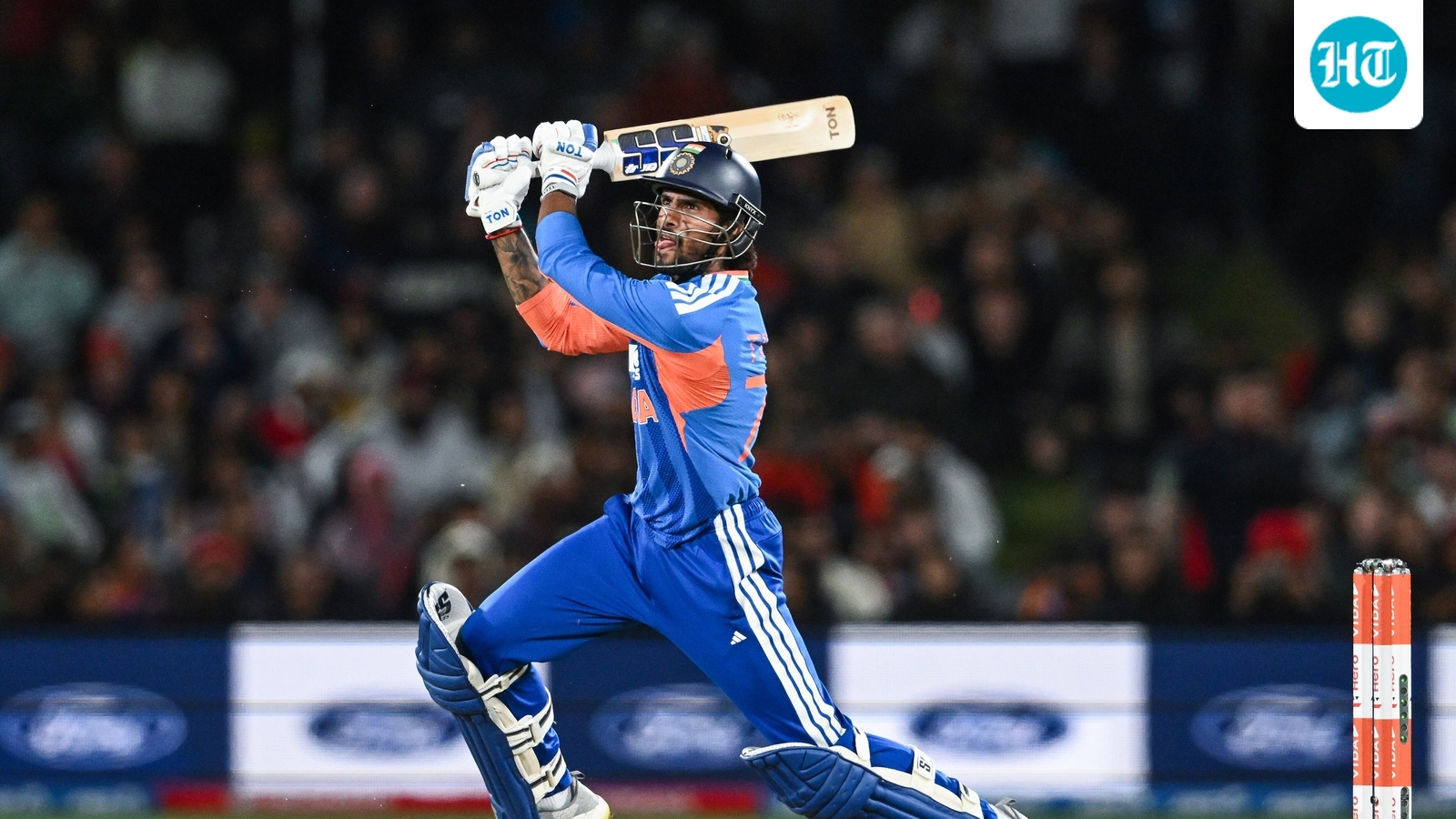
Mumbai: Tilak Varma and Nitish Reddy’s unbeaten 30-ball 69 run seventh wicket partnership helped India pull a win back from the dead while chasing 181 for a 4-wicket win in the second T20I at Christchurch on Saturday.
It helped India take a 2-0 lead in the five-match series.
India were well behind the chase at 113/6 after 15 overs. That left them to get 68 runs in five overs with New Zealand having used up all their spin overs that dominated proceedings in the middle overs on a pitch where the ball wasn’t really coming on to the bat. From that moment onwards, it was a match by itself. New Zealand pacers against India’s finishers – Tilak Varma and Nitish Reddy.
Nitish made a push with some power, but he could only bring the equation down to 46 runs off 18 balls. A tall order, but the Kiwis hadn’t accounted for a Tilak onslaught.
New Zealand were left without the services of Matt Henry. Varma went berserk against Jacob Duffy and Nathan Smith, pocketing five fours and a six in the 12 deliveries that followed. That left Duffy with 11 runs to defend in the final over. For the first time in the match, India became the favourites.
Tilak brought up his fifty in the final over, but reserved his celebrations for the victory. When Reddy clipped Duffy past mid-wicket in the penultimate ball, Tilak pushed back his flowing locks and pent-up energy to let out an almighty scream. It added to his collection of memorable finishing heists.
Earlier, New Zealand kept the Indian openers in check for 10 balls in a row and got Abhishek Sharma caught in the deep. Almost. Duffy would hear the dreaded free hit siren. The bowlers dominated the Powerplay with India restricted at 44/1.
New Zealand introduced Michael Bracewell with his off-spin in the sixth over where he should have got Vaibhav Sooryavanshi but for a dropped chance. It was still a quiet over. Convinced, skipper Mitch Santner doubled down on spin and brought himself on. Between Bracewell and Santner, New Zealand were able to slow the proceedings down considerably in the middle overs. Invariably when runs go dry and the asking rate climbs, it results in wickets. Santner got three of them in the process.
With the dew not disrupting proceedings as feared, Kiwi spinners dared to mix it up with slow spin. The situation called for the batters to bring out the broom to challenge the spinners’ length. But neither Shreyas Iyer nor the floater Axar Patel, best suited to counter-attack against spin, tried the horizontal bat shots.
On the day, they couldn’t target the straight boundaries either as New Zealand spinners did not err in length. Led by Santner’s delightful spell of slow spin (4-0-21-4), the Kiwis took complete control in the middle overs, with India’s returns making a poor read at 66/5, before Tilak turned the tide.
With the ball, India swapped the two Yadavs – introducing Prince for Mayank, a shade slower but a definite improvement in bowling smarts. Just when Finn Allen was threatening to open up the reverse V, by moving around the crease for a ramp shot, Prince was able to nail one in the block hole to take his leg stump.
Shreyas Iyer had taken the learnings from the last match by not risking spin in the Powerplay at largely batting-friendly conditions at Hagley Oval. With a wicket each to Arshdeep Singh and Bhuvneshwar Kumar, India chained the hosts down to 43/3 in the first six overs.
The silver lining for the bowlers was that the second T20I was being played on the same surface as the last one. Anticipating that the pitch would slow down, Iyer was able to eke out a couple of economical overs from Naman Dhir and Axar Patel immediately after the Powerplay.
Stuck at 66/2 at the mid-way stage of the innings, New Zealand needed a move on. Iyer was alert to the possibility by re-introducing Prince, but he wasn’t up for it in the field by grassing a chance. Bevon Jacobs survived a fielding lapse from the Indian captain on 20.
From that moment onwards, Jacobs and Glenn Phillips took calculated risks without going all out. Phillips would tee off by taking his front foot across, connecting a few, but the batters in the middle largely appeared to have reassessed their par score expectations after 225 were chased down in the previous match.
New Zealand settled for 72/0 in the middle overs, dictated by the 77-ball 116-run fourth wicket partnership between Phillips (70 off 43b) and Jacobs (58 off 46b).
Among Indian bowlers, Axar Patel recovered brilliantly with a crafty spell (4-0-28-0) after the caning he got in the opening T20I, while Bhuvneshwar Kumar (4-0-50-1) hasn’t quite been able to hit his straps on international return.


