






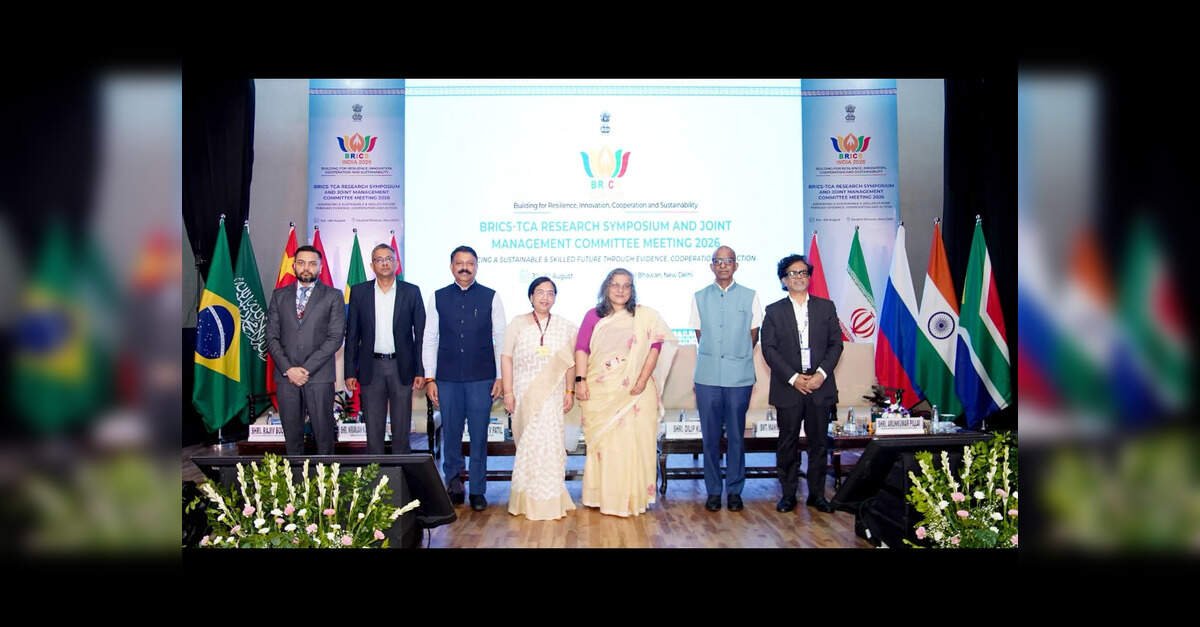
New Delhi: India has proposed a BRICS-wide international skill gap study, a vocational skills competition and a compendium of best practices in technical and vocational education and training (TVET) during the BRICS Technical and Vocational Education and Training Cooperation Alliance (BRICS-TCA) Joint Management Committee meeting held in New Delhi.The proposals were discussed during the two-day BRICS-TCA Research Symposium and Joint Management Committee (JMC) meeting, organised by the National Skill Development Corporation (NSDC) under the guidance of the Ministry of Skill Development and Entrepreneurship (MSDE). Held under the theme “Sustainable and Digitally Enabled TVET: The BRICS Perspective”, the event brought together representatives from BRICS countries, international organisations, academia, industry and training institutions.
Under India’s chairship, the proposed international skill gap study aims to identify workforce shortages and emerging occupations across BRICS countries. The proposed BRICS Skills Competition seeks to promote vocational excellence and harmonise competency standards, while the compendium will document best practices in industry partnerships, digital learning, qualifications and financing mechanisms in vocational education.
Speaking at the inaugural session, MSDE Secretary Debashree Mukherjee said skills have become critical economic infrastructure that shapes productivity, industrial competitiveness and workforce resilience. She called for deeper cooperation among BRICS nations in labour market intelligence, joint research, institutional strengthening, artificial intelligence and green technologies to build future-ready skilling systems.
Additional Secretary in the Ministry of Education Anandrao V. Patil highlighted the importance of lifelong learning and said the National Education Policy (NEP) 2020 supports multidisciplinary education, credit portability and integration of vocational and higher education. He added that BRICS collaboration could further strengthen joint curricula, institutional exchanges and recognition of qualifications and micro-credentials.
The symposium also featured presentations by BRICS member countries on flagship skill development initiatives and panel discussions on green skills, financing mechanisms, and the use of artificial intelligence, virtual reality and augmented reality in technical and vocational education. Representatives from the World Bank, International Labour Organization, UNESCO, the Ministry of New and Renewable Energy, universities and industry also participated in the deliberations.


