



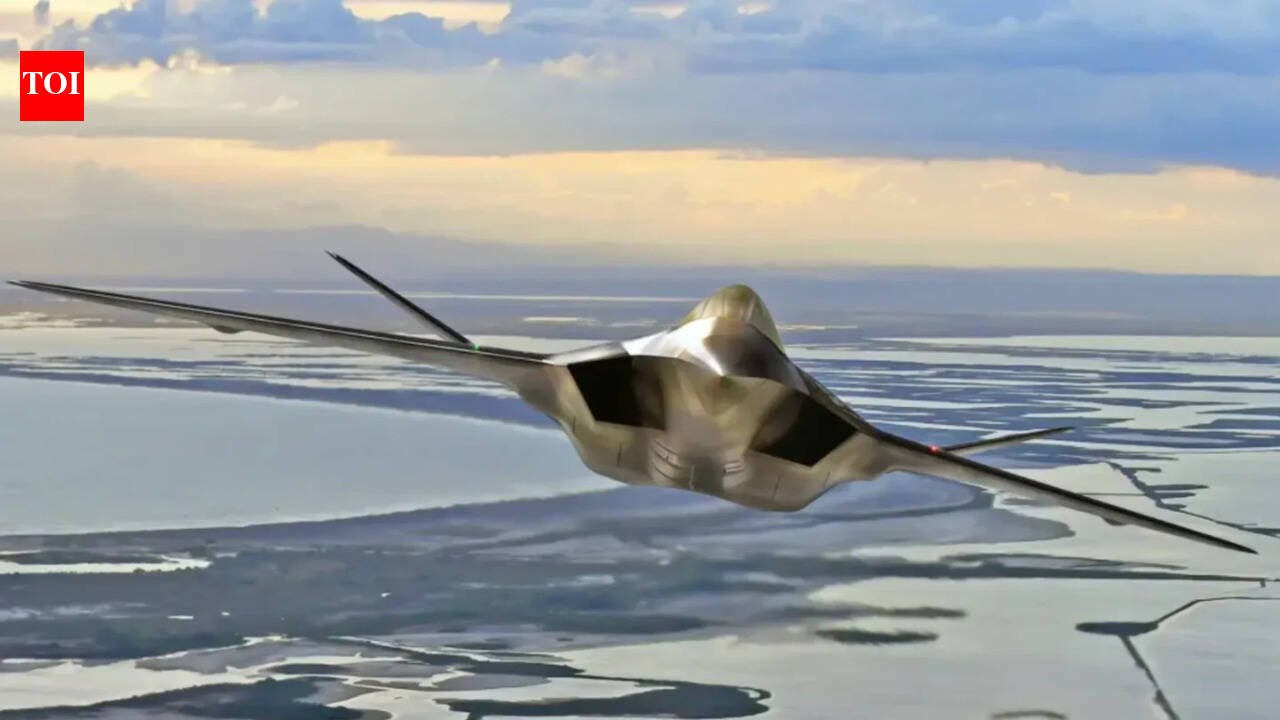
Chief of the Air Staff Air Chief Marshal AP Singh has said India is looking to participate in a sixth‑generation aircraft programme but with a twist.Rather than starting a project from scratch, the IAF is seeking strategic partnerships to fast‑track procurement of these fighters, the air chief said at an event in New Delhi last year.That urgency comes as China already has flying prototypes of two separate sixth‑generation aircraft.US President Donald Trump launched the F‑47 sixth‑generation fighter program last year from the Oval Office, although a prototype of that aircraft has reportedly been flying since 2020, according to the US Air Force. The US Navy is also supporting a separate sixth‑generation project, the F/A‑XX program.Besides the two American and two Chinese programmes, there are two European‑led sixth‑generation combat aircraft efforts: the Franco‑German‑Spanish Future Combat Air System (FCAS) and the UK‑Japan‑Italy Global Combat Air Programme (GCAP).India has been examining both.The Indian Air Force told the Parliamentary Committee on Defence that it is looking to join one of these programmes.Airbus says an FCAS prototype is expected to fly in 2028, while the GCAP prototype is expected to fly next year. Neither project is likely to enter frontline service before the mid‑2030s.Airbus, a key partner in FCAS, says it is now looking at Sweden as an additional partner amid major differences between France and Germany over requirements that threaten to derail the program.French firm Dassault has said it could build the aircraft independently.France has previously split from a European program to produce the Rafale to meet its own needs.If the FCAS partnership collapses, India could seek another partner, although that would likely extend timelines.
Sixth‑generation aircraft
Unlike fifth‑generation fighters, which emphasise frontal stealth, this new class aims for all‑around low observability.Platforms are being designed with digital‑first engineering, model‑based design and advanced software architectures that separate flight‑critical functions from other systems.Stealth shaping, gallium‑nitride transistors, and variable‑cycle engines promise both efficiency and high thrust, while weapons suites are expected to include long‑range standoff missiles and potential directed‑energy defenses.These aircraft integrate artificial intelligence, high‑capacity networking, cyber‑warfare tools and battlefield command‑and‑control capabilities to accelerate decision‑making.Airframes are expected to be optionally manned—capable of piloted, remote or AI‑driven missions—with enhanced human‑systems integration through helmet‑mounted virtual cockpits providing 360‑degree vision and AI‑augmented situational awareness.India’s own fifth‑generation Advanced Medium Combat Aircraft is expected to begin entering service around the same timeframe.India and Russia are also in talks on acquiring additional Su‑57s.


