



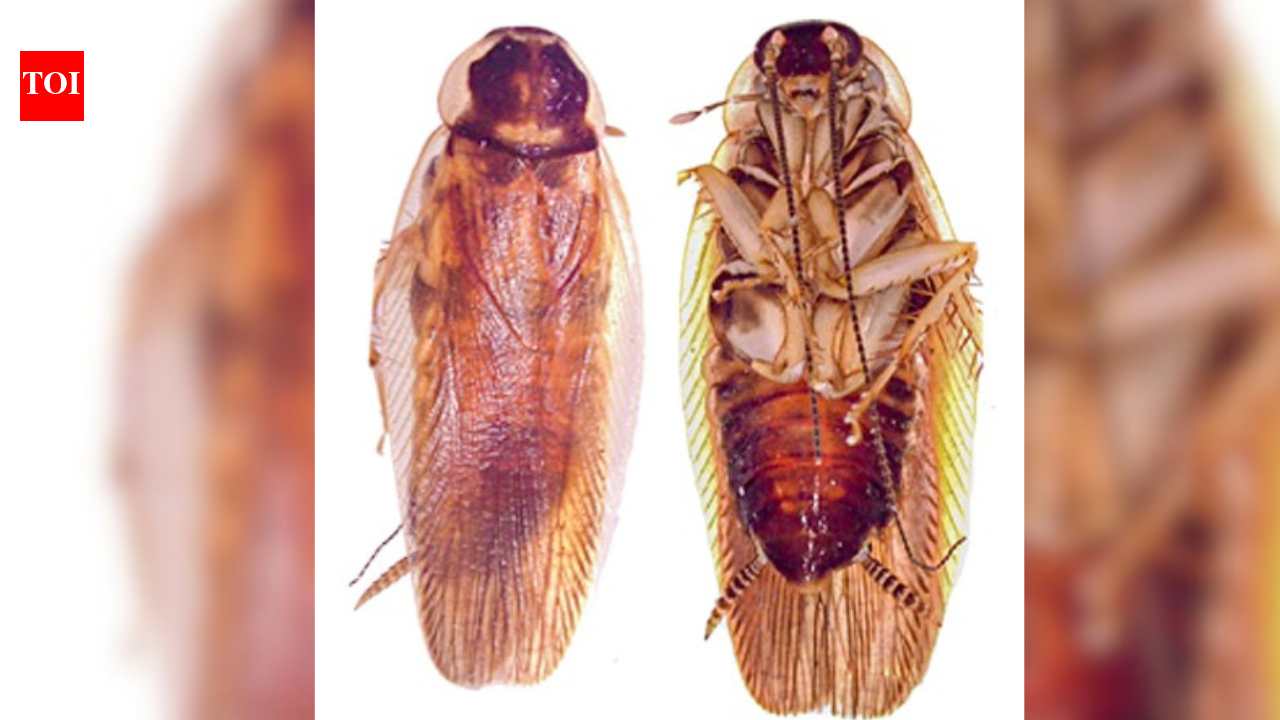
KOLKATA: Scientists in India have for the first time in over two and a half centuries of research identified a new cockroach species, Neoloboptera peninsularis, from the farmlands of Nathachiwadi in Daund, Pune, using a landmark integrative taxonomic approach that combines morphology, genitalic study, DNA barcoding and phylogenetic analysis. The discovery by Zoological Survey of India (ZSI) marks a major advance in Indian entomology by moving beyond traditional identification methods and using molecular evidence to establish species uniqueness with far greater accuracy.This is the first time since cockroach research began in India in 1758 that a new species has been described in the country through such a comprehensive modern framework. The finding is being seen as a turning point for taxonomy in India, where species identification has long depended mainly on visible physical traits. By adding genetic fingerprinting and evolutionary analysis, researchers were able to confirm that Neoloboptera peninsularis is a distinct species with a clear place on the evolutionary tree.The new species is only the third known member of the genus Neoloboptera recorded from India. The other two were described in 1865 and 1995. With this addition, the number of documented cockroach species in India rises to 190, accounting for about 3.8 percent of the world’s known cockroach diversity. The species is not known to occur anywhere outside India, adding to the country’s remarkable record of endemism in cockroaches, with nearly half of its known species found nowhere else on Earth.The discovery also highlights how much remains undocumented, even in relatively well-studied regions. Maharashtra, despite its size and ecological range, has seen only 13 original cockroach species descriptions so far. Researchers say the use of DNA-based tools is likely to accelerate the pace of discovery and improve confidence in species identification across the country.The study was carried out by scientists from the Zoological Survey of India’s centres in Pune and Chennai in collaboration with Prof Ramkrishna More Arts, Commerce and Science College, Pune. The team comprising A Shabnam, M Senraj, Sahil Shikalgar, Rashmi Morey, and K P Dinesh says the work signals a new era for biodiversity documentation in India, where molecular evidence is becoming essential for revealing hidden species and understanding their evolutionary relationships.


