



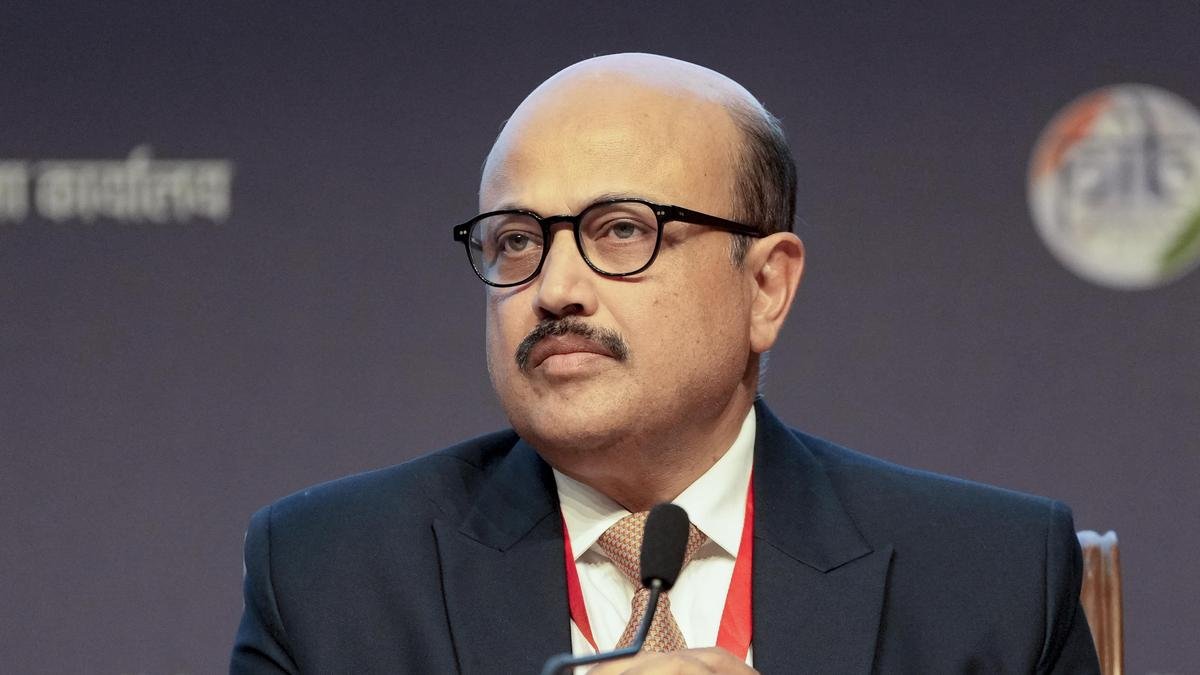
Commerce Secretary Rajesh Agrawal. File
| Photo Credit: PTI
India remains engaged with the U.S. on a trade deal, Commerce Secretary Rajesh Agrawal said on Monday (March 16, 2026). Sources in the government, however, said that India will now sign a trade deal with the U.S. only once that country has settled its “tariff architecture” and has clarified the country-wise tariff rates.
This comes against the backdrop of two trade-related investigations the U.S. is carrying out that could potentially see additional tariffs being levied on a number of countries, including India.
“Pursuant to the U.S. Supreme Court judgement dated 20th February 2026 invalidating reciprocal tariffs, the reciprocal tariffs are no longer in force,” Mr. Agrawal said at a press briefing.
“The U.S. Government has issued Executive Orders imposing 10% tariffs pursuant to section 122 of the Trade Act 1974 on certain products from all countries,” he added. “India remains engaged with the U.S. side for a mutually beneficial trade agreement.”
Uncertainty over deal
India and the U.S. announced a trade deal on February 2, 2026 and a joint statement on the finalisation of a framework for the deal was released on February 7. At the time, Commerce Minister Piyush Goyal had said that the deal would be signed in March.
The U.S. Supreme Court on February 20 ruled against the validity of U.S. President Donald Trump’s use of the International Emergency Economic Powers Act (IEEPA) to levy reciprocal tariffs on America’s trade partners. It is after this that the U.S. imposed the 10% tariffs on all its trade partners under Section 122 of the Trade Act, 1974. These tariffs are in force for a period of 150 days from February 24.
“The U.S. deal was to be signed in March. When we said this, at that time the Supreme Court judgement on IEEPA tariffs had not come,” a senior official in the Ministry of Commerce explained. “Now with the Supreme Court judgement on IEEPA tariffs, the tariffs per se don’t exist.”
Final rate yet to be decided
Additionally, over the course of March 11-12, the U.S. Trade Representative initiated two separate investigations into the U.S.’ trade partners under Section 301 of the Trade Act, 1974. If the findings of these investigations warrant it, the U.S. can impose additional tariffs on particular countries.
“Any deal that we finalise and sign has to be seen against the tariff structure or comparative advantage that India gets in the U.S. market,” the official added. “The U.S. is working on trying to recreate a tariff architecture globally. If they are able to finalise that, at that juncture it would be right to sign the deal.”
Under the framework announced by the two countries, the U.S. was to impose an 18% tariff on most goods imported from India. Now, the new rate will depend on the rates the U.S. imposes on India’s competitors.
“Depending on how their tariff architecture settles, that will determine where India will land,” the official said. “In case all others are at 19%, 20%, 21%, 22%, then India will remain at 18%. But if others come down, then India will also come down. That is something for the U.S. also to take a call on.”
India importing more Russian oil
Mr. Agrawal also highlighted the U.S.’ removal of tariffs on India linked to its import of Russian oil.
“On February 7, 2026, the 25% additional ad-valorem tariffs imposed by the U.S. on certain Indian exports citing India’s imports of Russian oil were removed,” Mr. Agrawal noted.
Following the start of the ongoing conflict in West Asia, the U.S. Treasury Department issued an order to “allow” India to import oil from Russia, a concession it later expanded to all countries.
“On petroleum, whether we are buying it at a premium [from Russia], the Petroleum Ministry would be the right forum to answer it in detail,” Mr. Agrawal said. “But we do monitor the import data and we can say that we are buying Russian oil and there has been an increased buying of Russian oil in the current month because of the challenges we are facing.”
Published – March 16, 2026 05:36 pm IST


