



The anatomy of fear
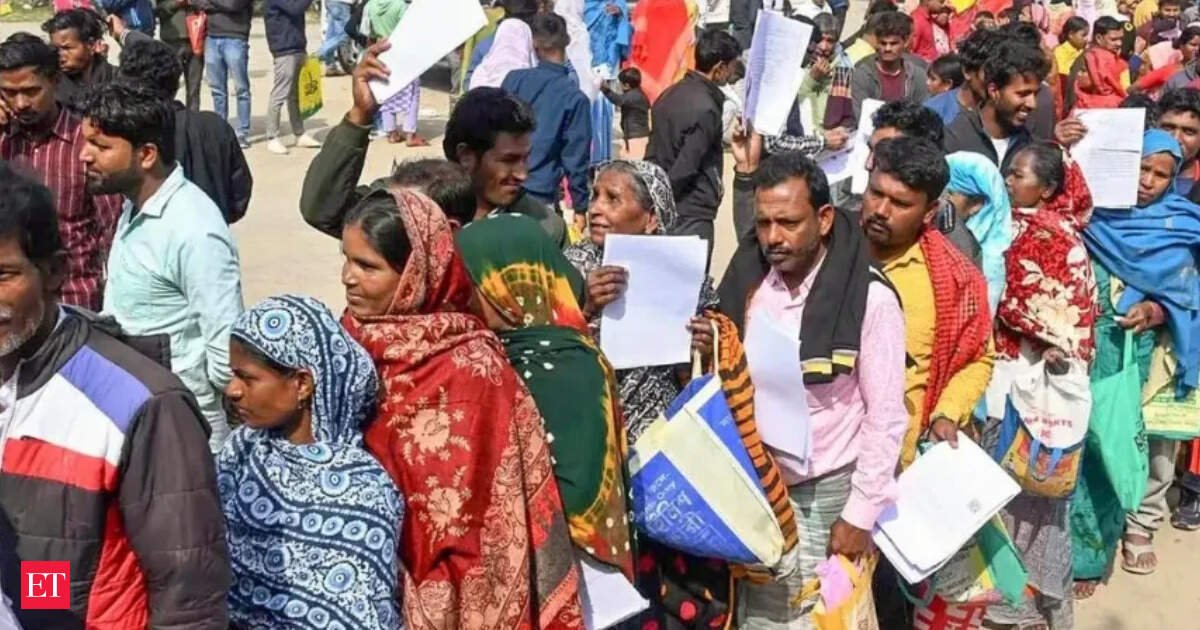
Two weeks after a midnight standoff in this otherwise obscure pocket drew national headlines, the landscape is starkly altered. In villages like Sadipur and Jotgopal Kagmari, doors remain shut through the day, and courtyards lie empty. The paradox is palpable: residents who fought a high-stakes battle to have their names restored during the SIR review are now prioritizing safety over suffrage.
Also Read: SIR in West Bengal: Will call for report from chief justice of HC today itself, says SC
“There are six members in our family. All our names were placed under adjudication, so my husband applied to restore our voting rights. He was never part of any violence. Still, police sent him a notice,” says Jalili Bibi of Sadipur. “Now, four of our names have been cleared, but he is too afraid to return, even to vote.” It is a sentiment echoed throughout the district, where voters exist on paper but are absent on the ground. Runa Laila, whose husband Md Asmaul Basar is on the run, adds: “He wasn’t part of any protest. He had gone to deliver an order. Someone has framed him and now the police are looking for him. Voting is no longer our priority. I just want him to be safe.”
A tightening dragnet
The catalyst for this exodus was the Supreme Court’s April 6 decision to hand over the probe into the assault on judicial officers to the NIA. The violence erupted when seven officers deputed for SIR adjudication work were confined for nine hours by an agitated mob. The fallout has been swift and politically agnostic. At least 52 people have been arrested so far, with NIA registering 12 cases that have cut across party lines. The dragnet has claimed an Indian Secular Front (ISF) worker, ISF candidate Maulana Shahjahan Ali Qadri, and close aides of Congress candidate Sayem Chowdhury. Chowdhury himself was detained for night-long questioning and had his mobile phone seized for forensic analysis. In a video message after his release, he alleged political vendetta, stating that “TMC, BJP and NIA have acted together to target us. People can see what is happening.”
The macro picture: political sparring vs. ground reality
While the village squares remain eerily quiet, the political rhetoric has reached a crescendo. Prime Minister Modi has characterized the incident as symptomatic of a “Maha Jungle Raj,” while the Trinamool Congress (TMC) has accused opposition parties of instigating the unrest during the SIR scrutiny. On the ground, the developmental narrative—roads, water, and healthcare—has been eclipsed by the security crisis. BJP candidate Nibaran Ghosh argues that the party has moved beyond the SIR row, stating that “People here need better roads, clean water, a dedicated women’s ward at the govt hospital, better schools and hostels. The sitting MLA did little beyond building personal wealth.”
Also Read: West Bengal SIR: SC to consider plea against EC’s decision to freeze electoral rolls ahead of polls
In contrast, TMC’s Md Najrul Islam blamed the BJP for using the SIR process to delete valid voters and accused Congress of fuelling fear, claiming “Congress is trying to help BJP by creating conflict among voters who are still eligible.” Caught in this high-stakes theater are residents whose original grievance now feels overshadowed. “We protested because our names were deleted,” says a young voter whose elder brother has fled. “Now, even if the name is there, the person is not.”
As dusk falls, the silence in Mothabari deepens. For a community that successfully challenged an SIR system that threatened to disenfranchise them, the coming election may pass with its voters missing—not erased by the system this time, but by the consequences of challenging it.


