



For nearly two decades, there was no sign of beavers along Strawberry Creek in Great Basin National Park. Then, in 2024, park staff discovered evidence that one had returned, several quaking aspen trees had been freshly cut down beside a beaver dam analogue, a human-built structure designed to imitate the ecological effects of a natural beaver dam. The discovery was particularly encouraging because the nearest known active beaver dams were more than five miles downstream. The animal apparently travelled a considerable distance before reaching the restored section of the creek. Even more remarkably, the beaver began using a landscape that humans had deliberately prepared to perform some of the functions beavers naturally provide. The National Park Service described the discovery as the first sign of the species in Strawberry Creek in 19 years. Although the animal apparently moved on without building a lodge, its arrival offered an unexpected indication that restoration was creating conditions suitable for a natural ecosystem engineer.
After the fire, Strawberry Creek no longer looked like the cold mountain stream its native trout needed
The story began with the 2016 Strawberry Fire, which burned 2,790 acres of Great Basin National Park. Among the areas affected were the riparian zones surrounding Strawberry Creek, an important mountain stream that provides habitat for Bonneville cutthroat trout and supports wider ecological processes. The fire removed vegetation along the creek, increased water temperatures and contributed to erosion and sedimentation. For the trout, the consequences were severe. Before the fire, Strawberry Creek had been the park’s most productive Bonneville cutthroat trout stream. Afterwards, fish disappeared from severely burned sections, while average population density fell sharply. The loss of streamside vegetation also meant less shade and cover, while erosion altered the creek’s physical structure. The restoration team therefore needed to rebuild habitat rather than simply replace individual plants.
Scientists rebuilt the creek by copying the work beavers naturally do
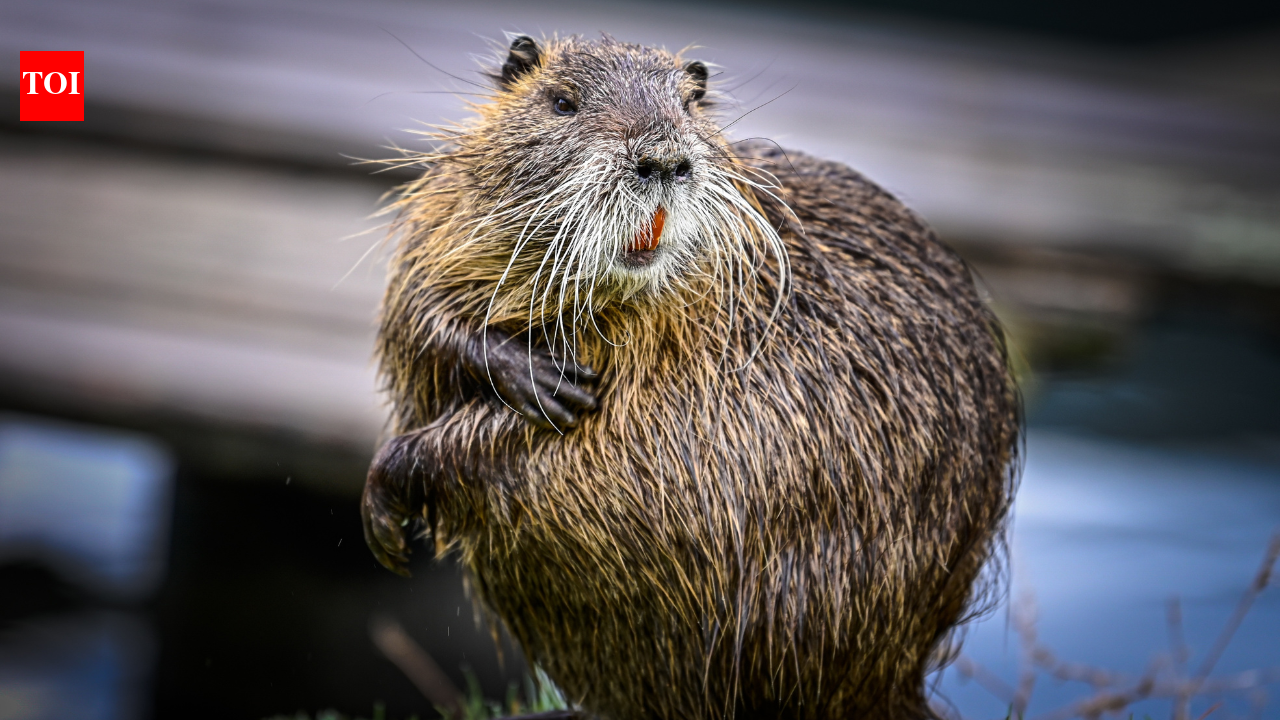
The beaver’s arrival offered a glimpse of what natural restoration could become (Image: Canva)
Beginning in 2021, the National Park Service and its partners introduced low-tech, process-based restoration, or LTPBR, to Strawberry Creek. Instead of reshaping the entire stream with heavy machinery, workers installed structures made from locally available wood and sediment. Among them were beaver dam analogues and post-assisted log structures. These structures were deliberately designed to imitate processes normally performed by beavers. They slow flowing water, capture sediment, raise the stream channel and encourage water to spread into the surrounding floodplain. They can also create deeper pools where fish can shelter and survive the winter. Between 2021 and 2024, restoration crews built and maintained 74 LTPBR structures along Strawberry Creek. The approach was intended not to freeze the stream into a particular shape, but to give natural processes the opportunity to continue the restoration.
The restoration began changing the water long before the beavers returned
The restoration produced measurable changes in Strawberry Creek. Monitoring between 2021 and 2024 showed that the number of captured Bonneville cutthroat trout more than doubled to 136, with fish found at eight of nine survey sites. Researchers estimated a density of 511 fish per mile, compared with much lower numbers immediately after the fire. The structures also increased slower-moving pool habitat, with the proportion of these areas rising by 10% between 2022 and 2024. One structure initially created a pool about three feet deep and eventually trapped nearly 500 cubic feet of sediment. By slowing and spreading water, the restoration work reduced erosion and created conditions where riparian vegetation could establish itself. The changes demonstrated why process-based restoration can be useful: instead of constructing a finished landscape, it creates conditions that allow the stream and its surrounding ecosystem to keep changing naturally.
Then, after 19 years, fresh teeth marks appeared on the creekside aspens
The clearest sign that the restored creek was becoming more suitable for beavers came in 2024. Park staff discovered several quaking aspen trees that had been felled by a beaver, providing the first evidence of the species in Strawberry Creek in 19 years. The nearest known active beaver dams were more than five miles downstream, suggesting that this was a wandering animal that had explored the restored habitat. There was an almost poetic detail to the discovery. The aspen trees the beaver cut down fell directly onto one of the newly constructed beaver dam analogues. The animal did not establish a lodge there and apparently moved on, so the discovery did not represent a permanent recolonisation. Nevertheless, the tree-cutting was an important ecological signal. A species that had been absent for nearly two decades had once again interacted with the creek.
The beaver’s arrival offered a glimpse of what natural restoration could become
Beavers are often described as ecosystem engineers because their dams physically alter streams and create conditions that benefit numerous other species. By slowing water and creating deeper pools, beaver dams can provide refuge for fish while also helping regulate how water moves downstream. They can trap sediment, raise local water tables and increase habitat complexity. That makes their return particularly valuable in a restoration project designed around natural processes. Humans can construct structures that imitate beaver dams, but an actual beaver can maintain and modify its environment in response to changing water levels, vegetation and food availability. The National Park Service therefore hopes that continued restoration and suitable conditions will encourage more beavers to return to Strawberry Creek and eventually take over some of the ecological work that restoration crews have begun.
What happened at Strawberry Creek shows why restoration does not end when the workers leave
The 2024 discovery did not mean Strawberry Creek had been completely restored, nor did it prove that a permanent beaver population had returned. But it offered something conservationists rarely get to see so clearly, an animal responding to a landscape that humans had deliberately repaired. The project began after fire had simplified the creek and damaged habitat for native trout. Rather than attempting to engineer every part of the landscape, restoration workers introduced structures that mimic natural processes and then allowed water, sediment, plants and wildlife to interact with them. The returning beaver became part of that process. For the National Park Service, the chewed aspens were therefore more than evidence of a returning animal. They were a glimpse of what restoration can ultimately achieve, creating conditions in which nature itself begins doing the restoration work.


