






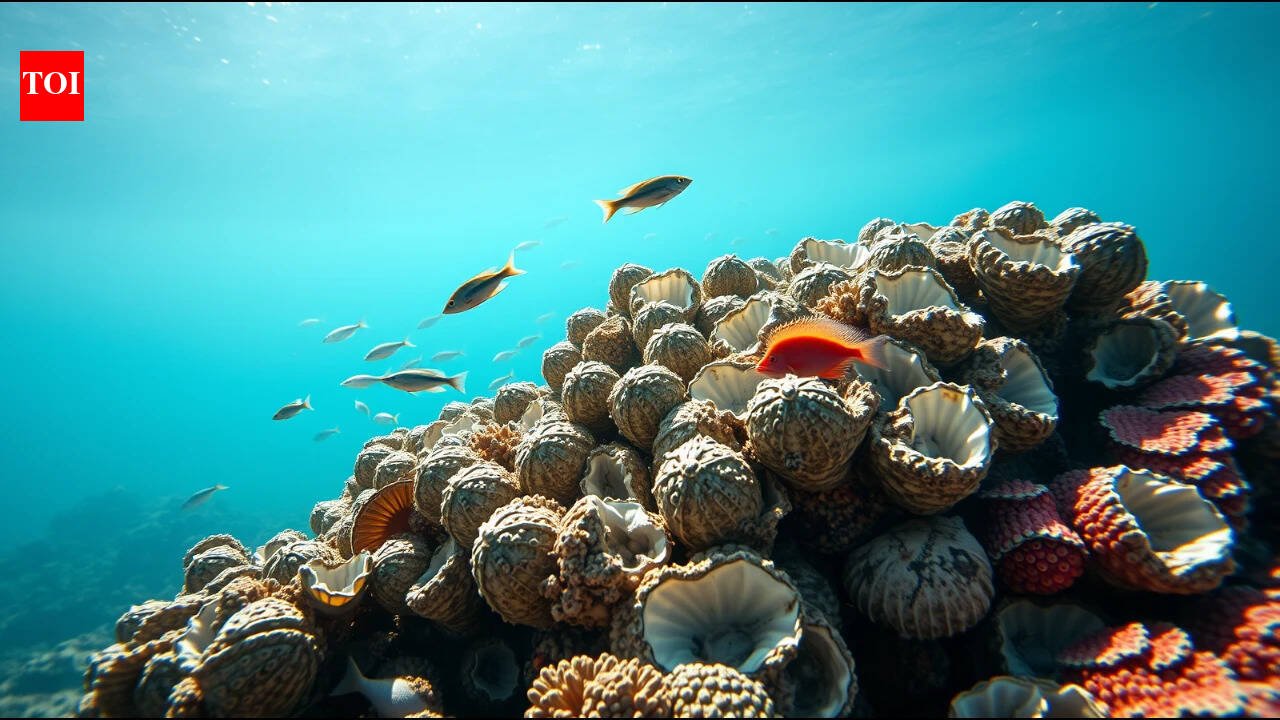
Australia’s oyster reefs once stretched extensively along the country’s coastline, providing food and habitat for marine life and supporting Indigenous communities for thousands of years. European colonisation brought widespread destruction, with oyster shells harvested on a huge scale and burned to produce lime, while disease, fishing pressure and habitat loss further reduced reef ecosystems. By the modern era, less than 10% of Australia’s original shellfish reef habitat was estimated to remain. In 2019, the New South Wales Government began restoring oyster reef habitat in Port Stephens, an estuary that had once supported extensive natural oyster beds. Rock was placed across 7.5 hectares of previously bare seafloor, creating hard surfaces for naturally occurring oyster larvae to settle on. The restoration began producing striking results within a few years: millions of oysters had colonised the reef, and researchers estimated that the growing population could filter about 9 million litres of seawater every hour.
How rock gave oyster larvae a place to settle again in Port Stephens
According to NSW Marine Estate, the Port Stephens project involved constructing a reef base across 7.5 hectares of previously bare seafloor. The choice of material was important. Oyster larvae, or spat, need a hard surface on which to attach before they can grow and eventually form reef structures. Bare sand and soft sediment do not provide the same conditions. Rather than manually populating the entire reef with oysters, researchers designed the restoration so naturally occurring larvae could colonise the newly placed rock. Construction was also timed around periods when oyster settlement would naturally be strongest. The approach meant the reef could begin rebuilding itself through natural recruitment, while researchers monitored how quickly oysters established and how the developing habitat affected the surrounding ecosystem.
Why millions of oysters filtering water matters
Oysters are more than reef-building animals. As they feed, they remove suspended particles and nutrients from the water, meaning large oyster populations can contribute to cleaner, healthier estuarine environments. Researchers studying the Port Stephens reef estimated that the restored oyster population could filter approximately 9 million litres of seawater every hour. That is roughly equivalent to more than three Olympic-sized swimming pools passing through the oysters’ filtration system every hour. The developing reef also provides physical habitat for other marine organisms. As oysters build up on the rock, they create a complex three-dimensional structure that can offer shelter and feeding areas for fish and other species. That means the restoration’s value is not measured simply by the number of oysters that have returned. The aim is to recreate an entire ecological system in which oysters form the foundation for a much broader community of marine life.
How Port Stephens fits into Australia’s oyster-reef restoration
The Port Stephens project is part of a wider effort to restore Australia’s lost shellfish reefs. These habitats were once widespread but have declined dramatically because of historical harvesting, habitat destruction, disease and other pressures. Restoration projects such as this one demonstrate why rebuilding the physical foundation of a reef can be so important. Once suitable hard substrate is available, naturally occurring oyster larvae can settle, grow and reproduce, allowing the reef to develop organically.


