



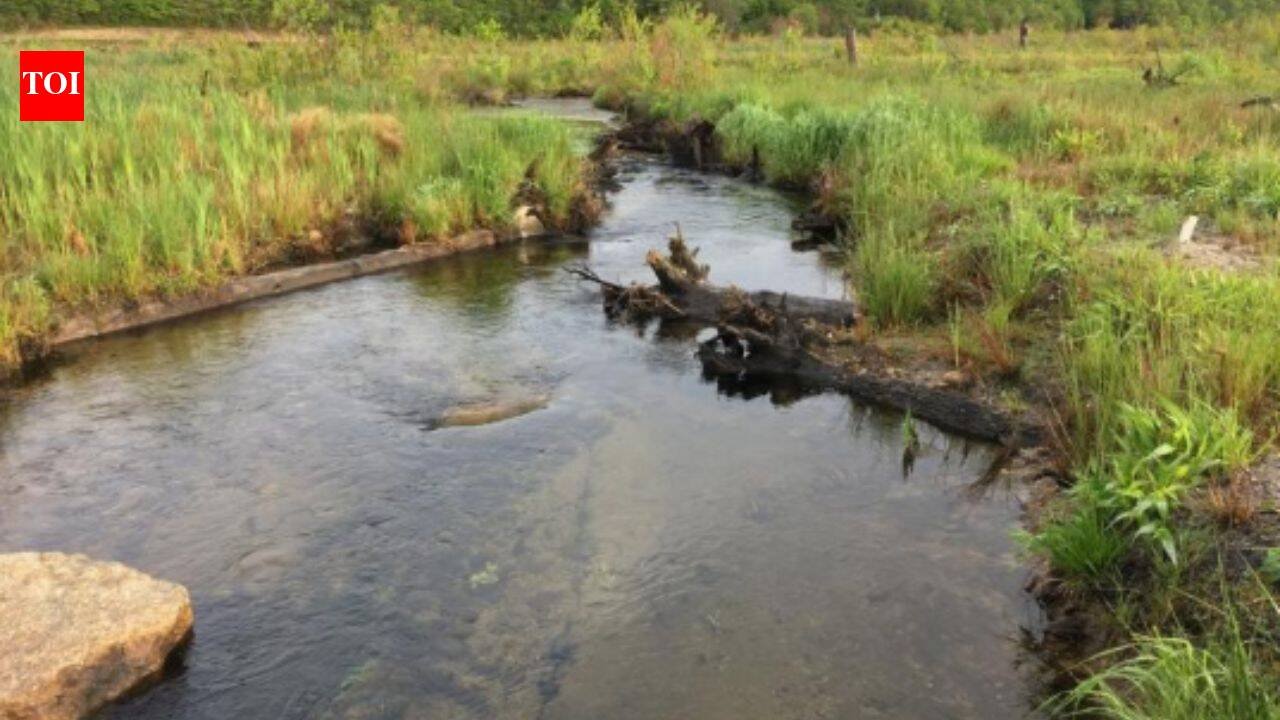
For more than a century, Tidmarsh Farms in Plymouth, Massachusetts, was used to grow cranberries. In 2010 it started a transofrmation that slowly turned it back into freshwater wetland.Tidmarsh Farms is a 600-acre property near the coast. According to NOAA Fisheries, cranberry farming had changed the land by draining its natural wetlands, cutting trees, straightening streams and putting barriers in place to control water. Sand was also repeatedly added over the natural peat, creating a thick layer over the original wetland.The restoration could not return the property exactly to what it had been before cranberry farming. However, work at Tidmarsh East eventually restored 225 acres of wetland habitat and more than three miles of stream channel.Before the restoration, fish such as alewife and blueback herring who were rarely seen in the former cranberry bog, were now swimming beyond barriers that had blocked their movement for more than 100 years.
Restoring the wetland
The land had been used as a cranberry bog since the 1890s. Like other cranberry farms in southeast Massachusetts, Tidmarsh was created by replacing native habitat. Forested wetlands were cleared, the swamp was drained and streams were changed into straight channels.The way the farm was managed also changed the soil. Sand was periodically placed over the existing peat, compressing it and altering the shape of the land. Barriers were built to trap and control water. These barriers also stopped fish from moving upstream to reach their habitat.By the time Tidmarsh East was taken out of production in 2010, about two feet of sand had been placed over the peat. Removing all of it was not possible. Therefore, the restoration team used the sand to create mounds and gullies that formed the surface of the restored wetland.Excavators also dug three miles of new stream channels. Instead of water moving quickly through straight, man-made channels, it now flows more slowly. The restored streams also have cooler water conditions that are suitable for fish.
Excavators dug three miles of new channels, slowing water flow through the restored wetland. (AP photo)
Fishes return
One of the major changes came from removing dams and other barriers across the property. This connected the headwaters, where streams begin, to the sea for the first time in more than a century.The restored land was also connected with nearby protected areas, creating a habitat corridor for fish and wildlife.Thousands of trees were brought in to create a more diverse habitat. More than 20,000 native plant species were planted during the restoration work.The results became visible much faster than some researchers had expected. Within a year of restoration work beginning, the sandy soil started producing new growth.According to Associated Press, a 2025 study of sites including the Foothills Preserve in Plymouth found that the sand at Tidmarsh contained long-dormant native seeds. These seeds could germinate when the sand was mixed with peat.Another study published in 2021 looked at Tidmarsh and other restored sites. It found that water retention, soil health and microbial communities improved rapidly within a few years.Tidmarsh is now known as Tidmarsh Wildlife Sanctuary, with Mass Audubon managing most of the land. Visitors include birdwatchers, schoolchildren and local residents who remember the area as a cranberry farm.
Cranberry Bog Restoration Program
The restoration at Tidmarsh has also created a long-term research project. Living Observatory, a nonprofit group brings together researchers, artists and others to study how former cranberry farms recover.Cameras and sensors installed across the site collect information about the changing wetland. The sensors monitor conditions including soil moisture and temperature, while cameras provide a record of the changes. The data is publicly available and has become a resource for researchers studying wetland restoration.The success of Tidmarsh has also helped the state launch its Cranberry Bog Restoration Program. The programme can provide technical assistance and connect farmers with federal funding and buyers interested in conservation.So far, the state has completed construction on nine restoration projects covering about 500 acres and 10 miles of stream habitat. Another 11 projects covering a further 500 acres are in the planning stage.The need for such projects has increased as cranberry farming faces difficulties. According to the US Department of Agriculture, the number of retired cranberry farms in Massachusetts increased by about 40% between 2017 and 2022.


