



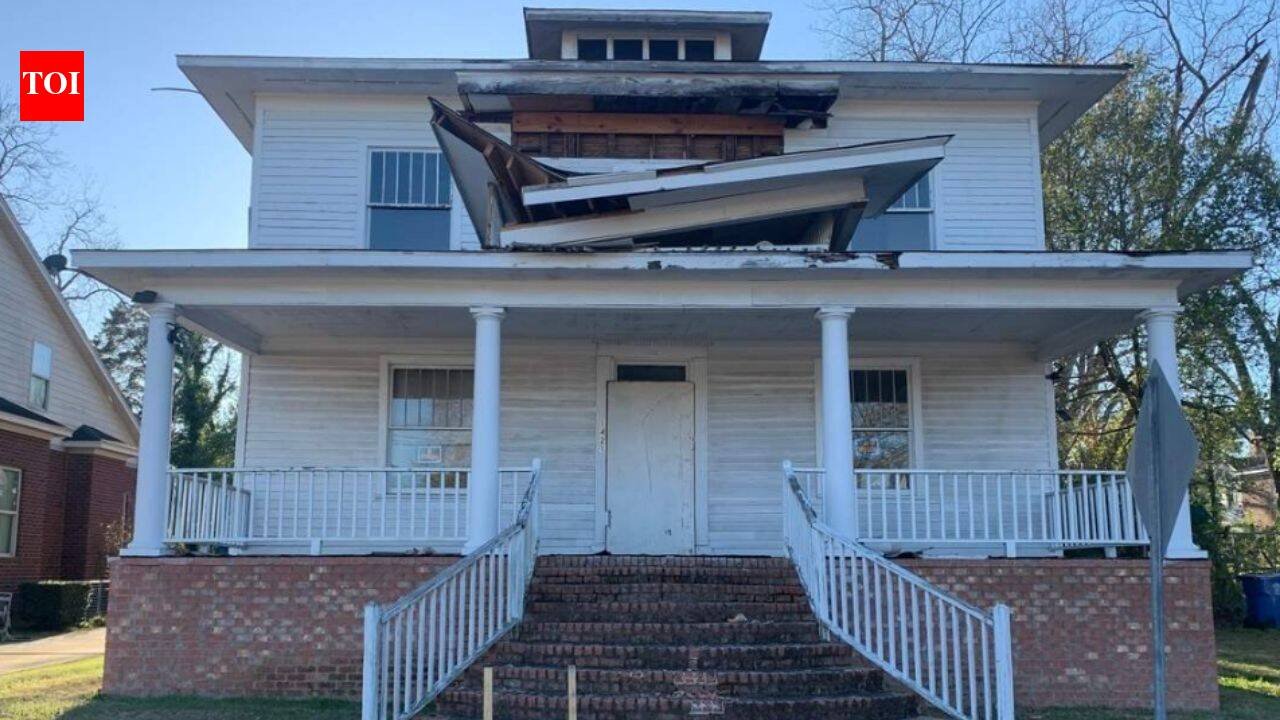
A historic house in Columbia, South Carolina, that was once linked to generations of Black community and civil rights leaders is now being demolished after years of efforts to save it failed, AOL reported.The Robert Weston Mance House was built in 1903 and was moved two blocks in 2008 by Allen University to make room for new student dormitories. The university had promised to restore the house after moving it, but the restoration never happened.Nearly two decades later, the two-storey American Foursquare house on Heidt Street has deteriorated badly. The city has formally declared it an unsafe structure, and demolition work has now begun.The demolition follows a long legal dispute between Allen University and the city over whether the house should be torn down. The university had argued that restoring the property would be too expensive, while preservation officials said the building was still structurally sound enough to save.
Links to Columbia’s Black history
The house became known as the Mance House after Rev. Robert Weston Mance bought it in 1922 while serving as president of Allen University. He lived there with his family, including his son, Dr Robert Weston Mance Jr.Mance Jr later became a physician and educator and served as superintendent of Waverly Hospital. The hospital was part of a wider Black community in Waverly, where African American residents built businesses and institutions during segregation.The neighbourhood included the Waverly Five & Dime, which was run by George Elmore. Elmore was among the men who successfully sued for the right of Black South Carolinians to vote in primary elections.Waverly Hospital was founded by African American doctor Norman A. Jenkins to provide medical care to Columbia’s Black community during segregation. The hospital later became part of Good Samaritan-Waverly Hospital.Allen University and Benedict College also became important institutions in the community. The Waverly Historic District was added to the National Register of Historic Places in 1989 and became part of the National Park Service’s African American Civil Rights Network in 2021.
The Robert Weston Mance House was built in 1903 and was moved two blocks in 2008 by Allen University to make room for new student dormitories.
University promised to restore house
The Mance House originally stood at the corner of Pine and Hampton streets. In 2008, Allen University was carrying out an $18 million dormitory expansion and needed the property moved.The house was relocated to 1421 Heidt St, around half a mile from the university’s core. As part of the arrangement, the university agreed to restore the building to a liveable condition so that future university presidents could live there.The restoration promise was also linked to a financial guarantee from the federal Department of Education for the dormitory project and the relocation effort.At the time, then-university president Charles Young said, “The Mance House has been an important part of Allen’s history, and we are proud we have been able to save it.”But after the move, the promised restoration did not happen. The house remained empty. Before being relocated, it had been used for storage and office space.Over the years, its windows were broken, paint began to chip and code violations accumulated. By the time demolition became a serious issue, the building had been left vacant for years.Historic Waverly neighbourhood association president Ronald Davis said he understood the importance of the house but was concerned about its condition and safety.“I understand the significance of the building and how important it is, and history is important, but safety is my top priority as president of Historic Waverly, and I will not waver on that in any way,” Davis told The State.Davis said he had seen college students and homeless people entering the property. He also said he feared the roof could collapse or someone could start a fire.“Allen University had an opportunity to prevent the house from reaching that point. They did absolutely nothing to fix that building,” he said.
Demolition attempt and court battle
The dispute came into the open in 2023, about 15 years after the house was moved. Neighbours saw a wrecking crew at the property and part of the roof had already been removed.However, no demolition permit had been issued. Allen University was ordered to stop the work and seek formal approval from the city.In February 2023, the city’s Design/Development Review Commission rejected the university’s request for a demolition permit.City preservation staff said the house had suffered damage because of years of neglect, but they did not consider it beyond repair. After visiting the property, staff wrote that it “appeared to be structurally sound” and was not in as serious a state of disrepair as many other historic buildings.Allen representatives told the commission that restoring the property would be expensive. One firm estimated that the work would cost more than $500,000.Eric Gamble, who was Allen’s vice president of planning and information technology at the time, told the commission that the university had to make decisions based on its own needs.“Allen University isn’t in the Waverly district to hurt it, but we have to make decisions that are applicable to the university,” Gamble said.He also told the board that Allen’s CEO and board of trustees had voted to demolish the property.The commission voted 4-1 against the demolition permit. Allen University then sued over the decision, and the dispute remained in court for more than two years before the parties agreed to dismiss the case.The city eventually approved a demolition permit this summer, allowing the university to proceed with taking down the house.


