






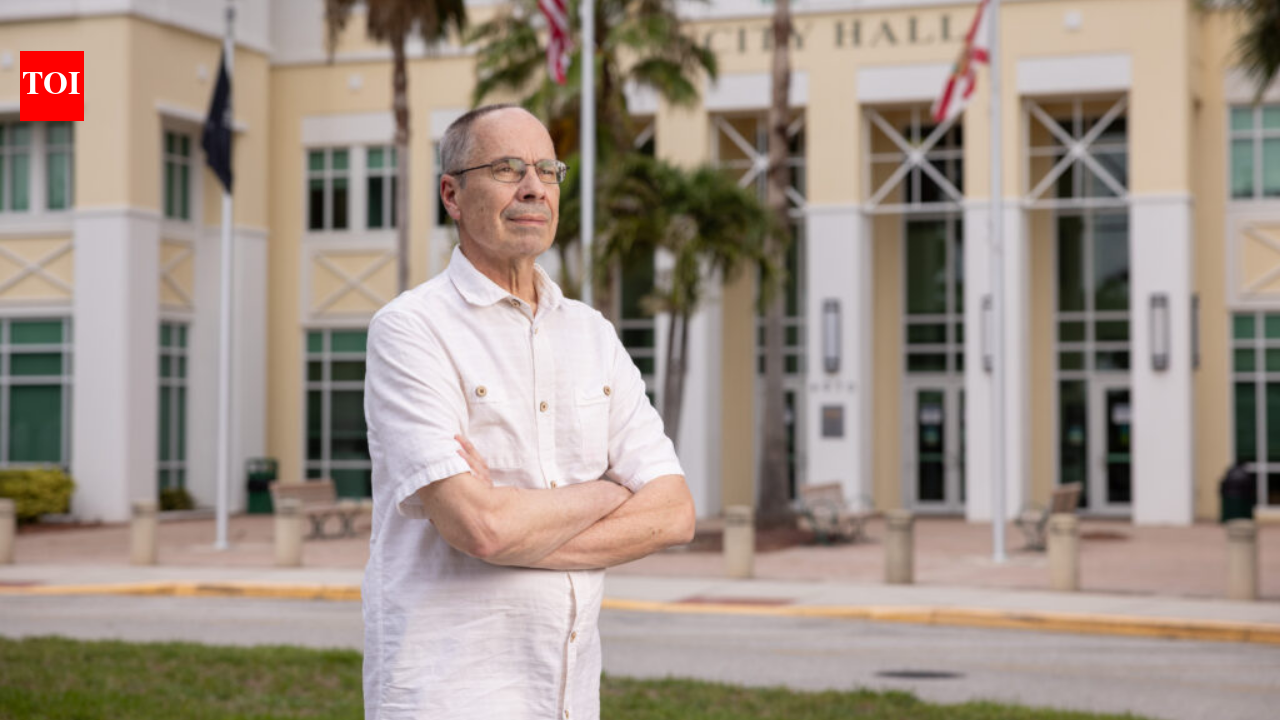
A retirement plan that began with a vacant Florida lot has now become the subject of a federal lawsuit. In 2006, Rhode Island resident Art Yatsko bought a residential lot in North Port, Florida, intending to eventually build a home there. Eighteen years later, as he prepared to begin construction, he learned that the property had been rezoned and no longer permitted a new single-family residence. According to the Institute for Justice, which represents Yatsko, the zoning change prevented him from building the home he had planned for years. Yatsko filed a federal lawsuit against the City of North Port on June 9, 2026.
A retirement home planned for years
Yatsko purchased the vacant property on Kumquat Avenue in North Port in 2006 after seeing an advertisement for residential lots being offered at auction. According to the lawsuit’s description, he envisioned eventually moving from Rhode Island to Florida after retirement and building a modest two or three-bedroom home. The property appealed to him because it was in a residential area and had the characteristics he wanted for his future home. He also planned to have a swimming pool, garage and space to park a small boat.For years, the lot remained undeveloped. Yatsko continued to own the property, paid taxes on it and periodically travelled to Florida to check on it. The plan was not immediate construction but a long-term retirement project. By 2024, however, he was ready to turn that plan into reality. He travelled to North Port and met with builders at the property to discuss construction and obtain estimates. It was during that process that he learned about the zoning change.
The zoning rules had changed
North Port had been revising its zoning and land-use regulations as part of an effort to encourage more commercial development. According to the Institute for Justice’s account, city officials were concerned about the composition of North Port’s tax base and sought to increase commercial activity. The city identified certain areas as “Activity Centers”, including one near Yatsko’s property, where commercial development would be encouraged. The resulting zoning designation affected vacant residential lots in the area.Yatsko’s property was placed in the Commercial Office Regional (COR) zoning district. Under the new rules, a new single-family residence was no longer permitted on his lot. That created an unusual situation: existing houses remained in the surrounding neighbourhood, but Yatsko could not build a new single-family house on his vacant parcel.
North Port had been revising its zoning and land-use regulations as part of an effort to encourage more commercial development (Image Credit: Institute for Justice)
What can be built on the property?
The dispute is not simply about whether development is allowed on the property. The central issue is which types of development the new zoning permits. According to the Institute for Justice, single-family homes are prohibited in the affected zoning district, while other uses are permitted or potentially available through different approval processes.The legal filing and the Institute for Justice’s case materials point to the possibility of uses that are considerably different from the residential home Yatsko had planned. The organisation says the zoning framework could allow uses such as a nightclub or shooting range, while a conventional single-family home is prohibited. Some multifamily residential uses may also be possible with special permission. For Yatsko, however, those alternatives do not address the purpose for which he purchased the property. His plan was to build a home similar to the single-family residences already found in the neighbourhood. The dispute therefore centres on whether North Port’s zoning restrictions can prevent that particular use of the vacant lot.
Why the city changed the zoning
North Port’s broader planning strategy is an important part of the case. The Institute for Justice says city officials wanted to diversify the city’s tax base by increasing commercial activity. Its case materials cite a city benchmark calling for commercial activity to rise from roughly 8% of the tax base to at least 18%. The city therefore created areas where commercial uses would be encouraged as part of its development strategy. Yatsko’s lawyers argue that the new zoning goes beyond simply permitting additional commercial development. They contend that it also prevents some existing residential uses, including the construction of a single-family house on Yatsko’s vacant property.The lawsuit also argues that the surrounding area lacks the infrastructure and development conditions needed to become the type of commercial centre envisioned by the zoning plan. Those are allegations made by Yatsko and his legal team; the city will have the opportunity to respond through the federal litigation.
The constitutional challenge
Yatsko’s lawsuit was filed in the U.S. District Court for the Middle District of Florida on June 9, 2026, under the case name Arthur Yatsko v. City of North Port, Florida. The docket identifies the action as a civil-rights case brought under 42 U.S.C. § 1983, with a jury demand.The complaint challenges North Port’s zoning restrictions under the U.S. Constitution. Among the arguments described by the Institute for Justice is that the city’s prohibition on a single-family home violates Yatsko’s due-process and equal-protection rights. His attorneys rely in part on the U.S. Supreme Court’s 1928 decision in Nectow v. Cambridge. That case involved a zoning restriction affecting a property where the proposed use was consistent with surrounding development. Yatsko’s lawyers argue that the principles from that decision apply to the North Port dispute. The lawsuit does not mean Yatsko has already established that the zoning is unconstitutional. The claims will be considered through the federal court process.
A dispute over one vacant lot and a wider zoning question
The case highlights the effect that changes to local zoning rules can have on property owners who purchase land under one set of development expectations and later face different restrictions. Yatsko bought the North Port lot in 2006 and held it for nearly two decades before attempting to build. By the time he was ready to move forward, the city’s revised zoning rules had changed what could legally be constructed there.For now, the property remains at the centre of an ongoing federal case. The lawsuit asks the court to examine whether North Port’s restrictions on Yatsko’s planned single-family home are constitutionally permissible. What began as a long-term retirement plan has therefore become a legal dispute over zoning, property use and the limits of a city’s authority to regulate development.


