









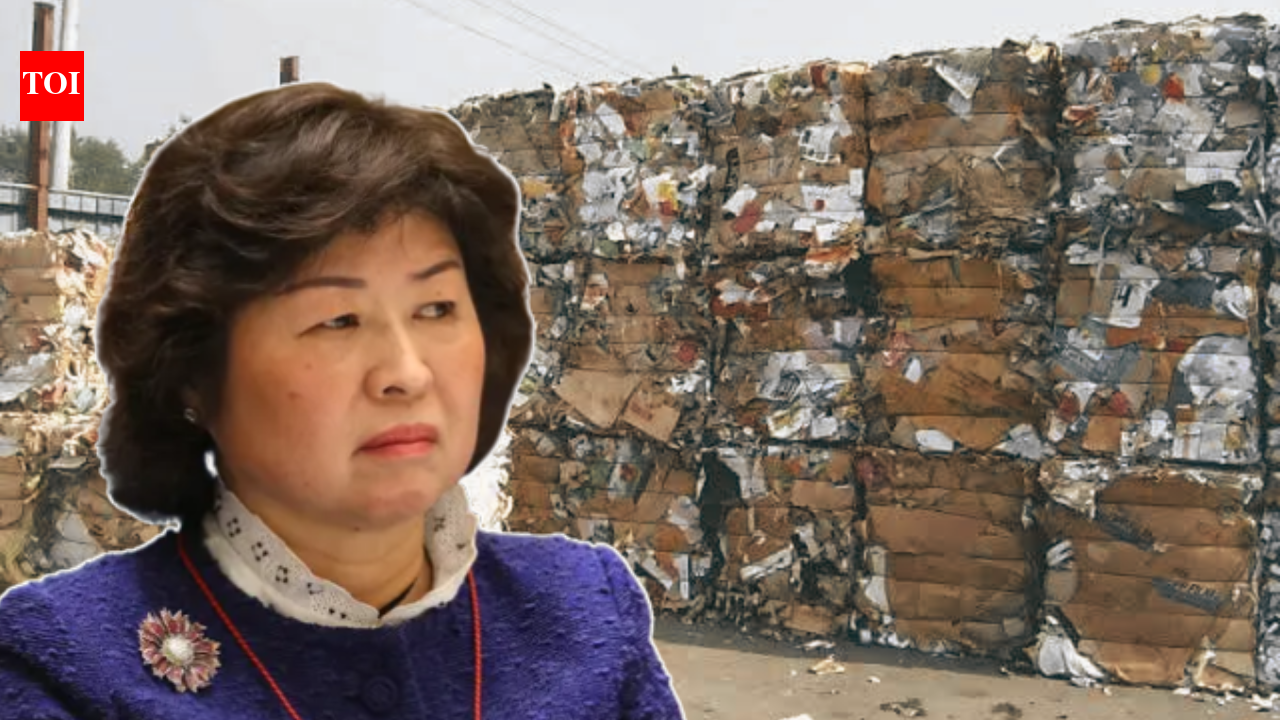
In 1985, business tycoon Zhang Yin started a paper-trading business in Hong Kong with about 30,000 yuan, or 3,800 US dollars. More than two decades later, she would be named China’s richest person, with an estimated fortune of $3.4 billion on the 2006 Hurun Rich List. The material at the centre of her business was something most people had already thrown away: waste paper. Zhang eventually built a business that collected recovered paper in the United States, shipped it to China and used it as raw material for paper and packaging products.
She saw value in something others discarded
According to a 2007 profile in The New York Times, Zhang entered the paper trade when China was facing a shortage of paper-making raw material and its manufacturing industry was beginning to expand. In Hong Kong, she learned about the waste-paper business. Zhang recalled advice she had received from a man in the industry. “Wastepaper is like a forest. Paper recycles itself, generation after generation,” she told the NY Times.She later arrived in Hong Kong from Guangdong in 1985 and started her own company with 30,000 yuan after turning down a job offer. She began buying scrap paper through intermediaries in the United States. The business soon showed her that Hong Kong alone would not be enough. China’s growing manufacturing sector needed cardboard and packaging, while the United States had a much larger supply of used paper. So Zhang looked towards America.
In 1990, she moved to Los Angeles
The waste paper was used to make cardboard needed by the country’s growing export industries.
As reported by The LA Times, Zhang began collecting waste paper in Los Angeles in 1990 and shipping it to China, where it was used to make cardboard needed by the country’s growing export industries. Her company, America Chung Nam, was already on track to ship about 3 million tons of waste paper in 2002, almost all of it to China. The operation was initially small.Zhang and her husband had driven around the United States in a used Dodge minivan, approaching garbage dumps for scrap paper. The couple had formed their US recycling company in the 1990s to collect paper and ship it to China. Zhang later described how difficult those early years were. Speaking to reporters in Hong Kong in November 2006, she said: “I had to learn from scratch. The business was just my husband and me, and I didn’t speak a word of English.” “It was my hard work that helped me achieve my success,” she added.
The shipping problem had an unusual solution
There was one major difficulty with Zhang’s business: waste paper was bulky and had to travel from the US to China. But the existing trade between the two countries offered an opportunity. Chinese ships were carrying manufactured goods to the United States. Some vessels had considerable unused space on their return journey. According to The Economic Times, Rupert Hoogewerf, publisher of the Hurun Report, said Zhang secured low shipping rates because many vessels were almost empty after unloading their cargo in the US. That helped make the long-distance movement of waste paper commercially viable.The basic chain was straightforward: recovered paper collected in America went to China, where paper manufacturers could process it into new packaging material. Chinese container ships commonly unloaded goods in US ports and returned to China carrying American waste paper.
‘America Chung Nam’ became a major exporter
The company Zhang built in the United States was ‘America Chung Nam.’ The company was the biggest waste-paper exporter in the US at the time. It reported that America Chung Nam had sales of $238 million in 2001 and that its export volume had put it at the top of the Journal of Commerce’s list of the nation’s biggest exporters. The company maintained that position for 18 consecutive years. By then, Zhang had identified a much larger opportunity. She did not want to remain only the company collecting and exporting the raw material. She wanted to manufacture the paper herself.
She moved from recycling into manufacturing
Her companies were now involved in both sides of the process: sourcing recovered paper and manufacturing packaging paper in China.
In 1995, Dongguan Nine Dragons was established to manufacture containerboard in Dongguan, Guangdong, according to Nine Dragons’ own listing documents filed with the Hong Kong Stock Exchange. The company’s first paper machine began production in July 1998. Its design capacity was 200,000 tonnes a year. The expansion was rapid. Nine Dragons’ listing document says a second paper machine, with a design capacity of 400,000 tonnes a year, began production in June 2000. The company’s manufacturing capacity subsequently rose to 3.3 million tonnes a year by the time of its 2006 listing documents. This is the point at which Zhang’s business moved beyond simply collecting America’s discarded paper. Her companies were now involved in both sides of the process: sourcing recovered paper and manufacturing packaging paper in China.
China’s export boom created a huge market for cardboard
China’s manufacturing and export industries were expanding rapidly, creating demand for cardboard and containerboard used to package goods. Chinese companies making products ranging from computers to bicycles were demanding more cardboard boxes, while China’s paper industry was expanding to meet that demand. A Forest Trends report published in 2007 also found that waste paper accounted for about 60% of the fibre used to manufacture paper and paperboard products in China at the time. It said about three-quarters of China’s waste-paper fibre was used to manufacture corrugated cardboard boxes for Chinese goods shipped to overseas markets. That gave Zhang’s business a direct connection to China’s export economy. American waste paper could become Chinese packaging, and that packaging could then be used for goods being exported around the world.
The next major turning point came in 2006
Zhang appeared at the top of China’s Hurun Rich List in 2006.
Nine Dragons Paper was listed on the Hong Kong Stock Exchange on March 3, 2006, according to the company’s annual report. Seven months later, Zhang appeared at the top of China’s Hurun Rich List. Hurun’s own 2006 report said that 49-year-old Zhang Yin had wealth of 27 billion yuan, making her China’s first female richest person. It also said Nine Dragons had a market value of 37.5 billion yuan and that Zhang owned 72% of the company. An AFP report put her fortune at approximately $3.4 billion. She had risen from 36th place the previous year to No. 1, according to the report. It also described her as the first woman to top China’s annual rich list.Speaking to reporters in Hong Kong in November 2006, she described how she viewed it differently from most people: “Other people saw scrap paper as garbage, but I saw it as a forest of trees.” She also told reporters, “Chinese manufacturers were desperate for scrap paper.” “All I did was help fulfill a need,” she added.
Where is Zhang Yin now?
According to Nine Dragons Paper’s current corporate information, she is still the company’s Chairlady, a position she has held since 2006. According to Forbers, her current net worth is around $1.7B (on Sep 23). Zhang’s husband Liu Ming Chung, the CEO of Nine Dragons, is also a billionaire.


