



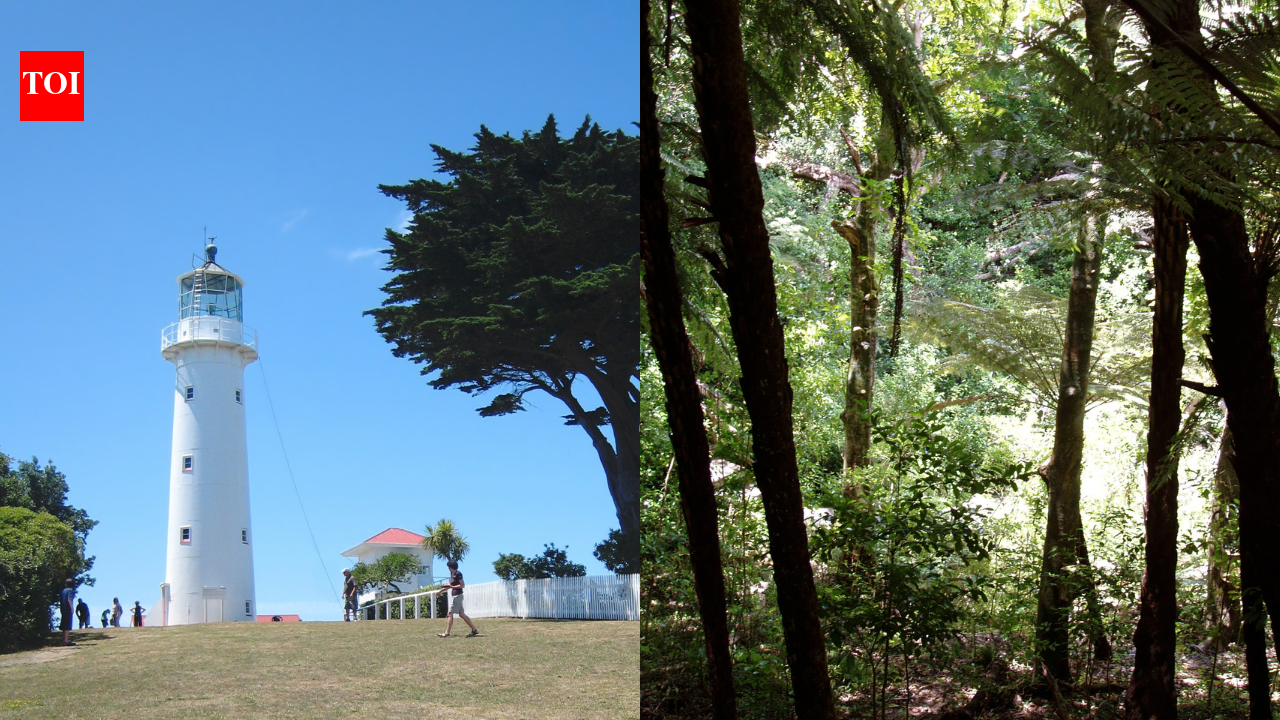
Ray Walter arrived on New Zealand’s Tiritiri Matangi Island as a lighthouse keeper in 1980, when the job was already approaching its end. The country was automating its lighthouses, and in 1984 Walter’s position disappeared when the Tiritiri Matangi light was automated. He did not leave the island. Instead, he moved into conservation work and became closely involved in a project to restore land that had spent decades under farming. By the time Walter retired from the Department of Conservation in 2006, he had spent 26 years on Tiritiri Matangi. During that period, thousands of volunteers planted 283,000 native trees as part of the island’s restoration, according to the Supporters of Tiritiri Matangi.The timing of Walter’s arrival coincided with a major change in the island’s future. Tiritiri Matangi, in the Hauraki Gulf near Auckland, had been deforested and used for pastoral farming. Farming was abandoned in 1972, but the land did not quickly return to forest. A 2013 paper in the New Zealand Journal of Ecology reported that only about 20% of the island still had grazed secondary forest when farming ended. The rest included pasture and other altered vegetation. Scientists and conservationists began developing plans for active restoration rather than waiting for natural regeneration alone. The project that followed involved rebuilding native vegetation, controlling introduced species and later reintroducing native animals. The paper, “Changes in the wild vascular flora of Tiritiri Matangi Island, 1978–2010”, documents how the island’s vegetation changed over the following decades.
Tiritiri Matangi Lighthouse | Wikimedia Commons
The lighthouse job ended, but conservation work beganWalter was in a useful position when the restoration project began to take shape, since he already lived on the island and knew its infrastructure and day-to-day conditions. The Supporters of Tiritiri Matangi says he became a supervisor for the Island Conservation Project after losing his lighthouse position and took over management of the project in 1985. He also served as a ranger and later worked on other island projects. His wife, Barbara Walter, was also involved in the restoration effort.Seeds were collected and plants were raised before planting across land that had previously been farmed. The restoration was not the work of one person planting hundreds of thousands of trees. Walter helped organize and manage a much larger community effort that brought volunteers to the island over several years. The scale of that work can be seen in the official figures. The Supporters of Tiritiri Matangi credits the project with planting 283,000 trees and says Walter’s legacy can be seen in the forest that now covers much of the island.The large planting program was concentrated between 1984 and 1994, rather than spread evenly across Walter’s entire 26 years on the island. The New Zealand Journal of Ecology paper puts the total at about 280,000 native trees and shrubs planted during that decade, a rounded figure based on its review of the restoration program. It found that the planted forest eventually covered 64% of the island and replaced much of the former pasture and bracken fern cover. The article also documented broader ecological changes, including the eradication of Pacific rats in 1993 and the translocation of 11 native bird species and three native reptile species.From open farmland to a growing forestThe planting program did not simply recreate the exact forest that had existed centuries earlier. Restoration managers had to work with the species available, the island’s remaining vegetation and the practical challenges of restoring heavily altered land. The scientific review found that the project produced major changes in the island’s flora, but it also recorded complications. More than two-thirds of the additions to the documented flora were exotic species, and more than half of those were being controlled because of their potential to become weeds. That finding is important because restoration did not freeze the island at a single point in time. New plants continued to arrive, and managers had to monitor which species were spreading. The same paper noted that some previously recorded plant species appeared to have disappeared. Restoration therefore involved continued management rather than a one-time planting campaign.Walter remained on Tiritiri Matangi through these changes. New Zealand’s Department of Conservation records the lighthouse’s separate technological history: the light was changed in 1984, and by 1990 it was solar powered and fully automated. The island’s lighthouse era had ended, but Walter continued working there as a ranger. The Department of Conservation’s history of Tiritiri Matangi also traces the island’s earlier farming and maritime past.
Tiritiri Matangi Island in 1921 | Wikimedia Commons
What happened after Ray Walter retired?Walter retired in 2006 after his long association with the island, and he died in 2023. The Supporters of Tiritiri Matangi described him as having served as lighthouse keeper, ranger, conservation project supervisor and committee member. The forest he helped establish has continued to be part of a larger conservation program. By 2010 the planted forest covered much of Tiritiri Matangi and natural regeneration was also taking place in some areas. The island’s ecological recovery has required continued monitoring of vegetation, invasive species and wildlife.The strongest figure attached to Walter’s years on the island remains the 283,000 trees credited by the Supporters of Tiritiri Matangi to the restoration effort he helped manage. He arrived in 1980 to keep a lighthouse. When automation removed that job four years later, he stayed, and his work on the island continued until his retirement in 2006.


