



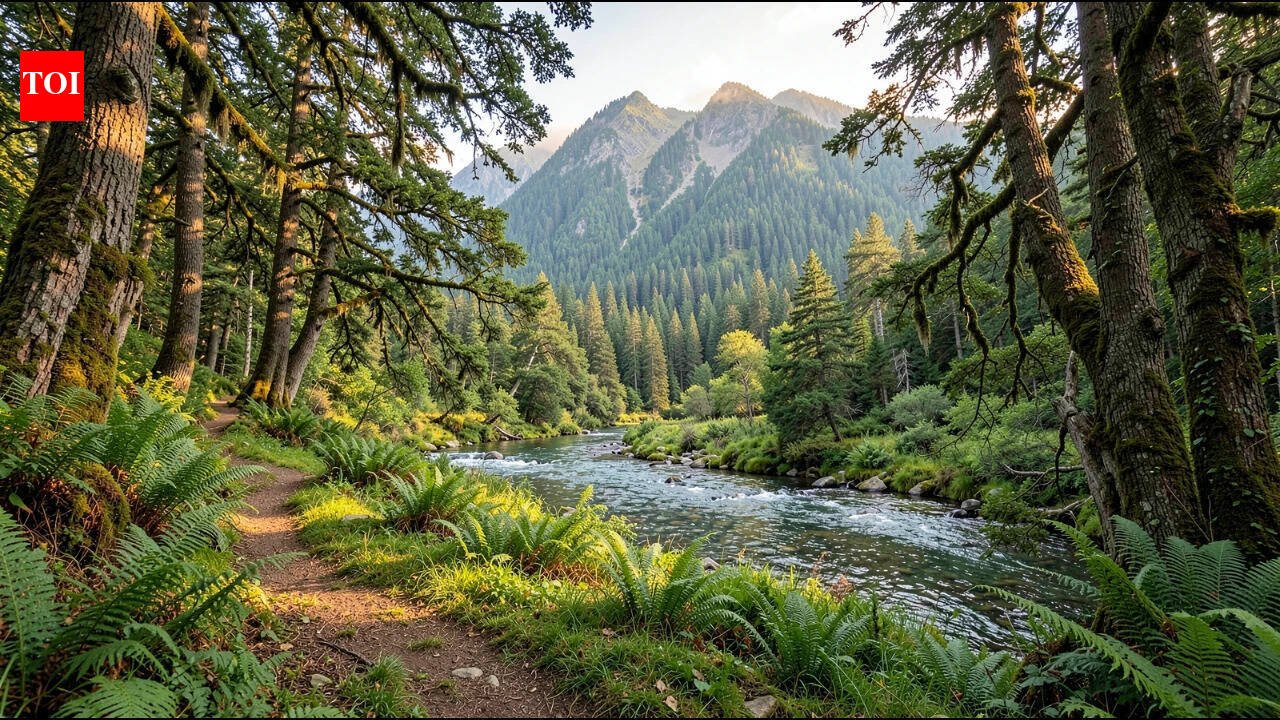
On 17 June 1972, Ashley Ann Bullitt, Scott Bullitt and Jill Hamilton Bullitt transferred 590 acres of family land on Squak Mountain to Washington state for a wilderness park. Their gift followed decades of land purchases by their father, Stimson Bullitt, who had assembled a property of more than 600 acres and built a vacation cabin on the mountain. Rather than retain the land for private use or allow it to be developed, the siblings chose to protect it for public enjoyment under strict conditions. The donation laid the groundwork for Squak Mountain State Park, which later expanded through additional land purchases and conservation efforts. The history of the park reflects both the family’s decision and the work of local hikers, conservation advocates and public agencies that helped safeguard the surrounding foothills.
How the Bullitt family acquired land on Squak Mountain
Stimson Bullitt began acquiring property on Squak Mountain during the 1940s, gradually bringing separate parcels together into a large family holding. He came from a prominent Pacific Northwest family associated with timber and broadcasting. In 1952, he built a 2-room vacation cabin on the mountain, providing a place for his family to spend time away from the city. The property eventually covered more than 600 acres around Squak Mountain’s 2,024-foot summit. In the early 1970s, the family trust transferred the land to 3 of Bullitt’s children: Ashley Ann, Scott and Jill Hamilton Bullitt. According to the history published by Washington State Parks, their father had reportedly outlined 3 possible uses for the property: the siblings could build homes for themselves, divide the land for development or donate it for a public park. They chose the third option. On 17 June 1972, they gave 590 acres to the Washington State Parks and Recreation Commission, with conditions intended to preserve the land’s wilderness character.The decision came during a period of change around Issaquah. Construction of Interstate 90 in the 1960s contributed to suburban growth in the area, while Squak Mountain had already experienced decades of resource extraction. Coal mining became an important part of Issaquah’s economy, and logging also altered parts of the mountain. The Issaquah Alps Trails Club’s history describes the area’s mining and logging past and traces how the Bullitt gift became the foundation of the state park. The mountain lies within the traditional territory of Coast Salish Indigenous peoples. Its geological history also predates the settlement and industrial activity that later shaped the region: the underlying rocks include sediments deposited in an ancient coastal environment.
The conditions that protected the original 590 acres
The Bullitt siblings did not simply donate the property for general recreation. The deed specified that the land should be managed as a wilderness park, excluding vehicles, horses, roads other than footpaths and man-made structures. Those restrictions distinguished the original donation from a conventional developed park. The family cabin did not survive for long after the land was transferred. According to the Issaquah Alps Trails Club’s account of the Bullitt family legacy, vandals had largely dismantled the 2-room building by the end of 1973. Its substantial stone fireplace remained, becoming a physical reminder of the cabin and the family’s connection to the mountain.A practical challenge remained: the donated property lacked a suitable connection to a public road for a formal trailhead and parking area. On 17 July 1984, the Washington State Parks and Recreation Commission purchased an additional 23 acres from North American Refractories Company. The land was part of the former Richmond-Harris Coal Mine property and provided access for visitors. This purchase was separate from the original Bullitt donation. The distinction matters because Squak Mountain State Park developed through several land transactions, while the wilderness conditions attached to the original 590 acres remained central to its identity.
Harvey Manning and the campaign to protect the foothills
The creation of the park was followed by a wider conservation effort to protect the mountains surrounding Issaquah. Harvey Manning, a writer and wilderness advocate, helped popularise the name “Issaquah Alps” for the local foothills. Washington State Parks recounts that Manning turned to these nearby foothills when winter snow made his usual mountain destinations difficult to reach. Manning became an influential advocate for preserving the area and was a founding member and first president of the Issaquah Alps Trails Club. He praised the Bullitt donation as “the greatest act of environmental benevolence in local history”, according to the state parks history.Bill Longwell was another important figure in the effort. A hiker, teacher and musician, he helped survey routes and organise trail-building work. Manning gave him the nickname “Chief Ranger”. The club’s own history describes Longwell as one of its original members in 1979 and credits him with extensive work improving trails on Squak and Tiger Mountains. The club’s contribution continued beyond the park’s establishment. Its volunteers have helped maintain trails, remove invasive plants and support restoration work with Washington State Parks. Its 2025 account of Squak Mountain also records the organisation’s first group hike, led by Longwell on 6 June 1979.
Later land acquisitions expanded the park
The original donation was only the beginning of Squak Mountain State Park’s development. In March 1992, the Trust for Public Land reached an agreement with the Grand Ridge Partnership to halt a proposed housing development beside the Bullitt property. The organisation purchased 17 building lots and secured an option on another 14, with the aim of transferring the land to the state. The acquisition was completed on 18 September 1995. Another expansion occurred through Washington’s Trust Land Transfer Program, authorised in 1989. The programme allows state trust land with significant ecological or social value but limited revenue potential to be transferred into public management. It also provides a mechanism for securing replacement land that can generate income for the relevant trust beneficiaries.Through this programme, 364 acres were added to Squak Mountain State Park in 1993 and 1994, according to Washington State Parks. Other acquisitions followed, bringing together land protected through the Bullitt family’s donation and later conservation efforts. Squak Mountain State Park therefore grew through a combination of private generosity, public investment and sustained local advocacy. The siblings’ 1972 gift established the original wilderness area; subsequent purchases and volunteer efforts helped protect a much larger landscape for future generations.
