



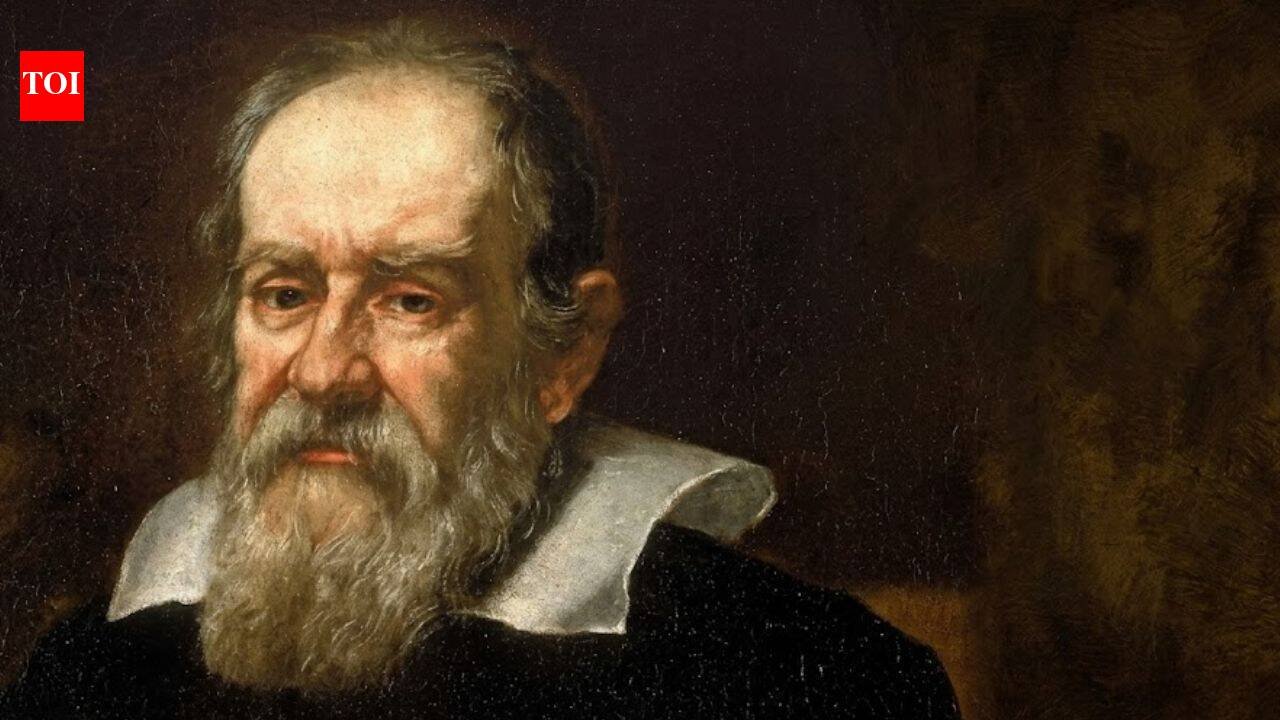
Galileo Galilei spent the final years of his life under house arrest at Villa Il Gioiello near Florence, Italy. Galileo moved to the villa in 1631, and it became his home after the Holy Office sentenced him to house arrest in 1633.The surrounding estate also includes the land where he had his vegetable garden. According to the Museum System of the University of Florence, the villa has been a National Monument since 1920 and is managed by the University of Florence through its University Museum System. Following its restoration in 2006, it hosts conferences and seminars and is open to visitors by appointment. Its rooms and garden offer a glimpse into Galileo’s life at the residence, where he continued his scientific work even after losing his sight.
How a Tuscan villa became Galileo’s home during his final years under house arrest
Galileo rented Villa Il Gioiello in 1631, encouraged by his daughter Virginia, who lived in the nearby monastery of San Matteo as Sister Maria Celeste. Virginia’s younger sister also lived at the monastery, and the two sisters wanted their elderly father to live nearby. From his previous home at Bellosguardo, visiting them meant travelling for two hours on a mule. The villa was just 300 metres from the monastery, allowing Galileo to live close to his daughters.At the villa, Galileo lived with Piera, a maid who took care of his daily needs under Virginia’s careful instructions. In 1633, the Holy Office ordered Galileo to remain under house arrest, making the villa his home for the rest of his life. Despite these restrictions, he continued his scientific work and discussed his ideas with students and collaborators who visited or lived with him during his final years.
How Galileo developed his scientific ideas at Villa Il Gioiello
Villa Il Gioiello was closely connected to two major works by Galileo. The manuscript of Dialogue above the two greatest systems of the world (Dialogo sopra i due massimi sistemi del mondo) originated at the villa for its first printing in 1632. The work was seized a few months later and subsequently republished in Holland.Galileo also completed his final major work, ‘Discourses and mathematical demonstrations around two new sciences’ (Discorsi e dimostrazioni matematiche intorno a due nuove scienze) at the residence. The work was published in Holland in 1638, by which time Galileo had become completely blind. However, losing his sight did not stop him from pursuing his scientific work. Several collaborators visited or lived with him at the villa, helping him continue his research and engage in scientific discussions.
What the villa’s restored rooms reveal about Galileo’s time
In October 2018, a new exhibition opened at Villa Il Gioiello following a project promoted by Fondazione CR Firenze and Il Colle di Galileo, with support from the Galileo Museum and the Accademia dei Georgofili. The exhibition focused on reconstructing and furnishing three significant rooms that were the study, kitchen, and cellar.Antique dealers selected the pieces with guidance from an inventory of the villa written in the period following Galileo’s death. Although the kitchen and cellar remained intact, both rooms were completely unfurnished.Their reconstruction, led by the Accademia dei Georgofili, drew on research into the likely materials and objects used at the time. Barrels and a small vat were built using techniques of that period, while glassware was reproduced from contemporary paintings.
How did Galileo spend his final years at the Tuscan villa
The villa and its garden reflect different aspects of Galileo’s life, from his scientific studies and family ties to his interest in vineyards. From the window of his study, he could see the Verdea di Arcetri vineyard belonging to his daughters’ convent, where wine was produced.Galileo also spent his final months at the villa with two of his disciples, Vincenzo Viviani and Evangelista Torricelli. Both took part in scientific discussions with him and lived at Il Gioiello during this period. Galileo died at the villa on 8 January 1642. He was buried in a secondary room in the Basilica of Santa Croce, without solemn celebrations.
