



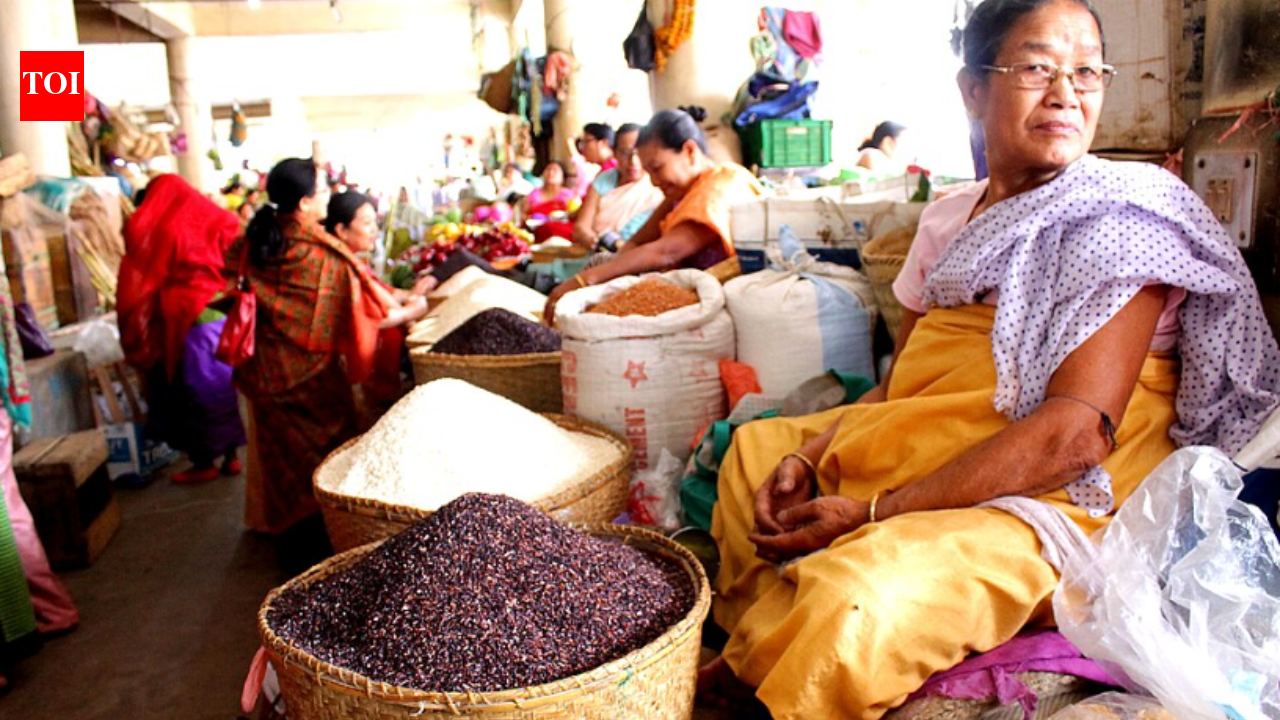
Ever imagined how it’s like to shop from a market that is run only by women? There is one such market in the heart of Imphal, which amid the steady hum of bargaining voices, and aroma of fresh produce and dried fish, will make anyone pause and experience the vibe of it. This place is unlike any other. The market is known as Ima Keithel, also known as Ema Market or Nupi Keithel, and is widely regarded as the world’s only all-women market, which is around a 500-year-old institution run entirely by women. With over 5,000 vendors conducting daily business here, it is not just an economic center but an embodiment of Manipur’s social and cultural landscape. Ima Keithel, which literally means “Mother’s Market” when translated from Meitei, is a reflection of the role that women have come to play in its heritage.
A market born out of history
Though the exact date of its origin remains debated, scholars trace the roots of Ima Keithel back to the 16th century. Its emergence is often linked to the ancient Lallup-Kaba system, a form of forced labour that required men of the Meitei community to leave their homes to cultivate distant lands or serve in wars. With males away for an extended period of time, females took charge of agriculture and managing the household, and later began selling extra goods at an improvised market. Over time, it developed into an organized market with females taking charge of it. Thus, Ima Keithel came into being. The market has been of immense significance during the colonial period too. When the British introduced economic and commercial reforms in Manipur, females of Ima Keithel staged a protest against these reforms. It led to the famous Nupi Lan, or Women’s War. During the protest, females demonstrated against economic decisions made by the British. In an effort to curb the protest, it is believed that the British attempted to sell the market premises to outsiders. However, it did not come to fruition because females defended it vigorously. Since then, Ima Keithel has been an embodiment of female strength and defiance.
A marketplace like no other
Unlike other markets found in other parts of India, Ima Keithel is unique because females are allowed to take charge of shops and sell goods. No male is allowed to operate or sell goods here. It is under strict control by the state government.Today, the market hosts between 5,000 and 6,000 women vendors, many of whom inherit their stalls across generations. For countless families, trading at Ima Keithel is not just employment but a way of life.
Visitors can explore a variety of products, traditional Manipuri textiles, intricately woven shawls from different tribes, handicrafts, household utensils, spices, toys, fresh vegetables, fruits, fish, and the region’s famed fermented dry fish known as Ngari. The vibrant display of handwoven phaneks and innaphis (traditional garments) makes it a treasure trove for textile enthusiasts.
Cultural heartbeat of Manipur
More than a shopping destination, Ima Keithel functions as a social and economic institution deeply embedded in Manipuri society. It provides financial independence to thousands of women while reinforcing community networks built over centuries. For tourists, the market is a prime attraction, not merely for its scale but for its story. The sight of thousands of women managing trade, negotiating prices, and preserving age-old traditions presents a rare example of female-led commerce sustained across half a millennium. Ima Keithel still remains what it has always been: a marketplace run by mothers, sustained by resilience, and rooted in history, one of the most extraordinary commercial spaces in the world.


