






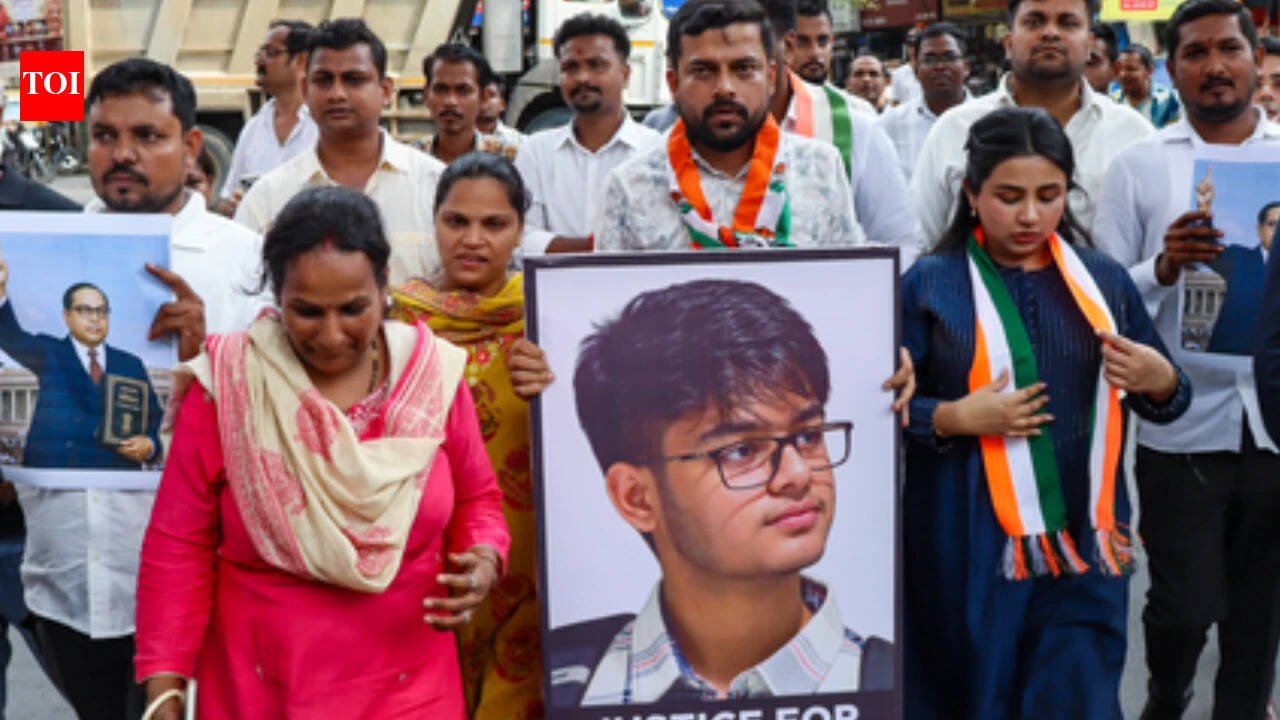
MUMBAI: A controversy has emerged over the handling of an academic malpractice case involving IIT Bombay student Sahil Wakode.According to sources at the institute, representatives of the faculty forum, mentioned that the second-year BTech student had given a written “confession” after he was allegedly found with a mobile phone during a mid-semester examination.The development has raised questions about the procedure followed by the institute, whose published disciplinary guidelines prescribe a formal, committee-led process for dealing with such cases.Sources, questioning the process that was followed, said handling academic malpractice is overseen by disciplinary committees and that an instructor does not have the authority to extract a confession from a student.The messages were posted last week, amid an ongoing investigation into Wakode’s death and protests by his parents, who have alleged caste discrimination and demanded action against Professor Suryanarayana Doolla and IIT Bombay Director Shireesh Kedare. TOI had reported about the posts last week.What IIT Bombay’s rules say?IIT Bombay’s published “Procedures for handling acts of academic malpractices by students” state that an instructor who discovers malpractice should prepare a report, collect evidence and submit it to the Head of the Academic Unit.The case is then referred to the Departmental Academic Disciplinary Action Committee (D-ADAC). The committee examines the case and recommends disciplinary action, which is forwarded through the department head to the Dean (AP).Cases warranting more serious punishment can be referred to the institute-level Academic Disciplinary Action Committee (ADAC).The guidelines specifically say that instructors should report cases with details including the student’s name and roll number, course number, description of the alleged malpractice and evidence collected.For examination-related malpractice, the guidelines say an invigilator should confiscate relevant material such as chits, phones or answer papers, issue the student a fresh answer book and allow the student to resume writing the examination. The invigilator is then required to prepare a detailed report and submit it to the head of the department conducting the course.The rules also state that disciplinary measures beyond the academic action prescribed for the assignment or examination are decided by the D-ADAC or ADAC, rather than by the instructor.What happened to WakodeWakode, 22, was found hanging in his IIT Bombay hostel room on the evening of September 18, hours after he was allegedly caught using his mobile phone to access ChatGPT during a mid-semester examination.His parents have alleged that he faced caste-based harassment at the institute. An FIR was registered against Professor Suryanarayana Doolla on a complaint by Wakode’s father, who alleged that his son had told him during their last meeting that Doolla had subjected him to casteist abuse and that he feared being implicated in a false case.The allegations are under investigation and have not been established.Crime Branch records 40 statementsThe Mumbai Crime Branch, which is investigating the case, has so far recorded statements of around 40 people, including Wakode’s parents, fellow students and IIT hostel staff, police said on Wednesday.Doolla’s statement has not yet been recorded, according to police.Investigators have also sent two mobile phones, a laptop and a tablet belonging to Wakode to the Forensic Science Laboratory at Kalina to decode the devices. Police said the digital evidence could help establish the sequence of events leading up to his death.Meanwhile, Wakode’s parents have continued their hunger strike at Azad Maidan for the third day, demanding the arrest of Doolla and Kedare.The IIT Bombay board has also constituted a 10-member committee to inquire into the circumstances surrounding Wakode’s death.


