






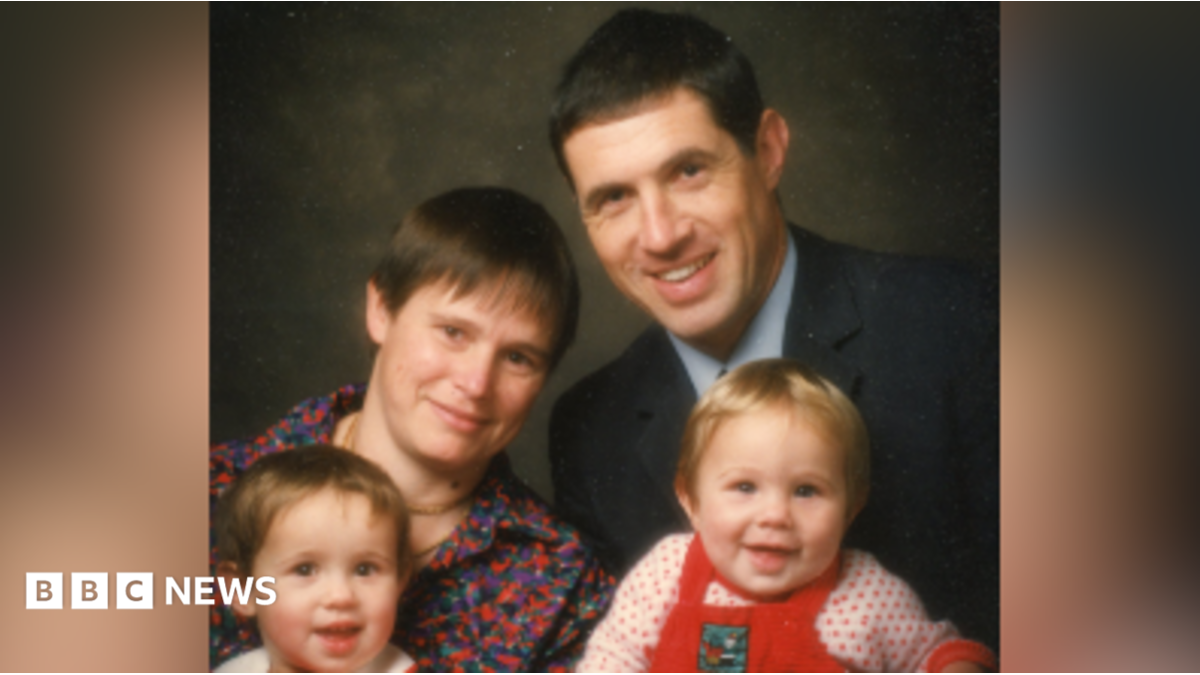
Since Clive’s death in 1999, Helen has been working as a dementia researcher, raising awareness of his condition and continuing his legacy through her charity, The Clive Project.
She continues to tell her story because there is still “more to be done” to help dementia patients and their families, she said.
Helen described her late-husband as a calm, level-headed and “very active guy” who used to run marathons, even “before it was popular”.
“Clive was unflappable,” she said.
“He reckoned he failed if he lost his temper.”
But as Clive approached his 40s things began to change.
“You can’t really tell at what stage somebody’s behaviour changes,” she said.
“Younger people in particular are always going to be difficult to diagnose.
“And he covered up some things. He never admitted to me that he was having problems with reading and writing.”
While Helen had never before heard of dementia in younger people, she said she “knew there was something wrong”.
“I would make plans and he would forget he was looking after the children,” she said.
“We had very many arguments about it.
“He said, ‘I’m just growing old’ – and he was early forties then.”


