



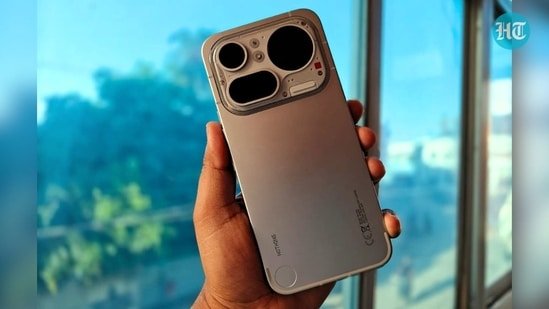
Nothing Phone 4a Pro review: The Nothing Phone (4a) Pro feels less like a typical upgrade and more like a quiet plot twist, something you don’t fully appreciate until you’ve spent time with it. Think of it like Inception, not loud at first, but layered once you start paying attention. Starting at Rs. 39,999 for the 8GB RAM and 128GB storage variant, it steps into a space where expectations are already high.
On paper, it checks familiar boxes: a 6.83-inch AMOLED display with a 144Hz refresh rate, a Snapdragon 7 Gen 4 chip, and a 50MP triple camera setup with a new periscope zoom lens. But beyond the specs, this phone is really about how those features come together in daily use.
But numbers don’t tell the full story. I’ve been using the Nothing Phone 4a Pro as my primary device for some time now, handling everything from daily tasks to long hours of scrolling and streaming. What stood out wasn’t just what’s new, but how those changes fit into everyday use. Let’s take a close look at this detailed review and find out whether those small, thoughtful changes actually improve the overall experience and why you should upgrade or purchase the Nothing Phone 4a Pro in 2026.
Nothing Phone 4a Pro Review: Design that doesn’t lose its roots
Nothing is clearly trying something different with the Nothing Phone (4a) Pro, and the shift is visible the moment you pick it up. The brand, known for its transparent backs and bold styling, now leans toward a more metal-heavy design. At first, it feels like a departure, but after using it for a while, I started to see the reasoning behind it.
Nothing has built its name on doing things differently, especially with design and is clearly trying something different with the Nothing Phone (4a) Pro. So when I first picked up the latest device, the shift was immediately noticeable. This time, the brand has moved toward a more metal-heavy approach, and while that may sound like a step away from its roots, it actually works in day-to-day use.
The aluminium unibody feels solid, and the matte finish makes it comfortable to hold. You still get a glimpse of Nothing’s signature style through the small transparent window near the top, but overall, this is a cleaner and more restrained look. At 7.95mm, the phone is slimmer than before and feels more durable in the hand.
That said, the metal back isn’t flawless. It tends to pick up smudges quickly, especially if you’re not using a case. On the positive side, it offers a secure grip and slides easily into pockets. The device weighs 210g, which you will notice, but it doesn’t feel uncomfortable during regular use. The device comes in three colour options: Black, Pink and Silver. I got the latter one for the review, and it looked clean without trying too hard.
Nothing hasn’t completely abandoned its identity. The upper section of the back still carries the brand’s signature identity through the camera layout and the updated Glyph Matrix. This version is larger and more refined than before, with 137 mini LEDs that can get quite bright. What I like here is how it has moved beyond being just a visual element. It now shows useful information like time, battery level, timers, and even alerts for specific contacts. Over time, I found myself relying on it more than expected, often checking notifications without flipping the phone.
Still, there’s a question here. Glyph has always been central to Nothing’s identity, but it’s clear the company is still figuring out how far it can go with it. It’s useful, yes, but it could do more.
In terms of handling, the handset strikes a good balance. Even though it’s a large device, it doesn’t feel awkward. The buttons are now placed more sensibly. The power button sits on the right, with volume keys above it, while the Essential Key has been moved to the left. This setup avoids the accidental presses I’ve faced on earlier models and makes everyday use smoother.
On the front, the design is simple and functional. The bezels are thinner, giving the display more room to stand out. The screen is bright, smooth, and responsive, which makes everyday tasks like scrolling and typing feel effortless. Visibility outdoors is not an issue either. Durability has also improved. The Phone 4a Pro now uses Gorilla Glass 7i and comes with an IP65 rating, offering better protection against dust and water than its predecessor.
In short, the design may split opinions. It still stands out, but in a more controlled way. Nothing seems to be moving toward a broader appeal, and whether that works for you depends on how much you valued its earlier bold approach.
Nothing Phone 4a Pro Review: Display
The Nothing Phone 4a Pro brings a noticeable upgrade in display quality. The 6.83-inch AMOLED panel carries a 1.5K resolution (1260 x 2800), and at this size, everything looks sharp without needing to think about it. Text stays clean, and videos hold detail well even when you’re watching up close.
What stood out to me more in daily use was the smoothness. The 144Hz refresh rate makes scrolling feel effortless, whether you’re browsing social media or jumping between apps. Touch response is quick, too, so taps and swipes register instantly. Brightness hasn’t been an issue either – even under harsh sunlight, the screen remains readable.
Colour reproduction is what you would expect from an AMOLED panel – rich but not overdone. The screen also supports HDR10, HDR10+, and HLG formats. There’s even a manual HDR toggle in settings, which is a rare but useful addition if you want to ensure compatible content plays correctly.
For streaming, the device comes with Widevine L1 certification, so apps like Netflix can stream in Full HD. I binge-watched a few shows during travel, and the experience was enjoyable overall. The panel handles contrast and sharpness well, especially when viewing photos and videos shot on the device itself.
That said, HDR performance across apps isn’t entirely consistent. While YouTube shows HDR options, the actual output doesn’t always look as bright or dynamic as expected. Netflix, too, doesn’t fully reflect the HDR capability here. So while the hardware is capable, software support still feels a step behind.
Nothing Phone 4a Pro Review: OS and AI
Nothing continues to keep things simple with its software, and that’s where the Nothing Phone 4a Pro stands out. Running on Nothing OS 4.1 based on Android 16, the experience feels clean and easy to live with. I liked how fluid everything feels while moving through apps or menus. The interface doesn’t try too hard, yet it manages to feel fresh.
The notification panel and quick settings are familiar, with a few small tweaks. While the horizontal swipe for more toggles didn’t quite work for me, the rest feels practical. The lockscreen widgets are more useful now, and I found myself actually using them. The Smart app drawer, though, feels unnecessary. I turned it off within a day. On the other hand, the new Essential Apps feature is interesting. It lets you create custom widgets quickly, and some of them can be surprisingly useful.
Glyph lighting now ties into live updates, which adds more purpose to it beyond just visuals. There’s also a Relaxation Hub widget, though it feels more like an extra than a must-have.
AI features have clearly taken a step forward. The Essential Key opens up Essential Space, where your screenshots, notes, and reminders get sorted automatically. It works quietly in the background and doesn’t interrupt your flow. I found the search and suggestions helpful without being distracting. There’s even support for on-device image generation, which shows where things are heading.
The AI Eraser does a decent job removing objects, but it’s not perfect; you may notice a slight blur in some edits.
Nothing promises three years of Android updates and six years of security support. It’s decent, but there’s room to do better
Nothing Phone (4a) Pro Review: Performance
The design of the Nothing Phone 4a Pro might grab attention first, but what matters more is how it performs in daily use. The handset is powered by the Qualcomm Snapdragon 7 Gen 4 chip, paired with up to 12GB RAM. On paper, it sits comfortably in the mid-range segment, but I was curious to see how it handles real-world tasks.
In day-to-day use, the device feels reliable. I moved between apps like YouTube, Instagram, X, and Google Maps without any lag or stutter. App launches are quick, and multitasking stays smooth even after long usage. It doesn’t feel like a device that struggles under pressure, which is what most users care about.
Storage performance also plays its part here. With UFS 3.1, apps load quickly and files open without delay. Over time, I didn’t notice any slowdown, which suggests the system is handling memory and background tasks well.
Gaming is where things get a bit more balanced. Titles like Battlegrounds Mobile India run well on high settings with stable performance. However, more demanding games like Genshin Impact are better suited for medium settings. I tried pushing it to higher graphics, and while it was playable, the device warmed up and frame rates dipped occasionally. On medium settings at 60fps, the experience stayed consistent and enjoyable.
Thermal management deserves a mention here. The device uses a 5,300mm2 vapour chamber cooling system, and it does its job well. Even after long gaming sessions, the back only felt slightly warm. I also noticed some heat while using the camera for extended periods, but nothing that affected usability or caused crashes.
For those who care about numbers, the device scored 1303 in single-core and 4282 in multi-core on Geekbench, with a GPU score of 4736. AnTuTu results went up to 1,423376, and it got 2089 best loop score with 99.3% stability on Wild Life Extreme Stress test, which aligns with what I experienced in real-world use. In short, the (4a) Pro focuses on delivering stable, consistent performance rather than chasing top-end numbers, and for most users, that approach works.
Nothing Phone (4a) Pro Review: Camera Experience
Nothing hasn’t changed everything with the Phone (4a) Pro’s camera, but it has clearly tried to refine what already worked. On paper, the setup looks familiar, yet a closer look shows a few important updates. The biggest one is the addition of a 3.5x optical zoom periscope lens with an 80mm focal length. It replaces the shorter telephoto from the previous model and aims to justify the higher price. Alongside this, the company has introduced its new TrueLens Engine 4, which is meant to improve how photos look in real-world use.
The main camera sticks to a 50MP sensor, now using Sony’s IMX 896. Sensor size and lens specs remain unchanged, so this isn’t a hardware leap. The ultrawide camera also stays the same with an 8MP sensor, and it continues to feel dated, especially for a phone carrying a “Pro” tag.
The telephoto camera is where things get interesting. While the zoom reach has improved, the sensor itself is smaller than before. In daily use, though, that trade-off doesn’t hurt as much as you might expect. The 3.5x zoom delivers sharp images, and it’s genuinely useful for portraits. Subjects stand out better, and the perspective feels more natural compared to standard shots.
What stood out to me most during testing was consistency. Whether I was shooting outdoors, indoors, or in mixed lighting, the phone delivered images that looked balanced. Colours stay close to what you see in real life, and the camera avoids pushing saturation too far. Dynamic range is handled well, so highlights don’t get blown out easily. Compared to earlier Nothing phones, this feels more dependable.
Daylight photos come out detailed without looking over-processed. Indoor shots are equally reliable, with good control over bright areas and shadows. The image processing is clearly working in the background, but it doesn’t draw attention to itself, which I prefer.
That said, it’s not flawless. There are moments when colours shift slightly, or when the camera tries too hard to sharpen details. The ultrawide camera continues to lag behind the main sensor, both in clarity and overall output.
Low-light performance is another area where the Phone (4a) Pro does well. It doesn’t artificially brighten scenes too much, which helps preserve the mood of the shot. Noise is kept under control, and details remain usable. Portraits in low light also turn out well, with accurate edge detection most of the time.
The telephoto camera holds up even after sunset. I was able to get clean shots at 3.5x and even push it to 7x with decent results. However, at higher zoom levels, images can look slightly over-sharpened, and I noticed a cooler tone creeping into some shots.
Selfies, on the other hand, are just average. The 32MP front camera produces softer images than expected, and I often wanted more detail, especially in good lighting.
Video performance is decent but not class-leading, and autofocus can occasionally hesitate. Still, the overall experience is solid. The camera app is simple to use and includes all the key features without making things complicated. The Phone (4a) Pro may not get everything right, but it delivers where it matters most – consistent, reliable photos across conditions.
Nothing Phone (4a) Pro Review: Battery Life
Battery life on the Nothing Phone (4a) Pro has been dependable in my daily use. The device which I am using houses a 5,080mAh battery, while the Indian varint houses a larger 5,400mAh battery. Although it comfortably got me through a full day with regular use. On lighter days, I often ended with close to half the battery still left. If you push it harder – gaming, camera, constant data, you’ll likely see it drop to around 20–30% by night. Screen time usually stayed between 3 to 6 hours, depending on how I used it.
There’s no wireless charging here, which feels like a trade-off to keep costs in check. Wired charging, however, does the job well. With a 50W charger (sold separately), I was able to get to about 60% in half an hour, and a full charge took a little over an hour. It’s quick enough for most situations.
For a more controlled test, I streamed high-resolution video continuously. After six hours, the battery dropped to 56%. That suggests roughly 13-14 hours of playback, though I had brightness maxed out, which clearly impacts endurance. In short, the battery holds up well, even if it doesn’t fully match the company’s claims.
Final Verdict
The Nothing Phone (4a) Pro doesn’t try to be the fastest or the most feature -packed phone in its segment, and that’s actually its strength. At Rs. 39,999, it focuses on delivering a balanced experience, one that feels consistent in day-to-day use. The clean software, smooth 144Hz display, and reliable performance make it easy to live with. The refined design and more practical Glyph interface also add to its identity without feeling gimmicky.
That said, it’s not without compromises. The ultrawide camera still feels behind, HDR performance needs work, and the lack of wireless charging might matter to some. It also doesn’t push boundaries in performance if gaming is your priority.
You should consider the Nothing Phone (4a) Pro if you value a clean UI, dependable camera output, and a design that stands out in a subtle way. But if you want top-tier gaming performance, a more versatile camera system, or if complete feature parity matters more, there are stronger options in this segment. Otherwise, Nothing Phone (4a) Pro gets the basics right, and for many users, that’s enough.
Specifications
Processor
Qualcomm Snapdragon 7 Gen 4
Rear Camera
50MP + 50MP + 8MP
Reasons to buy
Distinctive design with practical Glyph Matrix
Smooth and sharp AMOLED display
Clean and fluid, Nothing OS
Stable performance for everyday use
Reliable main and telephoto cameras
Reason to avoid
Ultrawide camera feels dated
Not built for heavy gaming
No wireless charging or charger in the box
HDR performance is inconsistent


