



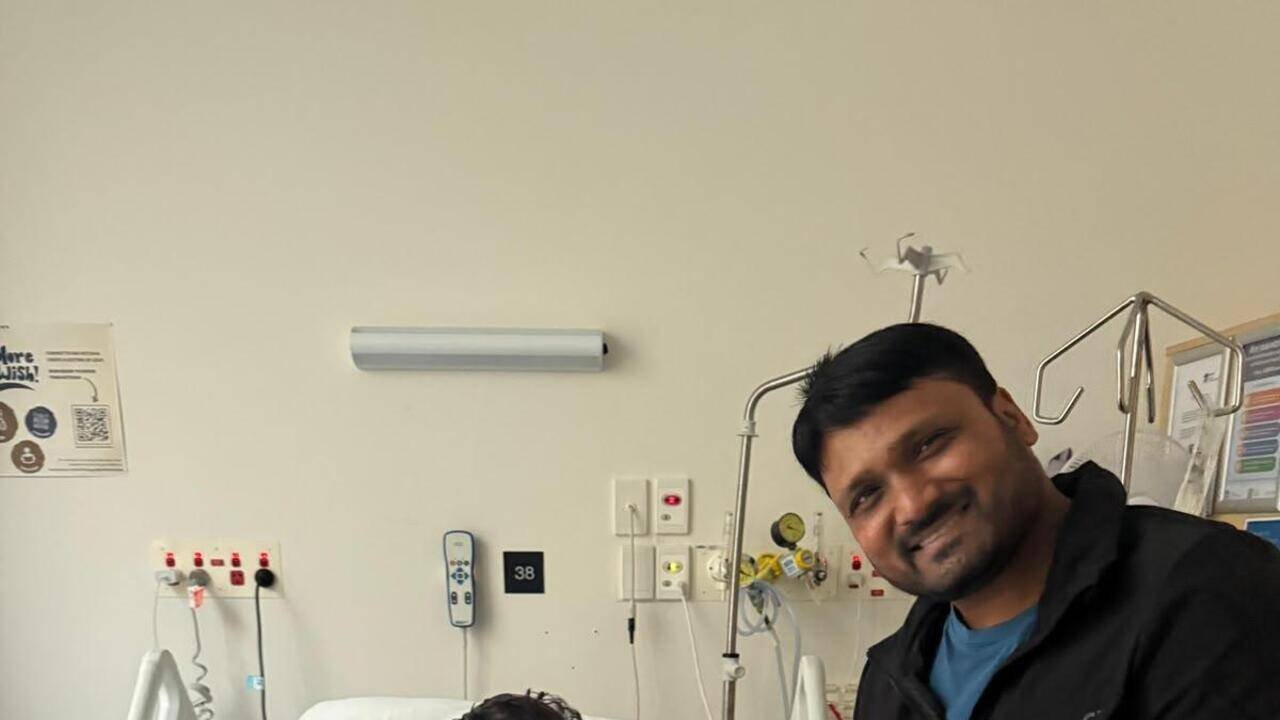
Hyderabad: The Dec 2025 attack at Sydney’s Bondi Beach brought global infamy to Hyderabad after a father-son duo from the city was named key accused in the shooting that left at least 15 people dead. But just a stone’s throw away, another Hyderabadi emerged as one of the tragedy’s unsung heroes, quietly scripting a very different story—one of extraordinary courage and compassion.Thirty-seven-year-old cab driver, Rehmat Pasha, not only dodged bullets, but he also rushed to the side of several grievously injured, ferried them to waiting ambulances and saved at least 18 to 20 lives that ill-fated evening. He even patiently lent a hear to trauma-stricken visitors left bleeding at the beach – putting aside his own shock and suffering. Pasha’s selfless act of helping complete strangers has now changed the course of his own, with the Australian govt granting him permanent residency. His wife and three young children –living in Mehdipatnam –will also join him soon. And if weren’t enough, Australian authorities have decided to display the cap he wore that day at the Sydney Museum, apart from nominating him for multiple bravery awards.But even as Pasha has humbly accepted the honours, none of that has erased the horror of Dec 14. He still vividly remembers every minute of that busy Sunday, which pushed him into long-term therapy and temporarily incapable of holding a job. “People say my life has changed for the better. But images from that day still haunt me,” Pasha told TOI, breaking down several times during a recent interaction in Hyderabad. He is back home to visit his family. The attackThat Sunday, Bondi Beach was busier than usual, Pasha recalled. The local Jewish community had gathered to celebrate Hanukkah. It was a little past 6.30 pm and Pasha had pulled up only minutes earlier to drop his ride. His next client was ready to hop on. But just as they were readying to leave, a thundering sound startled him. “I saw my passenger, who had just opened the trunk to keep his luggage, run away abruptly. Curious, I stepped out,” he said. “I heard gunshots. At first, I thought they were fireworks. Then I saw two gunmen opening fire from a bridge barely 100 metres away.”Pasha’s voice quivers as he remembers the next few minutes. It was certainly far removed from anything he ever imagined witnessing when he moved to Australia in 2021, hoping to find a better job after a degree in hospitality there. In the interim, Pasha did odd jobs to support his family of four back home in India. Raised in neighbouring Vikarabad, he moved to the metro for work after his studies. But this episode was life-altering. “There was gunfire. People were running, screaming. There was blood everywhere. People dying, children shrieking; looking for their parents. A 10-year-old girl was shot dead. An elderly couple was killed mercilessly… I saw grass turning red.” Split-second decisionPasha said, he had a split second to decide what to do next. He first rushed to a man who was shot in the neck. He tried to stop the bleeding with his hands. “But all my efforts were futile. He died in my hands,” Pasha said, tears streaming down his face. But since he had no time to waste, he immediately ran towards others desperately seeking help.He began pulling people behind trees, benches and steel kitchen structures to get them out of the attackers’ line of fire.“I kept taking cover while pulling people away. The attackers were moving forward, so I had to move people before they reached where we were hiding.”Though the shooting lasted only six to eight minutes, for Pasha it felt like a lifetime. And his ordeal was far from over. As the firing stopped, the rescue operation began.“There was blood everywhere. People were in pain and needed urgent help.”Until paramedics reached the scene, Pasha tried to comfort the injured, identify those who needed immediate medical attention and prayed constantly.One of the encounters still stays with him. An 85-year-old woman had been shot through both legs near her knees.“She was crying in unbearable pain. She looked at me and asked, ‘What wrong did I do, son? I was only sitting on the bench humming a song.’”Not knowing how else to comfort her, Pasha told her: “Don’t worry. Next year you will come back for Hanukkah, sit on this same bench and hum the same song again.’” “For those few minutes, she forgot her pain,” Pasha said, his face lighting up briefly.Three-hour rescueOnce medical teams arrived, Pasha became a key responder. For nearly three hours, he helped them carry the injured from the beach to waiting ambulances. “I also helped rescue some police officers, one of who was shot in the eye. I also helped a young rabbi, Leibel Lazeroff, who had suffered two gunshots below his waist.”They used surfboards as makeshift stretchers even as some injured were administered emergency treatment on the beach itself.Throughout those hours, Pasha said he never truly processed what had happened. Reality struck only later.“That’s when I broke down,” he said. And the trauma stayed with him long after the attack. Doctors diagnosed him with severe post-traumatic stress disorder (PTSD) and declared him temporarily unfit for work.“I still wake up after three or four hours. I hear ambulance sirens in my dreams. I see people running in blood-soaked clothes. I hear children crying.”Australia’s gratitudeThe Australian govt stepped in with financial support, medical treatment and counselling. During this difficult period Pasha met Abdul Syed Javeed, an immigration lawyer and founder of the Indian Youth Committee of Australia, also from Hyderabad.“What he did is beyond courage and recognition,” said Javeed who recommended Pasha’s name to Australia’s Department of Home Affairs for PR.Soon afterwards, Pasha was called by minister Tony Burke told that he would receive permanent residency. His wife’s and children’s applications are also being processed.Pasha has also been nominated for a govt bravery award, while Uber – the company he was working for — has recognised his courage. He has also received many job offers. “I still have to decide what I want to do after I feel a little more stable,” he said, gaining back his composure and going on to share how he’s still in touch with families of survivors. They invite him to prayer meetings, call to check on him and meet him whenever they can.“Every time I meet them, some cry, some bless me, some simply hug me.”Looking back, Pasha is often haunted by the thought that he could have saved more lives. Yet, he is equally struck by how a single evening transformed his otherwise ordinary life forever.


