



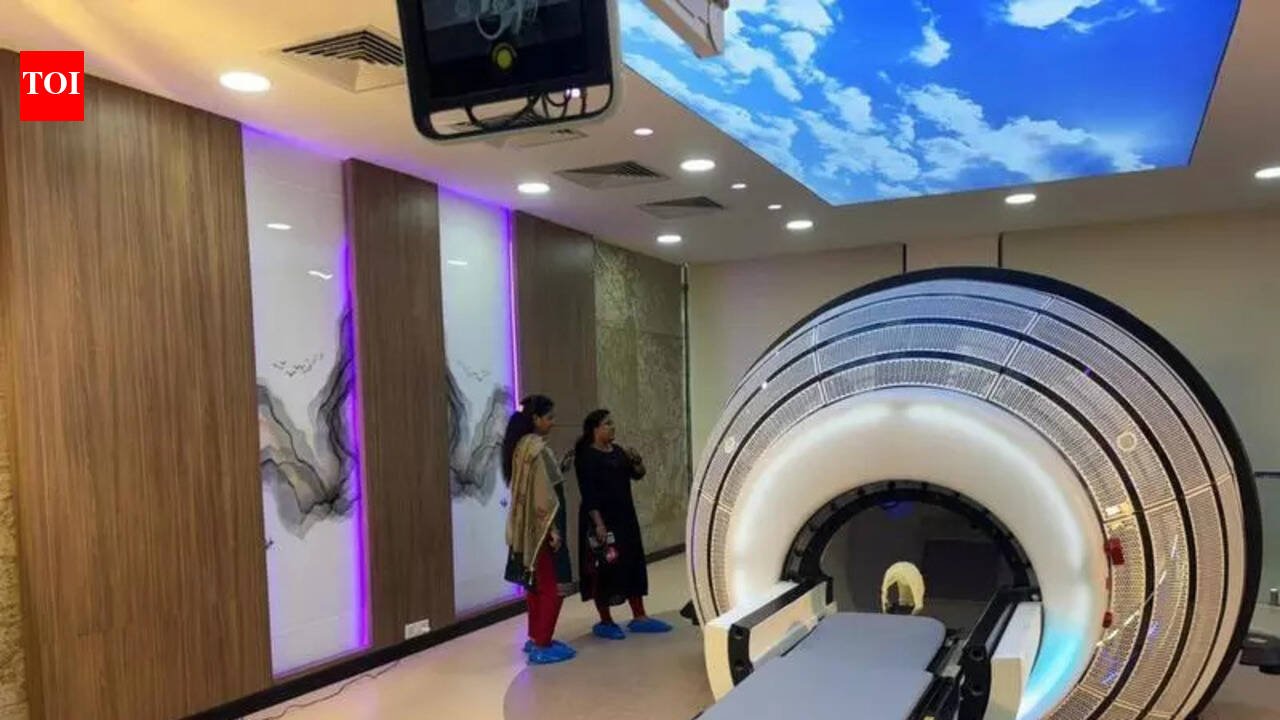
Hyderabad: In a major advance in non-invasive brain tumour treatment, AIG Hospitals in Gachibowli has installed the ZAP-X Gyroscopic Neuro-Radiosurgery Platform. The facility was inaugurated on Friday by health minister Damodar Rajanarasimha, and the hospital claims it is the first installation of its kind in South India and the second in India.Traditionally, many brain tumours require complicated neurosurgery, long hospital stays and weeks of recovery, according to doctors. However, the new machine enables the procedure to be completed in one day, with most patients able to go home on the same day. This cutting-edge system can destroy tumours without opening the skull.
Dr D Nageshwar Reddy, chairman of AIG Hospitals, said the system can destroy a tumour in 30–45 minutes and currently has the capacity to treat six patients a day. “First, doctors study scans of a patient, then they send highly precise radiation beams to the exact location of the tumour to destroy it while protecting surrounding healthy tissue,” he told TOI.The machine is particularly expected to play a key role in treating brain metastases — tumours that spread to the brain from cancers such as lung, breast, or pancreatic cancer.Doctors said the treatment can be used for patients aged over 2.5 years, with no strict upper age limit. This means that elderly patients who are not fit enough for major surgery could also benefit from the technology.John R Adler, a global neurosurgeon and the inventor of the ZAP-X system, said that the system is most effective for smaller tumours and typically results in fewer complications. “In some cases, tumours measuring four to five centimetres can be treated with the machine. For very large tumours, surgeons may first remove the main mass through surgery and then use the ZAP-X system to treat the remaining portions located deep in the brain,” he added.He said that if the machine is used regularly, it can treat up to 3,000 patients per year. He noted that, although the initial investment is high, the cost of treatment per patient becomes relatively affordable if hospitals treat large numbers of patients.Beyond treating tumours, researchers are exploring whether the technology could be used to treat certain brain disorders without damaging tissue. Dr Reddy said that research into the system’s potential use in treating conditions such as depression, addiction, and obesity is ongoing.


