



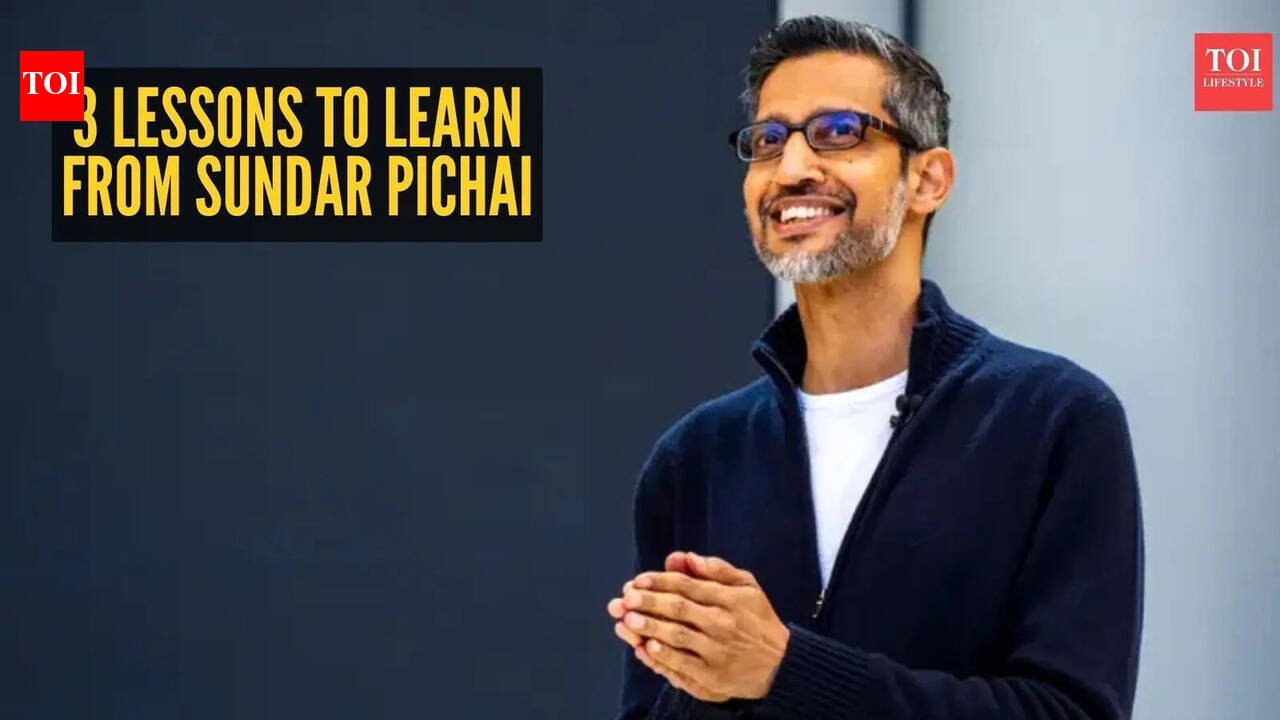
If there is one thing people consistently notice about Sundar Pichai, it isn’t just his intelligence or business success. It’s his calmness.Whether he’s answering tough questions from lawmakers, dealing with criticism about Google’s products, navigating layoffs, or leading one of the world’s biggest technology companies through the AI race, Pichai rarely appears rattled. You don’t often see him raising his voice, firing off emotional responses, or reacting impulsively.Of course, staying calm is easier said than done. Most of us aren’t running a company with thousands of employees and billions of users. But we all deal with stressful situations – an angry client, a difficult boss, family conflicts, financial worries, or simply a day where everything seems to go wrong at once.The good news is that calmness isn’t something you’re born with. It’s a skill. And some of the habits that seem to define Pichai’s leadership can be useful for anyone.Here are three lessons worth borrowing.
1. Don’t react immediately
One thing former colleagues and employees have often said about Pichai is that he’s a good listener.That might sound simple, but it’s surprisingly rare.Most people don’t actually listen when they’re stressed. They prepare their response while the other person is still talking. They’re already defending themselves, planning a comeback, or imagining worst-case scenarios.Pichai has built a reputation for doing the opposite. He tends to absorb information first and respond later.There’s a practical lesson here.The fastest response is not always the best response.Think about how many arguments begin because someone reacted instantly to a message, comment, or criticism. A rushed reply often creates a bigger problem than the original issue.The next time you’re facing a stressful situation, try delaying your reaction. Even a few minutes can make a difference.That doesn’t mean avoiding difficult conversations. It simply means giving yourself enough time to separate facts from emotions.Calm people aren’t necessarily less emotional. They’re just less likely to let their emotions take control of the steering wheel.
2. Focus on solving the problem, not protecting your ego
One of the reasons Pichai rose through Google’s ranks was his ability to work with different teams and bring people together.In large organisations, disagreements are inevitable. Strong opinions collide every day. Yet many leaders struggle because they become more interested in proving they’re right than finding the best solution.Pichai has often been described as collaborative rather than confrontational. Instead of trying to win every discussion, he tends to focus on moving the conversation forward.
This mindset is useful outside the workplace too.Many stressful situations become stressful because our ego gets involved.A colleague criticises our idea.A friend disagrees with us.Someone points out a mistake.Suddenly, the goal shifts from solving the issue to defending ourselves.But here’s the thing: being right doesn’t always make your life easier.Imagine you’re stuck in an argument with a family member. You might technically win the debate and still damage the relationship.Sometimes calmness comes from asking a simple question:“What outcome do I actually want here?”Do you want peace? Progress? A solution?Or do you just want to prove a point?Those are very different goals.People who stay calm tend to focus on outcomes rather than victories.
3. Keep a long-term perspective
One of the most challenging periods of Pichai’s leadership has been the rapid rise of artificial intelligence.Google has faced intense competition, constant scrutiny, and endless predictions about which company will win the AI race.Yet when you listen to Pichai speak, he rarely sounds panicked.That’s partly because he tends to think in years rather than days.Many people become anxious because they view every setback as a disaster.A bad meeting feels like career failure.One mistake feels permanent.A rejection feels like the end of the road.But most problems are smaller than they appear in the moment.Pichai’s career itself is a reminder of that.He grew up in Chennai, studied engineering, moved to the United States for higher education, and spent years working inside Google before eventually becoming CEO. None of that happened overnight.Success was built through consistent progress, not dramatic leaps.The same principle applies to everyday challenges.When something stressful happens, ask yourself:“Will this matter a year from now?”Many times, the answer is no.That doesn’t mean your current problem isn’t real. It simply helps put things in perspective.A calm mind often comes from remembering that today’s frustration is usually just one small chapter in a much larger story.The real secret behind staying calmPeople sometimes assume calm individuals don’t feel stress.That’s not true.Sundar Pichai almost certainly experiences pressure, uncertainty, criticism and difficult decisions like anyone else. The difference is how he responds to them.Calmness isn’t about eliminating stress.It’s about creating enough space between what happens and how you react.Listening before speaking.Prioritising solutions over ego.Looking beyond the immediate moment.These habits sound simple, but they’re surprisingly powerful.And perhaps that’s why Pichai’s leadership style stands out in a world that often rewards the loudest voice in the room.He reminds us that staying calm isn’t a sign of weakness. In many situations, it’s one of the strongest things a person can do.


