



A patient arrives at a hospital showing signs of sepsis, a deadly condition where the immune system attacks its own body after an infection. Sepsis kills 11 million people every year. Doctors must treat it within hours to save lives, but standard blood tests take up to 48 hours for results.
Last year, researchers reported a sensor platform capable of detecting multiple immune proteins linked to sepsis from a blood sample in real time. It was also compact enough for bedside use. The device was a protein biosensor — and it was based on six decades of research and technological development to read the body’s molecular signals at a speed compatible with acute medical needs.
Early-warning system
Proteins are important diagnostic targets because they are involved in almost every biological process. At any given moment, thousands of them are circulating in the blood: they regulate inflammation, carry oxygen, signal between cells, and fight infection.
When something goes wrong, proteins often change first. Troponin levels in the blood rise within hours of a heart attack. Procalcitonin levels increase during bacterial infections. Certain cancer-associated proteins appear in blood long before a tumour is visible on any scan. If these protein levels are measured accurately and quickly, clinicians can gain time to optimise treatment before the disease becomes too severe.
Scientists conceived of protein biosensors when they were studying ways to monitor glucose. In 1962, the American biochemist Leland C. Clark, Jr. and microbiologist Champ Lyons described the first functional biosensor in the form of an electrode coated with an enzyme that reacted with glucose to produce a measurable electrical current.
Modern biosensor researchers continue to use this basic design, pairing a biological recognition element with a signal-converting transducer. However, glucose is a comparatively simpler target than proteins. Blood contains thousands of structurally diverse proteins at the same time. Identifying a single target requires a way to recognise molecules with extraordinary precision.
Antibodies provided the first viable solution to detect proteins in a targeted way. Since they are produced naturally by the immune system, they can be attached to sensor surfaces to capture and identify specific proteins. The flip side was that antibodies are expensive to produce and even small amounts of heat, movement or improper storage can render them useless.
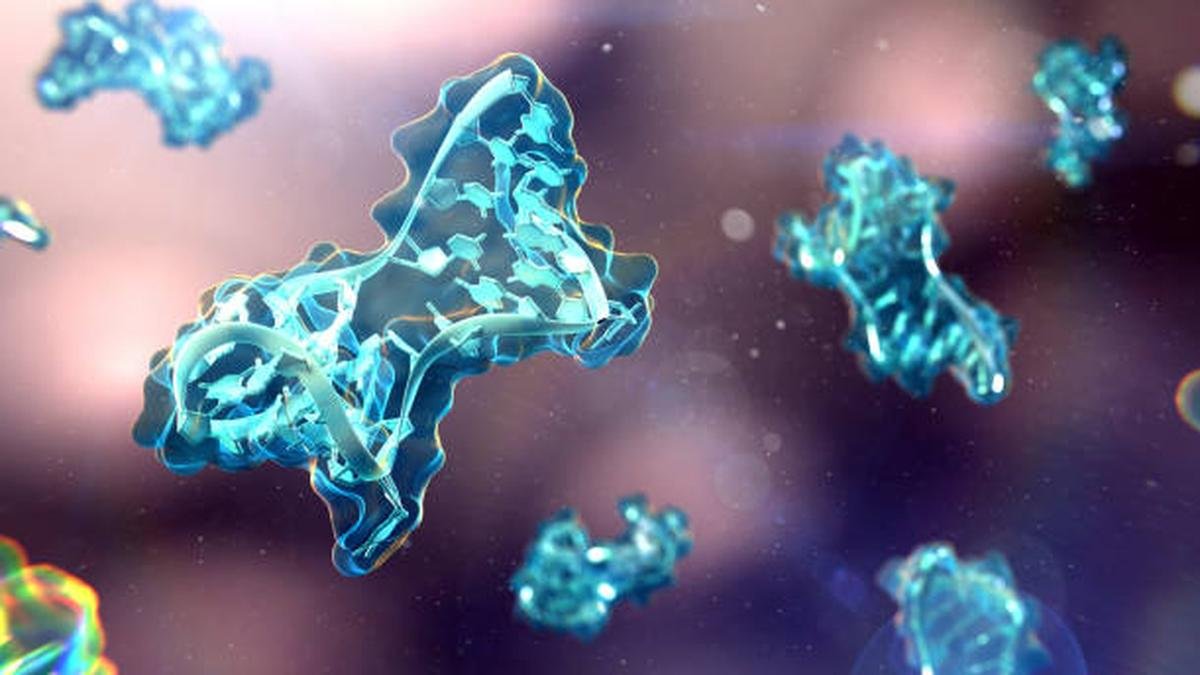
This pushed researchers towards aptamers — short, synthetic strands of DNA or RNA that bind to target proteins with high selectivity. They are also cheaper, more stable, and, unlike antibodies, can be produced entirely within a laboratory, sidestepping the biological systems that make antibody manufacturing difficult.
Over the last two decades, scientists have developed aptamers for hundreds of disease-relevant proteins and have become the recognition element of choice in advanced biosensor designs.
Current landscape
Today, protein biosensing lies at the intersection of chemistry, materials science, and electronics.
Nanotechnology significantly enhanced the sensitivity of biosensors by incorporating gold nanoparticles, carbon nanotubes, graphene, and materials called MXenes to build sensor surfaces. The high surface area of these nanomaterials gives more protein binding sites while their electrical properties generate stronger signals. Thus biosensors have become able to detect proteins even at low concentrations, when a disease is just setting in.
This nanotechnology infrastructure has more recently converged with biotechnological tools like CRISPR. Although best known for gene editing, when CRISPR enzymes are coupled with aptamers on a sensor’s surface, a target protein’s binding can be made to trigger a large and distinct signal. This approach has already been demonstrated to detect malaria, SARS-CoV-2, and many biomarkers of cancer.
Finally, the COVID-19 pandemic allowed these technologies’ developers to accelerate scaling, as the pandemic presented a strong demand for rapid, portable diagnostics.
The sepsis platform mentioned earlier paired a gold-silver alloy nanostructure with a machine-learning system trained to analyse complex signals. This setup could confirm an infection and also distinguish between disease stages to guide treatment decisions.
Healthcare workers are also applying multi-marker detection to pancreatic cancer, a disease with high mortality because it is currently usually detected only when it has become advanced. In a June 2025 review, University of Science and Technology Beijing researchers said several protein markers can now be simultaneously directed using a single platform, offering the best chance of improving early diagnosis.
Researchers are also exploring wearable monitoring. For example, in December 2025, a (separate) team from China reported an aptamer-coated microneedle array that could sample proteins through the skin of animals it was tested with. Their goal was to make a patch that could stick on the skin and monitor inflammatory or cardiac issues continuously and send data to a phone.
Scientists and engineers are also adapting this technology for environmental and industrial uses in the form of cell-free biosensors. Here, using isolated biological machinery like enzymes and regulatory molecules without maintaining live cells, these platforms can detect heavy metal contamination in water, trace antibiotic residues, identify foodborne pathogens in supply chains, and screen for biological threat agents.
Different future
The next step involves closed-loop systems — devices that can use artificial intelligence to interpret multi-protein sensor outputs and feed that information directly to automated therapeutic responses. This model could, in principle, trigger a drug delivery mechanism or adjust an ongoing infusion in response to real-time protein data. To this end, in November 2025, Turkish researchers published a proof-of-concept implantable sensor that used genetically engineered bacteria to detect target molecules in surrounding tissue and transmit data wirelessly from inside the body.
Several logistical hurdles remain before widespread clinical implementation. Biological recognition elements degrade over time, particularly due to heat. Baseline protein levels vary between individuals, complicating universal calibration. Many performant sensors are only laboratory prototypes, with no indications as to their scalability. Regulatory approval also requires extensive clinical validation, demanding substantial investments.
However, the field seems set to address them over time.
Manjeera Gowravaram has a PhD in RNA biochemistry and works as a freelance science writer.
Published – July 15, 2026 09:30 am IST


