


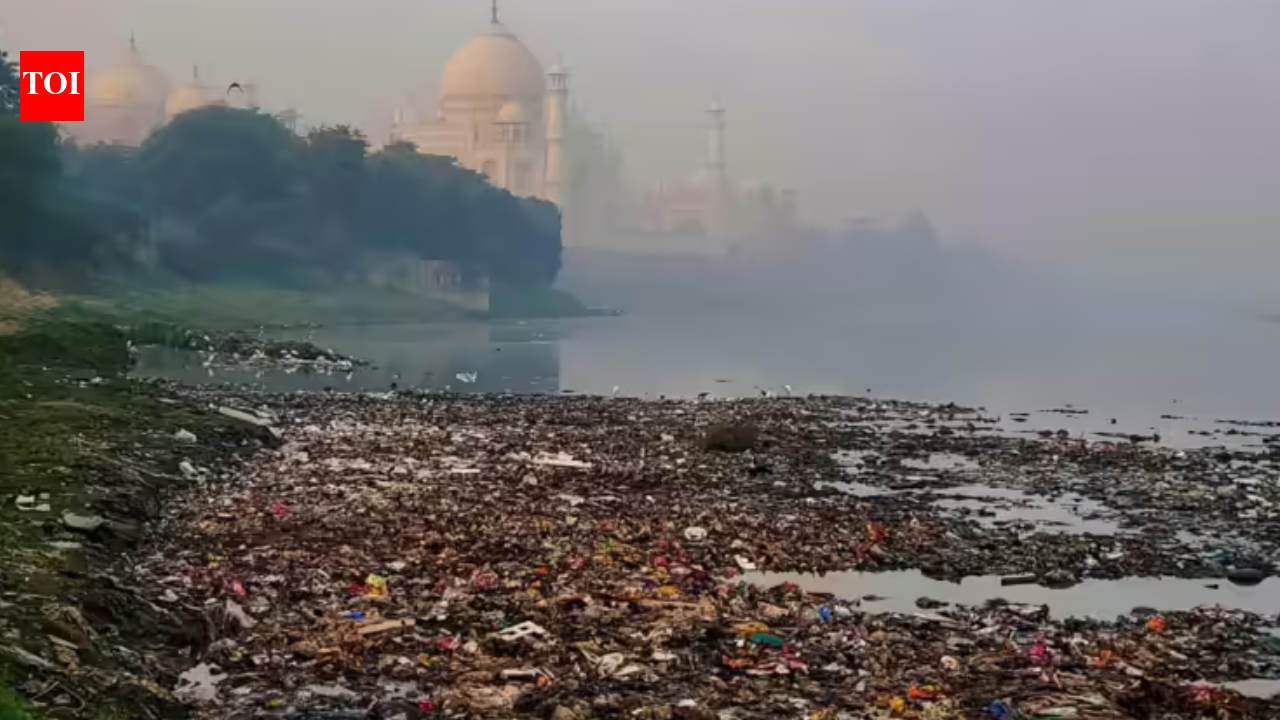
NEW DELHI: There is “widespread contamination” linked to microplastics in Yamuna, open drains, floodplain soil and even groundwater before monsoon rains hit, a first-of-its-kind scientific investigation has revealed.The ‘Study on Microplastics in River Yamuna and Groundwater in Delhi (2024–25)’, led by Dr.Nupur Bahadur, was commissioned by Delhi govt and conducted by The Energy and Resources Institute (TERI) across 49 locations.
Microplastics, defined as particles smaller than 5 mm, are persistent and capable of absorbing toxic chemicals, making them ecologically hazardous. The findings show that while the monsoon brought respite to the river’s flowing waters, it may be shifting the pollution burden onto land. Microplastic concentrations in the Yamuna averaged 6,375 particles per cubic metre in the pre-monsoon period (May–June 2024), but fell to 3,080 particles per cubic metre after the rains (Dec 2024–Jan 2025), a nearly 50% drop.Open drains such as Najafgarh and Shahdara recorded an even steeper 60% reduction — from about 7,500 particles per cubic metre to 3,000 particles per cubic metre. Researchers said the decline is because of rainfall-driven dilution and flushing.The improvement in water quality was accompanied by a spike in contamination along riverbanks. Microplastic concentration in bank soil rose from an average of 24.5 particles per kg before the monsoon to 104.5 particles per kg after.Groundwater samples collected from 42 sites showed relatively stable levels, averaging around 1,200 particles per cubic metre in both seasons, indicating limited short-term fluctuation but confirming thepresence of microplastics in subsurface water.The study also identified 10 major vulnerability zones across the city, including Najafgarh, Tilak Nagar, Saket–Vasant Kunj, Kalkaji, Karol Bagh, Naraina, ITO Barrage, Okhla, Ghazipur and Bhalswa—areas characterised by dense residential clusters, industrial activity, landfill sites and medical facilities.While there are no specific guidelines or global standards, experts said the volumes found were high and hazardous.“There are standards for total dissolved solids, but there is no specific standard for microplastics in water or soil. What goes into the human body can go through water, food and airas well. It causes a tremendous amount of harm,” said Satish Sinha, from Toxic Links.The study found microfibres to be overwhelmingly dominant — nearly 95% of all detected particles are microfibres — pointing towards domestic laundry effluents and textile-related sources as key contributors. Contaminants included particles from PET (used for bottles), HDPE (for containers, mugs, etc), LDPE (polybags, films, etc), and PVC among others.The report recommended a real-time plastic pollution monitoring dashboard, monthly microplastic testing at major drains, advanced filtration upgrades at sewage and effluent treatment plants.


