



India’s laboratories are expanding, research funding is growing, start-ups are emerging, and Indian researchers are increasingly contributing to scientific knowledge. Amid this expansion, who is preparing scientists to become leaders?
A researcher may spend years mastering experimental techniques, analysing data, publishing papers, and writing research proposals. But when that researcher becomes a principal investigator, a faculty member or a laboratory head, their expertise alone will not suffice. Leading a research group requires the ability to mentor young researchers, communicate effectively, build trust, resolve conflicts, inspire teams, and create an environment where people can do good science.
It is this oft-overlooked dimension of capacity building that four researchers have sought to address through a programme called ‘Building Opportunities & Driving Hope’ (BODH).
Making time
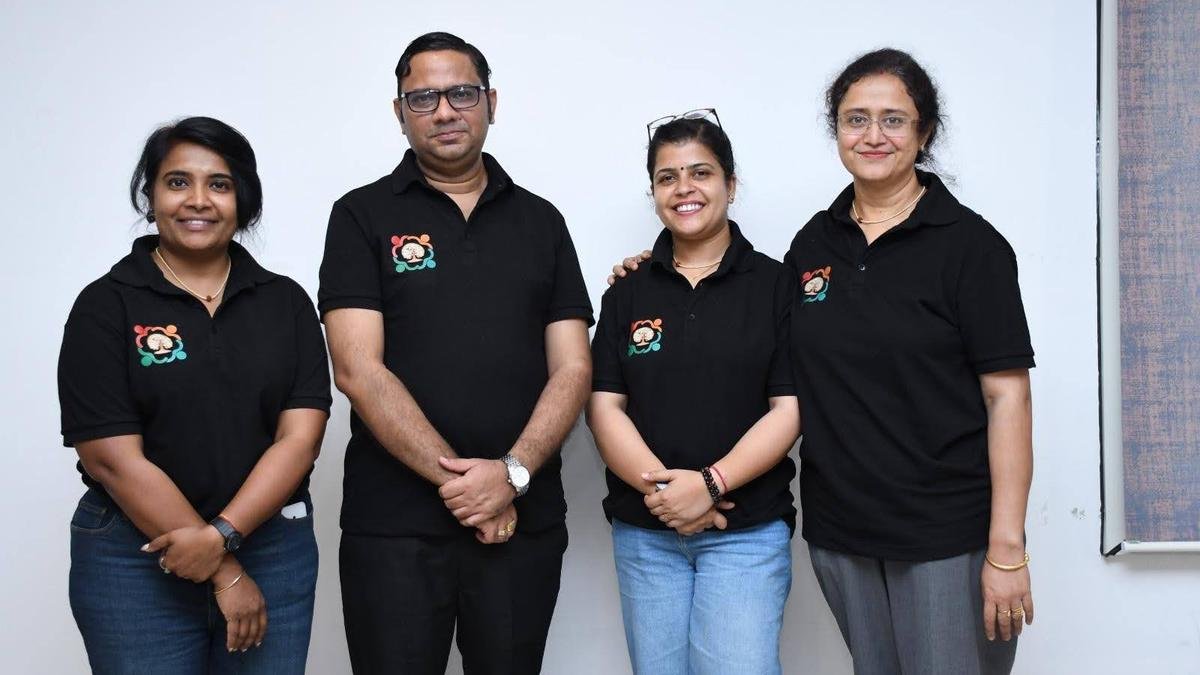
The initiative was born in September 2025 from the shared experiences of Veda Krishnan of the ICAR-Indian Agricultural Research Institute (IARI), New Delhi; Sriparna Chatterjee of CSIR-Institute of Minerals and Materials Technology, Bhubaneswar; Chandra Shekhar Sharma of IIT-Hyderabad; and Pooja Devi of CSIR-Central Scientific Instruments Organisation, Chandigarh, while working with the Indian National Young Academy of Sciences.
The four researchers, from diverse disciplines, had found that the Indian research ecosystem was preparing scientists for scientific work but less so for the institutional responsibilities they would face.
BODH has multiple capacity-building modules, catering to diverse stages and dimensions of researchers’ professional needs. For example, one, called ‘PRABODH’, is designed to help PhD scholars communicate their knowledge to various audiences, develop professional networks and collaborations, and explore alternative career pathways across academia, research organisations, industry, policy, scientific publishing, and communication. The programme also addresses how scholars can navigate stress, burnout, imposter syndrome, setbacks in research, and work-life balance.
According to Dr. Krishnan, the team does not charge for conducting BODH sessions. Instead, the host institution is expected to cover the speakers’ travel and boarding expenses. Altogether, she estimated, a 30-member session usually costs around Rs 3,000-5,000 per participant. Host institutions have usually mobilised these funds through research projects, strategic partners, funding agencies, industry, and CSR initiatives. The flexibility also means individual BODH programmes can be structured according to the needs at each institution and the funding norms there.
Professional journeys
A BODH session underway at ICAR-National Institute for Plant Biotechnology, New Delhi.
| Photo Credit:
Special arrangement
The transition from researcher to research leader is not always an easy one. A smart scientist may know how to formulate a hypothesis or design an experiment but managing a laboratory involves a different set of competencies. They need to figure out how best to mentor a doctoral scholar who is struggling, how to handle disagreements in a research group, how a principal investigator should build a collaboration, how to communicate a difficult decision without damaging morale, and so on.
The founders of BODH recognised this gap through their own professional journeys. Their association with the Indian National Young Academy of Science, and for three of them with the Global Young Academy, exposed them to different approaches to leadership and mentoring. The experiences strengthened their conviction that India needed a leadership framework designed by scientists, for scientists, rooted in the realities of Indian academia. The idea then evolved through conversations at conferences, scientific meetings, airports, train journeys, and informal gatherings.
To achieve its goals, BODH uses an experiential, activity-based approach. Participants debate, negotiate, collaborate, communicate, solve problems, and reflect through situations inspired by real encounters in laboratories and universities. The objectives include teaching participants what good leadership looks like and to encourage them to examine their own behaviour and understand how their actions affect others.
They are also taken through ways to tackle uncertainty, failure, rejection, and other challenges that arise in a complex research environment, to improve their and their teams’ resilience, and to better manage collaborations.
Research is often portrayed as an individual intellectual pursuit but contemporary science is increasingly collaborative. Large research projects involve multidisciplinary teams, institutions, industry partners, and international collaborators. The ability to communicate, negotiate, empathise, and work across disciplines is therefore as important as technical expertise for India’s scientific leadership.
Next generation of leaders
Within its first year, BODH has conducted ten leadership workshops involving more than 300 participants from over 70 institutions across India. Its programmes have reached faculty members, scientists, and research scholars at IIT-Hyderabad; IIT-Kharagpur; Indian Institute of Science Education and Research (IISER) Thiruvananthapuram; the Indian National Science Academy; ICAR-IARI; ICAR-National Institute for Plant Biotechnology, New Delhi; National Institute for Technology Raipur; Jawaharlal Nehru Technological University, Hyderabad; and Vellore Institute of Technology, Vellore.
The geographical and institutional diversity of these participants is important as India’s scientific ecosystem is expanding, albeit slowly, beyond a handful of premier institutions.
The team makes time for the programme on weekends and holidays, without affecting their official work. According to Dr. Krishnan, over the last year, the team has not taken any special leave or duty leave for BODH activities.
Beyond bringing their workshops to new centres, the team also envisages digital learning resources, facilitator manuals, leadership fellowships, scholarships for young researchers, women-in-STEM leadership programmes, and a nationwide mentorship network involving scientists across disciplines.
BODH is a reminder that scientific progress is ultimately a human enterprise. And as India seeks to establish itself as a leading knowledge economy, investing in infrastructure and technology will remain indispensable. But equal attention must be given to the people who lead research teams and shape institutional cultures.
Biju Dharmapalan is an adjunct faculty member at the National Institute of Advanced Studies, IISc campus, Bengaluru, and dean, Academic Affairs, Garden City University, Bengaluru. bijudharmapalan@gmail.com


