


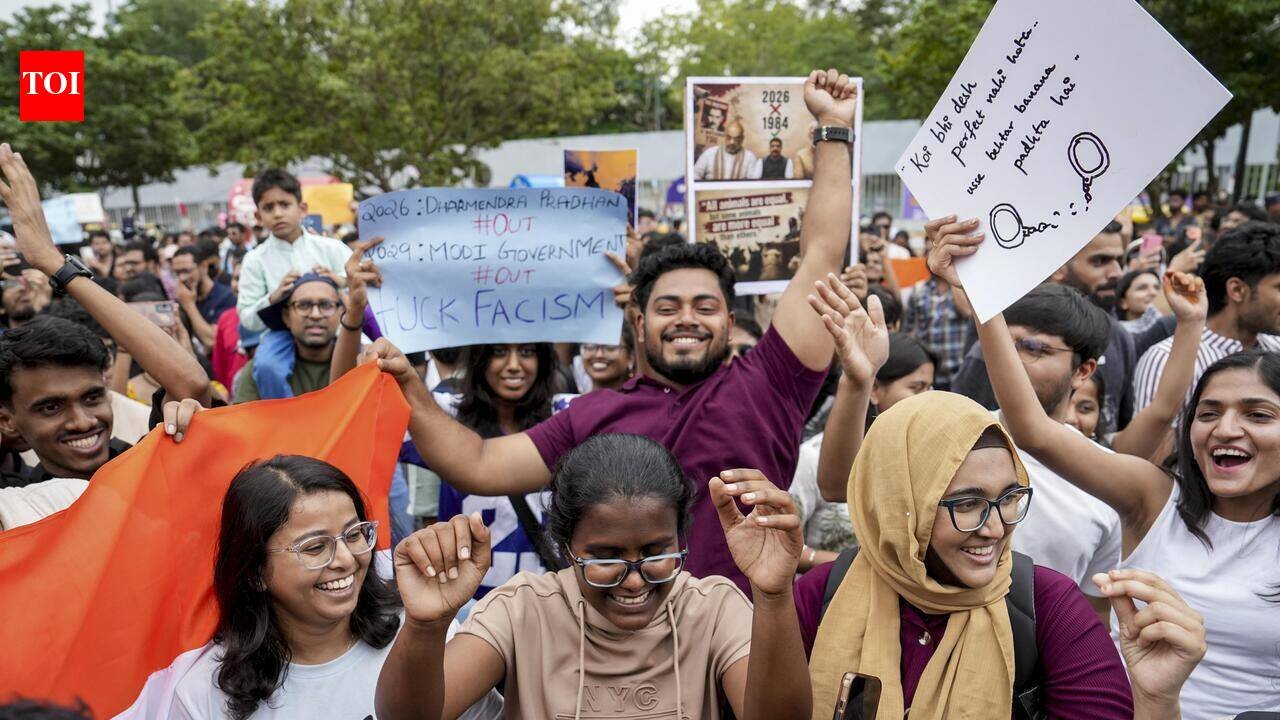
Bengaluru: While thousands of students and youngsters poured into Bengaluru’s streets, a small group of activists virtually made Freedom Park their second home, sustaining a month-long protest that remained remarkably peaceful despite its scale. Unlike demonstrations in several other cities, organisers and police ensured the movement in Bengaluru was largely free of violence.All India Students’ Association (AISA) was among the key organisations coordinating the protests. For Amandeep Singh, who travelled from Amethi in Uttar Pradesh, the agitation demanded both time and sacrifice. “The entire month was not normal for us. I would leave home by 6am to reach Freedom Park and return only around 10pm,” he said, his voice still hoarse after weeks of sloganeering.
CJP Jantar Mantar Protest Updates
Reflecting on the conduct of police, Singh drew a contrast with protests elsewhere. “In Delhi, our comrades were beaten up with lathis. But in Bengaluru, police chose the language of whistles,” he pointed out. Further, the organisers were cautious about access to the protest. “We made sure no controversy or negativity was spread. We were very selective about whom we allowed into the protest,” he added.Among the regular faces at Freedom Park was Tarini S, a student from south Bengaluru, who spent weeks singing protest songs and carrying banners: “This is the greatest moment of my life. The youth of this country have started a revolution.”Jacquelin J, an AISA activist, said the protests witnessed an outpouring of public support across Bengaluru. “People helped us in every possible way. Some brought food from their homes, others gave water. Writers, artists and musicians contributed through literature and songs, expressing their disappointment with govt,” she said.Policy expert Khalif Belthangady credited both students’ determination and state’s approach for ensuring a peaceful movement. “It wasn’t just about one issue; it reflected accumulated anger of the last 10 years. Our generation couldn’t always demand accountability. Gen Z participants took centre stage, while we, as seniors, helped organise the movement. There was no use of force, and I believe that was largely because govt cooperated.”
