



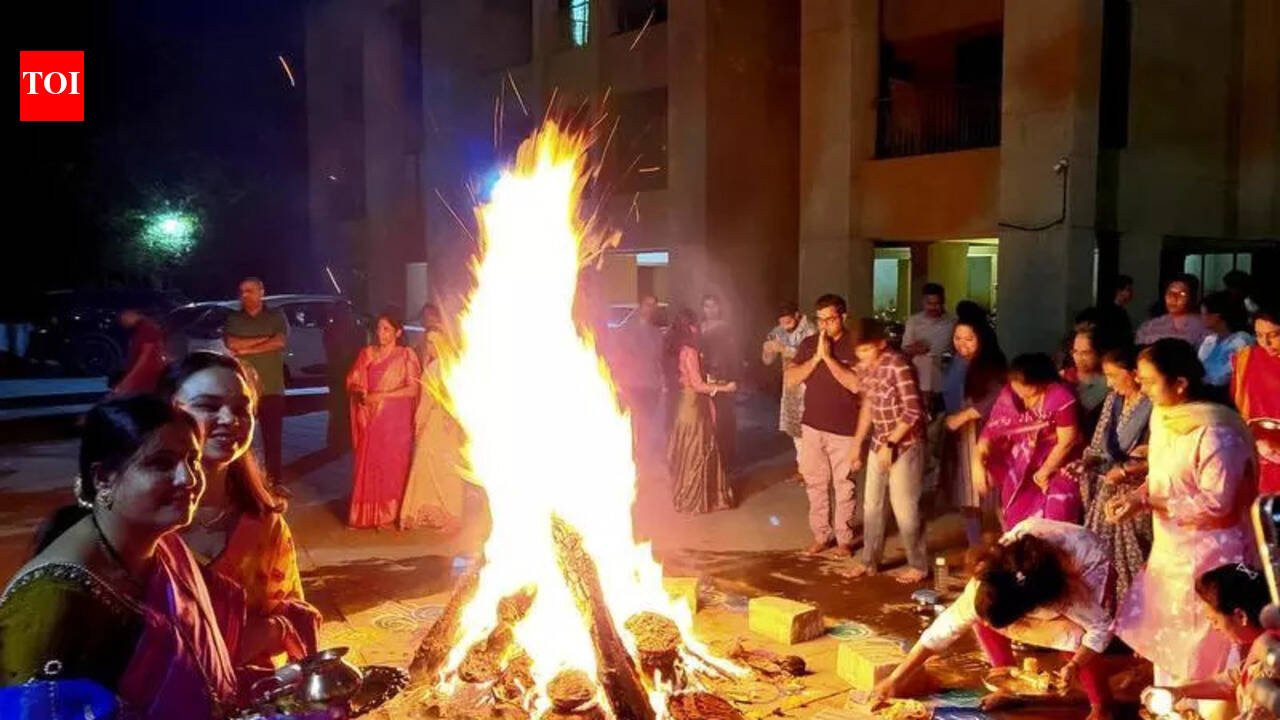
Pune: Both night and day temperatures climbed sharply across the city on Tuesday, making it the hottest day of the year so far, even as air quality deteriorated following Holika Dahan bonfires, as per Indian Institute of Tropical Meteorology’s (IITM) Air Quality Early Warning and Decision Support System. According to India Meteorological Department (IMD), Shivajinagar recorded a maximum temperature of 35.5°C, which was 1.3 degrees above normal and the highest recorded there since Jan 1, 2026. Lohegaon was hotter at 36.4°C, 2.2 degrees above normal, crossing the 36°C mark already. On March 3 last year, Lohegaon recorded 39.6°C — first hottest day of the year. Shivajinagar also hit a new season high of 37.7°C on the same day last year.For Pune, IMD has forecast that maximum temperatures could climb to 37°C in Shivajinagar and 38°C in Lohegaon by March 6. A weather expert had earlier indicated that warming would begin after Holi. “Maximum temperatures will go beyond 35°C and may reach 36-37°C during the week. Minimum temperatures will also rise to around 16-17°C,” he said. He explained that with the onset of summer in March, an anticyclonic circulation’s development is bringing dry and warm north-easterly winds that will push up temperatures. Along with Pune, parts of Maharashtra continued to feel the above-normal heat. In Vidarbha, Akola recorded a scorching 38.6°C on Tuesday — the highest maximum temperature in the state. Chandrapur (37.5°C), Brahmapuri (37.2°C) and Wardha (38.5°C) also reported significantly high readings. In Marathwada, Parbhani touched 37°C, while several stations in Madhya Maharashtra remained above normal. An IMD official said there will be a gradual rise in maximum temperatures by 2-3°C over Maharashtra during the next four days, with no major change thereafter. Minimum temperatures are also expected to rise gradually by 2-3°C over southern parts of Maharashtra during the same period. The lowest minimum temperature in the state was 15.2°C at Malegaon. Minimum temperatures also showed an upward trend in several areas, signalling the beginning of a sustained warming phase. Over Vidarbha, maximum temperatures are likely to increase by around 2°C over the next three days, with no significant change thereafter, while minimum temperatures are expected to see no large change over the next seven days.


