


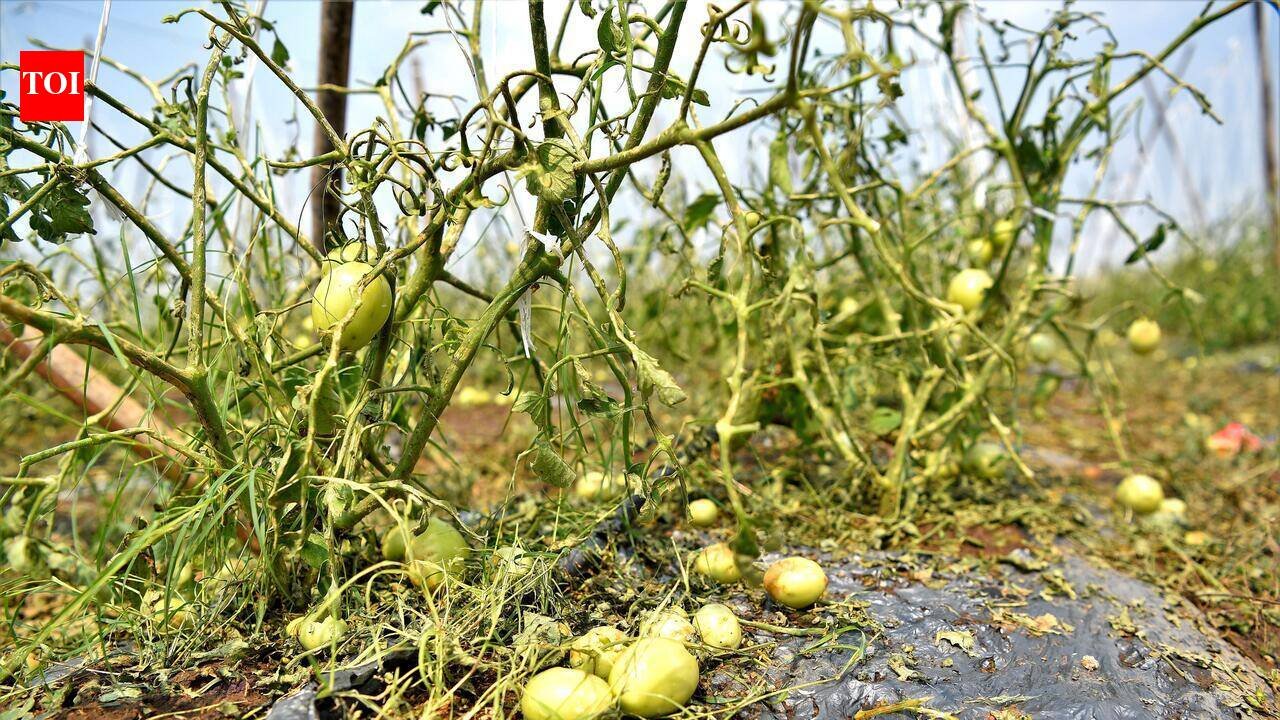
Gandhinagar: In a bid to minimise crop losses after heavy rainfall battered South Gujarat, the state govt has deployed joint teams of horticulture officials and scientists from Navsari Agricultural University (NAU) to help farmers revive uprooted horticultural trees through scientific techniques. The teams have been visiting affected villages in Valsad, Navsari, Surat, Dang and Tapi districts since last week, conducting field demonstrations and training farmers on restoring fallen trees whose roots remain connected to the soil, the govt said on Monday.Agricultural experts said uprooted saplings and fruit trees need not be written off if their root systems remain partially intact. With timely intervention and proper scientific care, many such trees can be restored, preserving years of farmers’ investment and reducing losses caused by the rain.The joint teams have continued field visits despite incessant rainfall and waterlogging, demonstrating techniques to raise fallen trees, prune damaged branches and carry out post-restoration treatment to improve survival rates.An official statement cited the experience of farmer Mohanbhai Patel from Ghej village in Navsari district, who said he had successfully revived around 80% of the mango trees uprooted during Cyclone Tauktae under the guidance of scientists from the horticulture department and NAU. According to Patel, the restored trees recovered so well that it is now difficult to distinguish them from unaffected trees.Quoting Ankur Patel, an associate research scientist at NAU, the statement said that a protocol must be adopted to revive uprooted horticultural crops. Farmers have been advised to raise fallen saplings gradually instead of pulling them upright abruptly to avoid further root damage.The scientists have also recommended pruning long and damaged branches to reduce the plant’s nutrient demand and encourage fresh growth. They advised applying a copper oxychloride (COC) paste on cut surfaces to prevent fungal infection and promote new shoots.For soil treatment, experts have asked farmers to avoid using cow dung manure immediately after flooding. Instead, they recommended mixing carbendazim with vermicompost before applying it around the tree base. To prevent root rot, the horticulture department suggested drenching the soil with a solution containing trichoderma viride and urea several times each month.
