The ancient egyptians were cat people. They prized them not just as pets but as predators that could keep snakes, rats and other pests in check. They worshipped a cat goddess, revered as the guardian of the home. They also sacrificed cats, wrapping their bodies in linen before burying them as offerings to the divine. So great was the demand for cats to mummify that temples bred them specially for the purpose.
FILE PHOTO: An evening view of the financial central district of Hong Kong (REUTERS)
That is one of the things you can learn at the Hong Kong Palace Museum, which is exhibiting mummified cats and other, shinier treasures from ancient Egypt in a blockbuster show that will end in August. The fun is not confined to the museum. In metro stations around the city, you can pose next to “pharaoh cat”, a cartoonish mascot, and translate your name into hieroglyphs (Chaguan’s name includes two vultures, a jar stand and a quail chick).
The plan to build the museum was unveiled almost ten years ago, backed by China’s central government to mark the 20th anniversary of Hong Kong’s “return to the motherland” in 1997. Not everyone was grateful. Back then, many Hong Kongers were confident and irascible enough to point out that no one had asked them if they wanted the gift. Things are different now. The covid-19 pandemic—sandwiched between a spate of anti-government protests and a spell of high interest rates—kneecapped Hong Kong’s economy. Tough new national-security laws also gutted any public opposition to the mainland authorities. Today the city is eager to win any favours it can get from Beijing.
The central government has obliged, bestowing other treasures on the city. It has allowed shiny mainland companies to list on Hong Kong’s stock market, including catl, a battery-maker, and Zijin Gold, which mines pharaonic tombfuls of precious metals. For the first time since 2019, Hong Kong last year topped the global charts for initial public offerings by value. And, though share prices have since faltered, plenty of firms are still looking to list. Hong Kong is once again a great place to raise money.
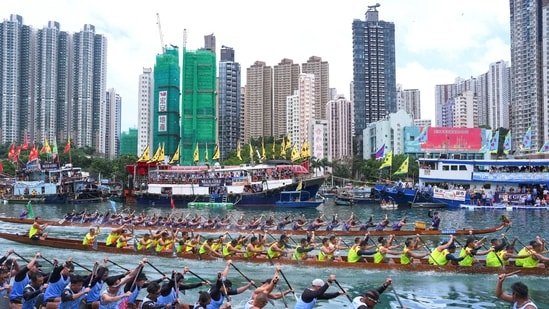
The city’s tighter ties with the rest of China do have one economic downside: the so-called “Shenzhen effect”. Even as mainland firms flock to Hong Kong to raise money, the city’s residents now rush to the mainland to spend it. Shoppers routinely cross the border on weekends to nearby Shenzhen to enjoy the mainland’s cheaper prices and scrappier retailers. On June 19th over half a million Hong Kongers raced out of the city, rather than staying to enjoy local attractions like the dragon-boat competition in Stanley, on the beachy, south side of Hong Kong island.
This exodus of customers, as well as the incursion of mainland e-commerce firms eager to grab market share, has stymied Hong Kong’s retail recovery. Shops, restaurants and hotels employed over 630,000 people in 2018. That number has fallen by 22%.
Stanley is one sad example. The picturesque village offers watersports, hiking and historic buildings, like Murray House, a colonial barracks, dismantled and relocated from central Hong Kong. The village’s other draw is its market, a jumble of 100 shops, shaded by tarpaulins and corrugated plastic, selling leather handbags, Bruce Lee t-shirts, personalised calligraphy and the like.
Far removed from Hong Kong’s metro system, Stanley used to be a popular weekend destination, especially for expats. But it is a shadow of its former self. The restaurants that once animated Murray House have died, leaving the neoclassical building with a noteworthy past but no obvious future. The market used to be inconveniently crowded. (“It was a pain,” says one resident.) These days it is ominously easy to navigate. Some shops have shut. One former wine kiosk now houses a bitcoin atm, which swallows banknotes in return for cryptocurrency. Letters to former tenants, including one from the taxman, gather dust behind it.
To revive Hong Kong’s fortunes, the government is investing in “experiences” beyond shopping. The Palace Museum is one successful example. Kai Tak stadium, opened in 2025, is another, able to seat 50,000 people on the site of the city’s former airport. It has just hosted i-dle, a Korean pop group, and will soon stage a pre-season football match between Manchester City and Inter Milan. The number of mainlanders visiting Hong Kong so far in 2026 is up 16% year-on-year, but still 25% below the peak before the protests of 2019.
How you feline?
Stanley, like the ancient Egyptians, is putting its faith in cats. When business flagged at Beesy Bay, a local restaurant, it commissioned a mural for the restaurant’s iconic yellow building. The artist, known as LeonLollipop, painted a cat called “Gloomie”, his cheek resting on an upturned paw in what the artist describes as a “pensive pose”. It soon became a popular spot for selfies. After Anson Lo, a Hong Kong pop star, posted a photo of himself mirroring the pose, his fans flocked to the site. The district office has commissioned more cat and dog murals across the village, painted by Art Dreamers, a local group. The aim was to “add some vibrancy to the area”, says Sandy Cheung, the district officer. LeonLollipop was not involved, but he thinks the results are “lovely”.
Unfortunately, Gloomie could not save Beesy Bay, which recently closed. But other businesses hope to benefit from an increase in foot traffic. From July, Hong Kong will allow customers to bring real-life pets to restaurants. Some Stanley establishments have applied for the necessary licence.
The city’s retail sales are still far from their peak. But they have increased by over 9% in the first four months of 2026, compared with the same period last year. Not long ago Hong Kong was declared dead by some financial commentators, and ready for embalming. But it is now finding a path back from the afterlife, with pensive cats to guide the way.
Subscribers to The Economist can sign up to our Opinion newsletter, which brings together the best of our leaders, columns, guest essays and reader correspondence.