



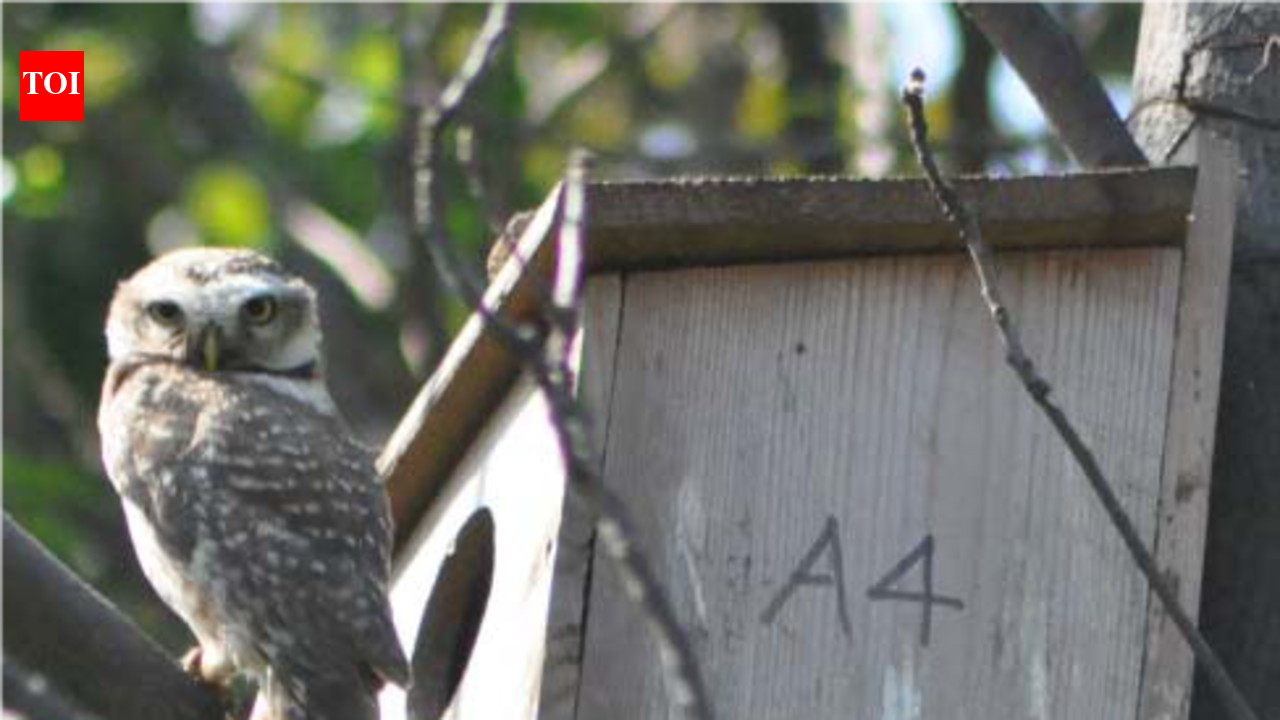
Ludhiana: Punjab Agricultural University (PAU) zoologists are urging farmers and rural residents to adopt standardised artificial nests to combat the sharp decline in cavity-nesting birds caused by shrinking forest cover, which currently stands at just 3.67% in the state.Addressing the loss of natural tree cavities, experts highlighted that artificial nests offer alternative breeding niches for beneficial insectivorous and carnivorous birds that control crop pests like insects, rats, and mice.Enhancing agricultural ecosystemsDr Tejdeep Kaur Kler, head of the department of zoology and principal ornithologist, explained that loss of natural habitats depletes birds acting as natural biological control agents.“Successful breeding in these artificial nests can enhance reproductive success and potentially increase the abundance of beneficial birds, thereby strengthening natural pest-management services in Punjab’s agricultural landscapes,” Dr Kler noted, adding that birds also enhance local aesthetic beauty.Species and outreach programmesThe university has evaluated and standardised nest models for six key species: the Common Myna (Acridotheres tristis), Spotted Owlet (Athene brama), Collared Scops Owl (Otus bakkamoena), Oriental Magpie-Robin (Copsychus saularis), House Sparrow (Passer domesticus), and Indian Roller (Coracias benghalensis).Zoology expert Dr Manoj Kumar stated that PAU has promoted these nests for over a decade through Kisan Melas, exhibitions, agricultural officer workshops, media talks, and farmer awareness camps, making models, dimensions, and pamphlets readily available.“Supplementing scarce natural tree cavities with well-designed artificial nests can therefore serve as a simple, practical and community-supported conservation strategy to provide breeding opportunities for secondary cavity nesters and help sustain their ecological role in agricultural ecosystems,” Dr Kumar added.


