






Almost everyone’s got at least one pair of jeans sitting at the back of the wardrobe; maybe the knee’s blown out, maybe they just don’t fit the way they used to, but the fabric itself is still perfectly good, thick, sturdy, and honestly too nice to just throw away. Denim happens to be one of the most versatile fabrics to repurpose, precisely because it’s tough enough to survive being cut, stitched, and reshaped into something completely different without falling apart. Here are five genuinely useful, good-looking ways to give an old pair of jeans a second life at home.
A sturdy tote bag or pouch
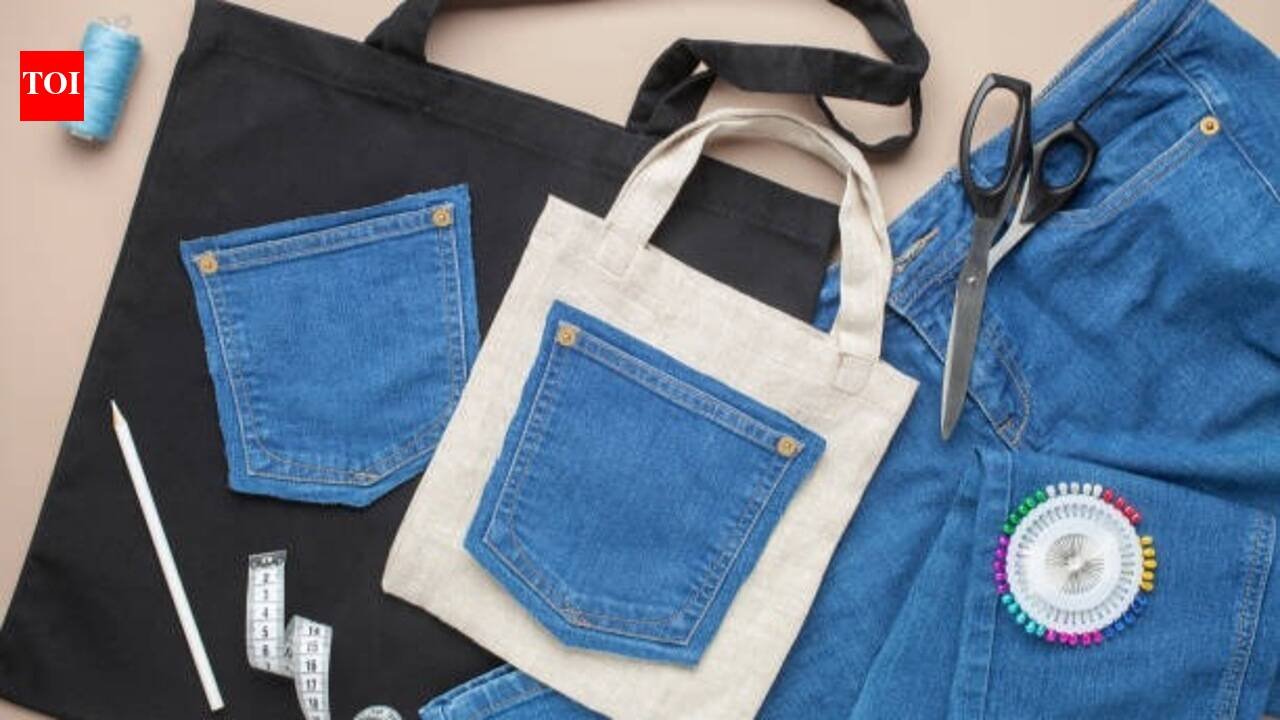
This is probably the most popular denim upcycle out there, and for good reason, jeans are already shaped in a way that makes bag-making surprisingly simple. Cut off the legs, sew the bottom shut, and you’ve got the basic body of a bag almost instantly, with the existing pockets doubling up as built-in storage for small things like keys or a phone. Using the waistband as the top opening, with the belt loops repurposed to thread a strap through, means you barely need to add anything extra, the jeans practically build the bag for you. It’s sturdy enough to hold groceries or books without stretching out of shape, which is honestly more than you can say for a lot of store-bought fabric totes.
A cosy denim cushion cover
Old jeans make genuinely great cushion covers, mostly because the fabric’s thickness gives cushions a slightly structured, tailored look rather than the softer, floppier feel you get from regular cotton covers. Cut two rectangles from the legs slightly larger than your cushion, sew three sides together, slide the cushion in, and stitch the last side shut, or add a zip if you want something you can remove and wash later. Mixing different washes and shades of denim across a few cushions on the same sofa actually looks intentional rather than mismatched, especially if you keep the rest of the room fairly neutral so the denim texture stands out a little.
A hanging wall organiser
The pockets on old jeans are honestly one of their most underrated features once you stop thinking of them as clothing. Cut out a few pockets, along with a decent strip of fabric surrounding each one, and stitch them onto a larger piece of denim or canvas backing, arranged in a grid, to create a genuinely useful hanging organiser for small items like pens, scissors, mail, or odds and ends that usually end up cluttering a countertop. Hung near a desk or by the front door, it turns something that would’ve been thrown away into actual, everyday storage that looks a lot more charming than a plastic organiser ever could.
A durable garden apron or tool pouch
Denim’s toughness makes it a genuinely smart choice for anything that needs to survive a bit of rough handling, which is exactly why old jeans work so well as a base for a gardening apron or a tool pouch. Cut and stitch a front panel from the legs, sew a couple of the original pockets onto it for holding small tools, seeds, or gloves, and attach straps using the leftover waistband or belt loops. It holds up far better than most flimsy fabric aprons you’d buy new, and there’s something satisfying about a pair of old jeans getting a second working life doing exactly what tough fabric is meant to do.
A patchwork rug or floor mat
For anyone with a few old pairs of jeans in different washes and shades, cutting them into strips or squares and stitching them together creates a genuinely sturdy, good-looking patchwork rug or doormat. Denim’s thickness means it holds up well underfoot without fraying quickly, and the varying shades of blue across different jeans actually work in the rug’s favour, giving it a deliberate, layered look rather than looking like mismatched scraps stitched together out of necessity. It’s a slightly bigger project than the others on this list, but the payoff is a genuinely functional piece of home decor that would cost a fair amount if bought new.
Disclaimer:
This article is intended for general informational and craft purposes only. Results may vary depending on denim thickness, sewing skill, and tools used. Always test cutting and stitching techniques on a small section first before starting a full project.


