



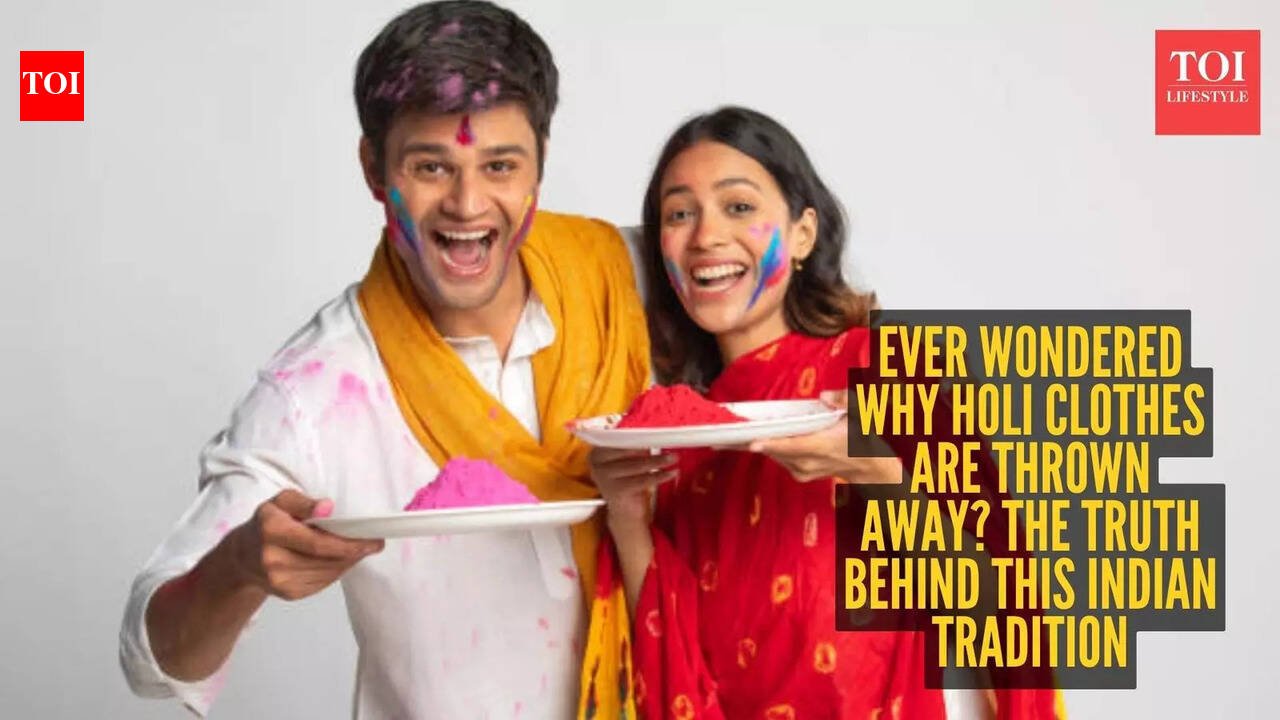
Every year after Holi, the same familiar sight appears across Indian homes. Balconies suddenly look like abstract art galleries. White kurtas turn stubborn shades of pink and purple. Old T-shirts hang under the sun, still carrying traces of green and blue that refuse to leave.And almost quietly, many of those clothes never return to the wardrobe again.It feels like an unspoken tradition. Wear something old on Holi. Enjoy the madness. Then let the clothes go.But why do we actually discard them? Is it religious belief, hygiene, or simply practicality? The answer sits somewhere between culture, memory, science, and the unique spirit of the festival itself.
Holi was never about dressing up
Unlike Diwali or weddings, Holi was never meant to be elegant. The festival celebrates playfulness, mischief, and equality. For one day, social rules soften. Neighbours throw colour at each other. Elders laugh like children. Nobody worries about staying neat.Historically, people deliberately chose old clothes for Holi. New garments would have made no sense when the entire idea was to get drenched in colour, water, and sometimes even mud.
In many rural traditions, Holi also marked the end of winter and the arrival of spring. Wearing worn-out clothes symbolised leaving the old season behind. After the celebration, discarding them felt natural – almost like shedding the past.So the practice began less as a rule and more as common sense mixed with symbolism.
The quiet connection with Holika Dahan
The night before Holi, families gather around the Holika Dahan bonfire. The ritual remembers the story of Prahlad and the burning of Holika, representing the victory of good over evil.Fire, in Indian rituals, often stands for purification. People symbolically release negativity, illness, or emotional burdens into the flames.Over generations, this idea extended to Holi celebrations as well. Some communities began believing that the colours played during Holi absorb unwanted energy from the past year. Throwing away stained clothes became a way of starting fresh.There’s no religious text commanding people to discard Holi garments. Still, traditions often survive through repetition rather than instruction. Grandparents did it, parents followed, and the habit stayed.It’s cultural memory at work.
The very practical science behind ruined clothes
Now comes the less romantic explanation – chemistry.Centuries ago, Holi colours were made from flowers like tesu, turmeric, neem leaves, sandalwood, and natural herbs. These powders were gentle and washed off easily.Modern colours are different.Many commercially available powders contain synthetic dyes, industrial pigments, and metallic compounds designed to stick strongly to surfaces. That includes fabric fibres.When colour meets cotton, something interesting happens. Pigment particles slide deep into tiny gaps within the threads. Water and detergent remove only surface stains. The deeper dye remains trapped.Sunlight makes things worse. Heat helps colours bind even more firmly, turning temporary stains permanent.So people don’t always throw away Holi clothes out of tradition. Sometimes the clothes simply refuse to recover, no matter how many washes they survive.
Hygiene matters more than we admit
Holi isn’t just about dry colour anymore. There’s water balloons, coloured foam, mud, street dust, sweat, and sometimes water from questionable sources.Clothes absorb everything.Dermatologists often explain that leftover chemical particles can remain inside fabric even after washing. For people with sensitive skin, reusing those clothes may cause irritation or itching.And let’s be honest – once a garment carries the memory of sticky colours and damp celebrations, wearing it again to work or social gatherings doesn’t feel appealing.
So practicality quietly takes over.
Holi is supposed to be messy
Part of Holi’s charm lies in its temporary chaos. It’s one of the rare festivals where perfection disappears completely.You start the day clean and careful. Within minutes, someone smears colour across your face. By afternoon, everyone looks equally unrecognisable.Clothes become part of that transformation. Watching a plain white kurta turn into a canvas of colours is strangely satisfying.Discarding the garment afterwards almost feels like closing a chapter. The clothes did their job. They held laughter, music, chaos, and memories.They were never meant to stay pristine.
The belief about “negative energy”
Across many households, elders still say Holi clothes carry ashubh urja – leftover negativity.Science doesn’t support the idea that clothing stores spiritual energy. But human psychology does explain why such beliefs persist.Rituals help people mentally reset. Cleaning homes before festivals, donating old belongings, or cutting hair after significant events all serve similar emotional purposes.Letting go of Holi clothes becomes symbolic closure. You leave behind stress, conflicts, and emotional baggage along with the stained fabric.The action feels cleansing, even if the reasoning sounds mystical.A new conversation around sustainabilityInterestingly, this tradition is changing.With growing environmental awareness, many people now hesitate to throw clothes away every year. Some keep a dedicated “Holi outfit” that returns annually. Others convert stained garments into nightwear, cleaning cloths, or DIY fabric projects.There’s also renewed interest in herbal gulal and eco-friendly colours that wash off more easily.Modern celebrations are slowly balancing tradition with responsibility. The spirit of Holi remains playful, but people are becoming more mindful of waste.White clothing dominates Holi celebrations for a reason.White symbolises simplicity and equality. Once covered in colour, everyone looks the same. Status, profession, and social identity briefly fade.And visually, bright colours stand out dramatically against white fabric. Photographs look vibrant. The celebration feels alive.But white cotton absorbs dyes deeply, which almost guarantees permanent stains. The very reason white looks beautiful during Holi also explains why those clothes rarely survive afterwards.Beauty and impermanence go hand in hand here.
Holi, at its heart, is about letting go
Maybe the real reason Holi clothes are discarded has less to do with religion or science and more to do with emotion.Holi celebrates change. Winter gives way to spring. Old tensions dissolve in laughter. Relationships reset.You begin the day wearing something ordinary. You end it coloured, exhausted, and strangely lighter.Letting go of those clothes mirrors the larger message of the festival – nothing stays the same forever, and that’s okay.The colours fade. The season moves forward. And life quietly begins again.So when those stained garments disappear after Holi, it isn’t just about ruined fabric. It’s about completing the ritual of celebration itself.The clothes carried the moment. And once the moment passes, we let them go.


