



Holi 2026 is here. Holi is rarely just a one-day event in India. This year, the main festival falls on March 4, 2026, when people come together to play with colours and celebrate the arrival of spring. A day earlier, on March 3, 2026, bonfires will be lit across the country to symbolise the burning of Holika (Holika Dahan), marking the triumph of good over evil. Also read | Happy Holi 2026: 100 best wishes, colourful images, messages, greetings, GIFs and WhatsApp status to share
While the central theme remains the triumph of good over evil and the arrival of spring, the execution varies wildly from one border to the next. From the playful violence of sticks in the north to the sombre reflections of the south, India’s ‘festival of colours’ is a masterclass in cultural diversity.
Lathmar Holi in Uttar Pradesh
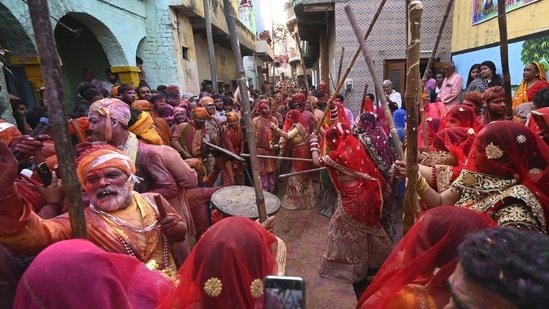
In the towns of Barsana and Nandgaon, Holi isn’t just about powdered pigment — it’s about defense. Following the legend of Lord Krishna visiting Radha’s village and being playfully chased away, the women of Barsana take to the streets with large wooden sticks (lathis). Men from Nandgaon arrive to ‘tease’ the women, who respond by raining blows down upon the men’s shields. It is a spectacle of strength and song, where the men must endure the ‘beating’ with grace, all while being drenched in organic colours and water.
Hola Mohalla in Punjab
Started by Guru Gobind Singh, Hola Mohalla is a distinct variation celebrated by the Sikh community, primarily in Anandpur Sahib. While dry powders are used, the focus is on martial arts. Expect to see gatka (traditional sword fighting), mock battles, and daring horsemanship. It transforms the festival of colours and love into a celebration of courage and readiness.
Dhulandi in Haryana
In Haryana, Holi is known as Dhulandi, and it takes on a particularly spirited — and often mischievous — tone. A unique tradition where sisters-in-law (bhabhis) play pranks on their brothers-in-law (devars). Traditionally, the women might form a human chain to ‘capture’ the men, who then have to ‘buy’ their freedom by offering sweets or gifts. It’s a day characterised by high-energy humour and community feasts.
Holi in West Bengal, Manipur, Goa, Maharashtra
While the core spirit of Holi remains constant, its regional flavours are what make the Indian landscape so vibrant during this season. In West Bengal, the festival is celebrated as Basanta Utsav, where students at Shantiniketan dress in yellow and perform graceful dance to welcome spring.
Moving west to Maharashtra, the focus shifts to Rang Panchami, celebrated five days after the full moon with massive community water fights. Down in Goa, the festival takes the form of Shigmo, a grand street carnival featuring folk dances and elaborate floats. Meanwhile, in Manipur, the five-day Yaosang festival blends Hindu traditions with indigenous culture, most notably through the Thabal Chongba, a traditional moonlight dance where youth join hands in a rhythmic circle.
The universal thread: good over evil
Despite the different names — be it Rang Panchami in Maharashtra or Dol Jatra in Bengal — the core remains the Holika Dahan. On the eve of the main event, bonfires are lit across the country to symbolise the burning of the demoness Holika. This ritual serves as a collective ‘reset button’, encouraging people to burn away past grievances and start the new season with a clean slate.


