






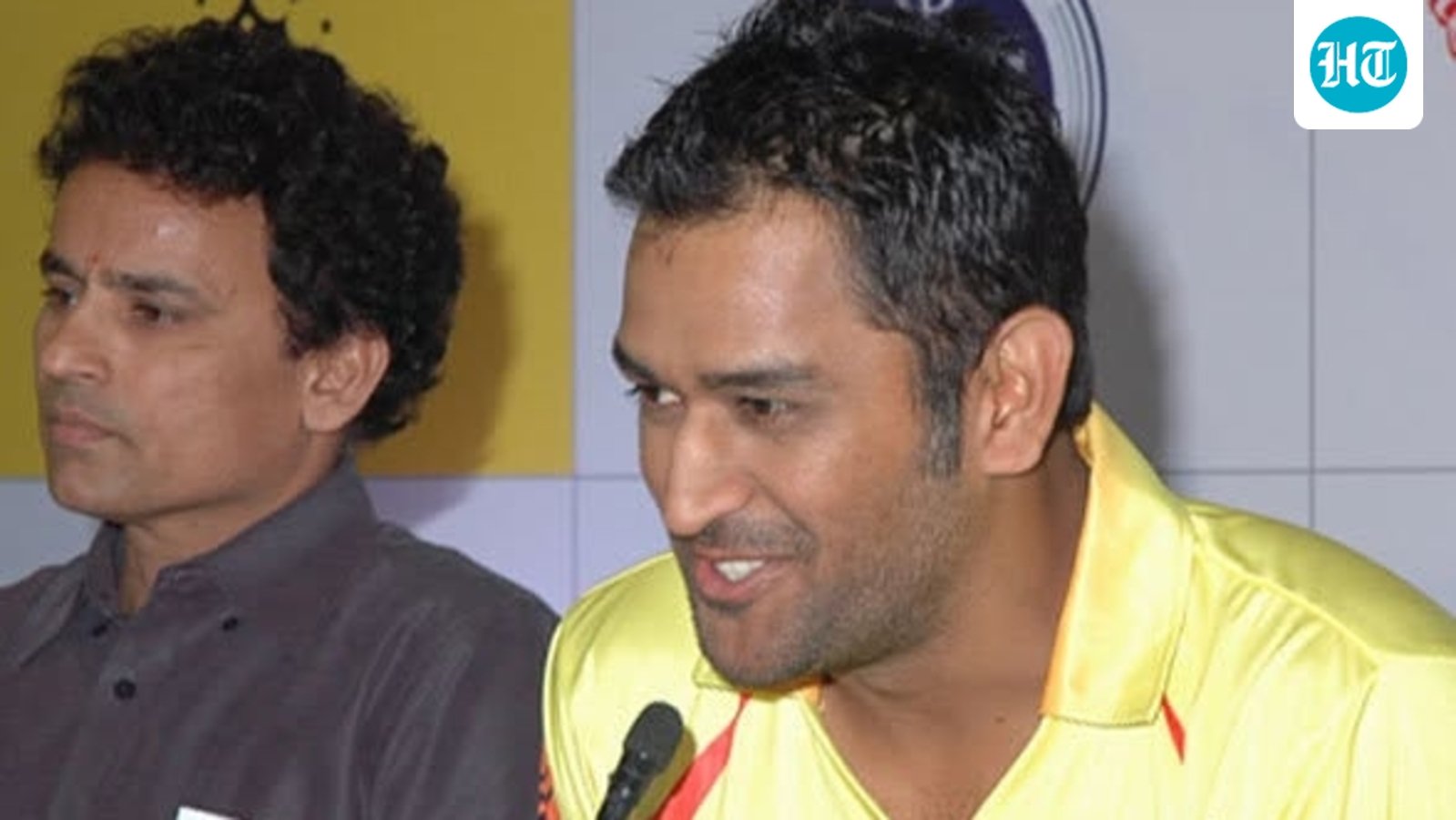
There was a time when a 56-ball hundred in Indian first-class cricket was almost unimaginable. The attack included Narendra Hirwani, one of India’s most dangerous spinners of the period, the pitch at Chepauk was wearing, and Tamil Nadu had been set 340 to win the Irani Trophy. Their opener had already made a first-ball duck in the first innings, but what followed was the kind of response that should have transformed a career.
He smashed 119 from 78 balls, reaching his century in only 56 deliveries as Tamil Nadu chased down the target with three wickets remaining. It equalled the fastest first-class hundred by an Indian, a mark also held by Rajesh Borah before Rishabh Pant lowered it to 48 balls in 2016. Only months earlier, the same batter had scored 551 runs during Tamil Nadu’s Ranji Trophy-winning campaign, including 160 in the quarter-final and 89 in the final.
India eventually came calling, but only briefly. Seven ODIs brought 88 runs and a solitary half-century before the door closed. Yet the man who disappeared from the international stage would later influence players whose careers became far bigger than his own. Rahul Dravid stayed at his house while playing league cricket in Chennai, and years later he sat on India’s national selection panel during the turbulent Sourav Ganguly-Greg Chappell period.
Then came perhaps his most famous contribution away from the field. Before the inaugural IPL auction in 2008, he argued that Chennai Super Kings should prioritise MS Dhoni rather than Virender Sehwag. When the bidding began, it was his paddle that eventually secured Dhoni for $1.5 million, beginning one of the most defining player-franchise associations in IPL history.
The man behind those episodes was Vakkadai Biksheswaran Chandrasekhar, better known as VB Chandrasekhar. His cricket journey contained a rapid domestic rise, an international career that disappeared almost as quickly as it arrived, a hugely influential second innings off the field and, eventually, a tragic ending.
From late starter to India batter
Chandrasekhar’s route into top-level cricket was unusual because he was not a teenage prodigy fast-tracked through the system. Born in Madras in 1961, he studied mathematics and engineering and made his first-class debut only at the age of 25, scoring 81 for Tamil Nadu against Hyderabad in the 1986-87 Ranji Trophy.
His rise after that was swift. During Tamil Nadu’s title-winning 1987-88 Ranji campaign, Chandrasekhar accumulated 551 runs in eight matches at 45.91. He made 160 against Uttar Pradesh in the quarter-final before contributing 89 in the final against Railways, where Tamil Nadu piled up 709 and won by an innings and 144 runs.
The innings that truly pushed him into national discussion, however, came later that year in the Irani Trophy. Chandrasekhar was dismissed first ball in Tamil Nadu’s first innings against Rest of India and had also been left disappointed after missing out on the Test squad for the home series against New Zealand. Krishnamachari Srikkanth later recalled that Chandrasekhar went to the beach and sat alone after the duck.
He returned with a completely different mindset. Set 340 in the fourth innings, Tamil Nadu raced towards the target as Chandrasekhar tore into an attack containing Hirwani and Gopal Sharma. His 119 came from only 78 balls, with the hundred arriving from 56 deliveries, and a 154-run opening stand with Srikkanth provided the foundation for an extraordinary three-wicket victory.
Two months later, Chandrasekhar made his ODI debut against New Zealand at Visakhapatnam. Five days after that, he scored 53 at Indore in an Indian batting line-up that included Srikkanth, Navjot Sidhu, Dilip Vengsarkar, Mohammad Azharuddin and Kapil Dev. It would remain the only half-century of his international career.
He returned during India’s 1990 tour of New Zealand and scored 92 in a first-class warm-up game, but his ODI comeback yielded scores of 4, 8 and 3. That final score, against Australia at Hamilton, brought the curtain down on an international career of just seven matches.
His domestic numbers looked far more substantial. Chandrasekhar finished with 4,999 first-class runs from 81 matches at 43.09, including 10 hundreds and 23 fifties. His career-best 237 not out for Goa against Kerala came late in his playing days, leaving him with the peculiar footnote of finishing just one run short of 5,000 first-class runs.
Dravid, Ganguly and the Dhoni call
Chandrasekhar’s impact on Indian cricket did not end when his playing career did. He helped bring a young Rahul Dravid into the India Cements set-up in Chennai, where the Karnataka batter could gain valuable experience in league cricket. Dravid stayed at Chandrasekhar’s house during that period, years before becoming one of India’s greatest Test batters.
Chandrasekhar later represented South Zone on the national selection committee between 2004 and 2006. That placed him inside the selection room during one of Indian cricket’s most turbulent phases, when Ganguly lost the captaincy, was dropped from the side and Dravid took over the leadership.
His most enduring influence, however, came through Chennai Super Kings. Chandrasekhar later recalled that N Srinivasan initially preferred Sehwag as CSK’s marquee target before he argued that Dhoni offered captaincy, wicketkeeping and match-winning batting in one package.
According to Chandrasekhar, Srinivasan eventually changed his mind and told him to “go and get Dhoni”. Chandrasekhar represented CSK at the 2008 auction and kept bidding until Dhoni was secured for $1.5 million, making him the most expensive player at the inaugural auction. He remained closely involved in CSK’s early cricket operations and was also remembered for his ability to identify and back talent.
A tragic final chapter
Chandrasekhar later became the owner of a Tamil Nadu Premier League franchise that was eventually known as VB Kanchi Veerans. The venture kept him deeply involved in cricket, but it also brought significant financial pressure, with police later saying he had been dealing with mounting debt associated with the franchise.
On August 15, 2019, Chandrasekhar died by suicide at the age of 57, only six days before his 58th birthday. His death shocked Indian cricket, especially in Tamil Nadu, where he had spent decades contributing as a player, mentor, selector, administrator and talent-spotter. The tragedy formed the final chapter of a career far richer than seven ODIs might suggest. Chandrasekhar helped Tamil Nadu win the Ranji Trophy, equalled an Indian first-class batting record, aided a young Dravid’s development and later played a direct role in taking Dhoni to Chennai.
When CSK raised the paddle for Dhoni in 2008, the spotlight naturally fell on the man being bought. Behind that paddle, though, was a forgotten India opener whose influence on Indian cricket stretched far beyond the runs recorded beside his name.


