



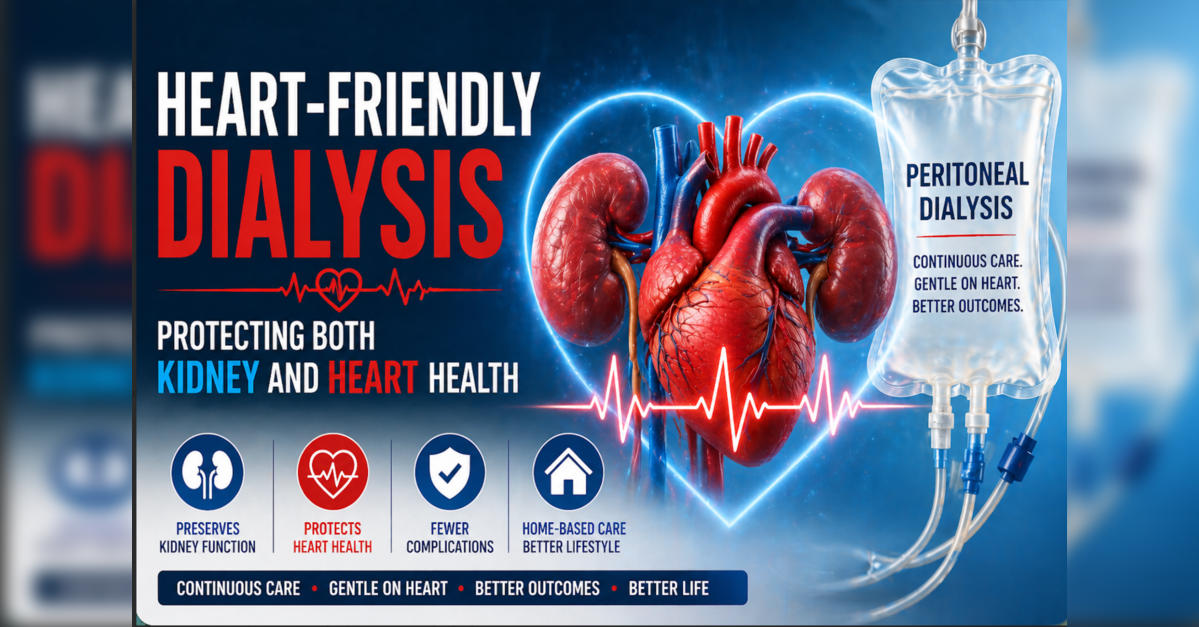
For patients living with Chronic Kidney Disease (CKD) and End Stage Renal Disease (ESRD), protecting heart health is just as critical as managing kidney failure. Cardiovascular complications remain one of the leading causes of morbidity and mortality among kidney patients, making cardiac-conscious dialysis care increasingly important.
Peritoneal Dialysis (PD) is recognized as a heart-friendly modality as it provides continuous and gentle fluid removal that helps to maintain cardiovascular stability and overall patient well-being. Effective fluid balance plays a critical role in reducing cardiac strain and supporting better long-term outcomes for kidney patients.
“A patient-centric dialysis care approach emphasizes on improving overall patient well‑being and long‑term outcomes,” said by Vikas Taneja, the Country Head of Vantive India. While sustaining life through effective renal replacement therapy remains essential, true progress requires a broader, patient‑centric perspective — one that recognizes the importance of cardiovascular health and quality of life alongside kidney function.
At Vantive India, we believe dialysis care must continue to evolve to meet these complex needs. By advancing therapies and care models that support cardiovascular stability, enable gentler fluid management, and prioritize patient experience, we are committed to helping patients achieve better long‑term health outcomes. Our focus is not only on extending life, but on expanding patients’ possibility — empowering them with care that supports resilience, independence, and a better quality of life.
Peritoneal Dialysis: Supporting Better Heart and Kidney Outcomes
The progression of chronic kidney disease to end‑stage renal disease remains a growing global health challenge. Physicians are playing an increasingly critical role in driving the adoption and implementation of comprehensive, patient‑centric models of care within healthcare systems. This is when “PD First” is advocated by Dr. R.Balasubramaniyam, the Chief Nephrologist of Kauvery Hospital, Chennai.
Dr. R. Balasubramaniyam, Chief Nephrologist, Kauvery Hospital, Chennai, advocates a “Peritoneal Dialysis First” approach because of its ability to preserve Residual Renal Function (RRF) while supporting cardiovascular stability.
Unlike conventional hemodialysis, Home-Based PD provides continuous and gentle fluid removal, helping to avoid abrupt intravascular volume shifts, sudden blood pressure fluctuations, and associated cardiovascular stress. It also preserves a better Residual Renal Function (RRF) that allows PD patients to often retain residual kidney function longer, which contributes to better fluid control, enhanced toxin clearance, and reduced strain on the heart.
Better fluid management can also help reduce symptoms such as swelling, breathlessness, and fluid overload that commonly affect cardiac patients.
In addition, Home-Based PD provides greater independence, fewer hospital visits, improving overall quality of life. For transplant candidates and pediatric patients, PD may also provide smoother treatment experiences with fewer complications.
With growing recognition of the close interplay between kidney disease and cardiovascular health, PD is increasingly being acknowledged as a heart-conscious dialysis modality.
A Cardiac-Smart Dialysis Approach for Better Patient Outcomes
Cardiovascular disease remains one of the biggest concerns for patients with chronic kidney disease. Choosing a dialysis therapy that minimizes cardiac stress can play an important role in improving long-term outcomes and quality of life.
Currently Home-Based PD is increasingly recognized as a cardiac-smart dialysis modality due to its gentle and continuous fluid removal process. Unlike conventional hemodialysis which involves rapid fluid shifts during short treatment sessions, PD helps to maintain better hemodynamic stability and reduce cardiovascular strain.
According to Dr. Rajeeva Lochana, the Senior Consultant of Nephrology & Transplant Medicine, Medway Hospitals Chennai, “PD offers superior volume control, which is especially important for patients with heart failure and cardiovascular complications. Continuous daily fluid removal helps maintain fluid balance, reducing symptoms such as edema and breathlessness.”
PD also supports longer preservation of residual kidney function, contributing to better toxin clearance and improved blood pressure stability.
Another major advantage is its home-based nature, which reduces the physical stress associated with frequent hospital visits and repeated in-center dialysis sessions.
For carefully selected patients, PD is more than a renal replacement therapy—it is an integrated approach that supports both kidney care and cardiovascular protection while improving overall patient well-being.
Disclaimer- The views/suggestions expressed in the article are the sole responsibility of the brand connected, this should not be considered as a substitute for medical advice. Please consult your treating physician for more details.


