









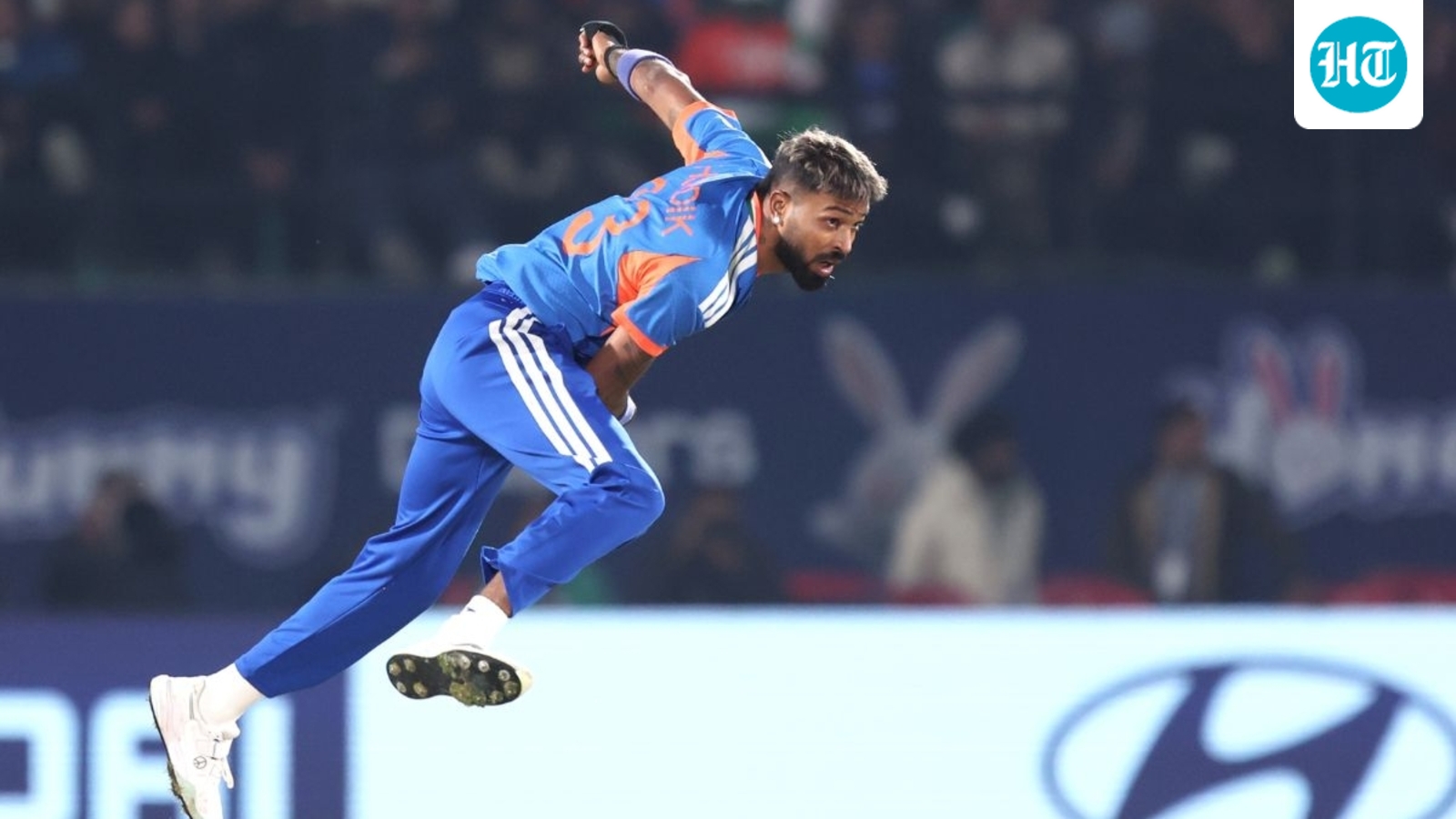
Hardik Pandya, India’s premier pace-bowling all-rounder, is breaking down more frequently than ever before, and the frustration must be mounting for him and the team. Back spasms, a leg strain and now a shin injury: three different injuries in five months have derailed him.
Even as India looks to firm up its core for the 2027 World Cup, which is less than a year away, Hardik’s breakdowns are more than an inconvenient roadblock. The team management has propped up Nitish Reddy and is nurturing Suryansh Shedge — who replaced Hardik in India A for the Sri Lanka A series — but there is a clear qualitative difference.
If Hardik is to make that trip to South Africa next year, he must be able to bowl all 10 overs and as things stand, Hardik is desperately short on game time. Nine months into 2026, Hardik has featured in 14 matches for India – all T20Is – and 10 for Mumbai Indians.
’10 overs a must for Hardik’
“If he has to play in the World Cup, he has to bowl a minimum of 10 overs. And to bowl those 10 overs efficiently, he should be able to bowl 15-20 overs in practice. That’s how it’s done,” former India trainer Ramji Srinivasan told The Hindustan Times.
“The person has to be totally fit, where your skill, fitness, strength and conditioning, recovery protocols, prehab protocols, nutrition and mental condition – everything has to work around the skill. It cannot be the other way around.”
Learn from the greats
Given the packed cricketing calendar, going back to basics, workload management notwithstanding, may benefit Hardik.
“Hardik should take a leaf out of L Balaji’s book. He came back so much stronger to play for India again in 2012, the T20 World Cup and the New Zealand tour. How did he come back? Balaji’s processes may not be pertinent now, but having a process is crucial. How do you make the process robust?” added Srinivasan.
“Hardik needs to talk to Zaheer Khan and L Balaji – players who have undergone many injuries and come back strong. Ashish Nehra is an amazing character too. He had so many injuries, but every time he came back stronger. He needs to ask them: how did you set your fitness protocols?”
Hardik has repeatedly pointed out that his body struggles to cope with the demands of ODIs, T20Is and Tests.
“He is talented enough to play all formats. That body can hold up. Cricket is not as physical a sport as tennis, soccer, the NBA or the NFL. You can do loads of things for Hardik to be able to play all three formats. First of all, get the assessment right. Workload management doesn’t start with physios. It starts with understanding where they are missing an analysis and what remedial measures are being given by the strength and conditioning coaches. Start from scratch. We want Hardik to be fit as a fiddle for the World Cup. For that, he has to have a lot of match practice.”
Also Read – For Bhuvneshwar Kumar, is T20I call-up a pathway to ODI World Cup squad?
The wrong posture
Deepak Sury, a former trainer at the BCCI’s Centre of Excellence (formerly National Cricket Academy), feels Hardik’s posture and landing are far from ideal.
Sury, formerly with the Delhi Capitals, also believes the physios working with Hardik need to introspect more deeply.
“He was fine earlier. But as he’s getting older, he started getting these problems. His weight distribution has been hampered. His posture has been impacted. It’s one thing to be fit, and another thing to be match ready. They are declared fit, then they play matches and return. Once you pick up a strain or a sprain, it will return,” Sury told HT.
“Two muscles – gluteus maximus and gluteus medius – decide how the foot lands. Most physios only focus on looking after the ankle and don’t look at the hip. Our weight distribution, which should move through the centre equally, is now moving through the shin.”
Between now and October 2, 2027, the road is a long one for Hardik because, for him, it’s not just about regaining fitness but also about staying fit. And as we’ve seen, that’s easier said than done.


