



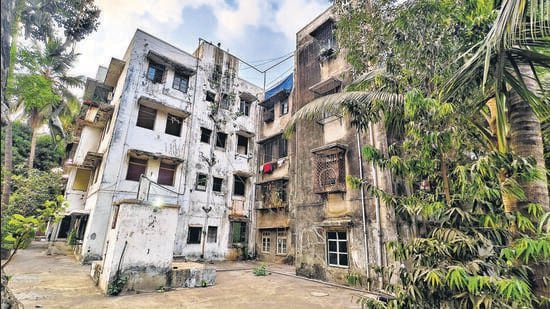
MUMBAI: The Bombay High Court has allowed 32 families to continue living in dangerously dilapidated buildings in a Sion housing society for eight more weeks “at their own risk”, after the residents sought more time to vacate their homes.


A vacation bench of justice Gautam Ankhad and justice Sandesh Patil on May 22 ordered the Brihanmumbai Municipal Corporation (BMC) to restore the buildings’ water supply and not take any coercive steps against the occupants for eight weeks.
The court said it was granting an extension solely on humanitarian grounds, as most of the petitioners were senior citizens. This was after the petitioners assured the court that they would occupy the dilapidated buildings, some of which are 60 years old, during the extension period “entirely at their own risk and consequences”. They also submitted an undertaking in court that they would not seek any further extension to vacate.
The case dates back to January, when 68 members of the Sion Kamgar Cooperative Housing Society in Sion East had approached the high court, challenging an eviction and demolition notice issued by the BMC in November 2025. This was after the BMC’s Technical Advisory Committee categorised four of the six buildings in the society as C-1 (dangerous and dilapidated) and the remaining two as C2-B (repairable without evacuation).
However, the high court dismissed the petition in February 2026, noting that the BMC committee had clearly opined that the buildings were in a dilapidated condition and dangerous to human life after conducting a physical verification and various tests. “The reasons and conclusions given by the consultant qua each building and other aspects of each building prima facie show that the buildings are in a completely uninhabitable state,” the court had said.
The court had also noted that many of the petitioners were from a minority opposed to the redevelopment of the housing society. This minority group of society members had challenged an order passed by the Assistant Registrar, Co-operative Housing Societies, granting the society permission to take further steps for the redevelopment, it had observed.
Since the society’s redevelopment proposal had been passed with a clear majority, striking down the BMC’s eviction notices would amount to halting the redevelopment of admittedly dilapidated buildings to the detriment of the remaining 98 members, the court had said.
The petitioners had challenged the order in the Supreme Court, too, but their plea was dismissed. Then, 32 society members, mostly senior citizens, again approached the high court, requesting reasonable time to make alternative living arrangements. Their petition said that immediate eviction would cause them serious hardship and prejudice.
The BMC opposed the plea, arguing that the petitioners could not be granted relief as their plea challenging the eviction and demolition notice issued in November 2025 had already been dismissed by the Supreme Court in February 2026. Thereby, the petitioners had already had enough time to vacate their homes, the civic body said.
However, the high court granted the petitioners an eight-week extension on humanitarian grounds.


