



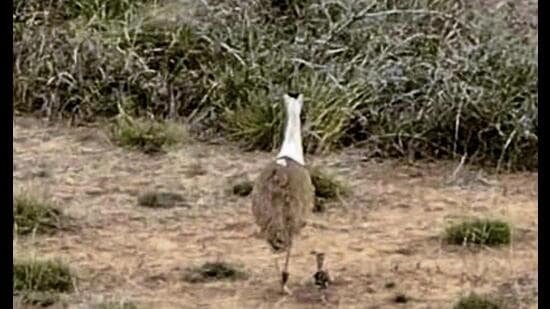
The first Great Indian Bustard (GIB) chick hatched in the wild in Gujarat is welcome news for the bird’s conservation. Dwindling numbers — 150-200 at present from close to 1,000 in the 1970s — have not only earned it an IUCN classification of “critically endangered”, but also have put the very survival of the species under question in recent years. The chick was hatched from a fertilised egg brought from Rajasthan and placed in the nest of one of the three birds (all females) reported in Gujarat. Given the three birds were laying eggs that had no chance of fertilisation with no males around, this experiment was crucial to studying the efficacy of translocation of eggs. The successful hatching in the wild is important for several reasons.


For a long time, wildlife experts have argued for expansion of the bird population outside Rajasthan, which hosts the largest GIB population within the country. A raft of development imperatives in the areas of the state that the bird inhabits are in conflict with conservation essentials. As a ground-dwelling, highly territorial bird, the GIB faces significant vulnerabilities from the shrinking of its habitat, including predation by animals that live in and around human settlements, such as dogs. This is compounded by the fact that it is a slow breeder, laying only one egg per breeding season. Its survival, therefore, depends critically on expansive, protected grasslands that afford enough genetic diversity through lower chances of inter-breeding.
To that end, not just Gujarat, but a handful of other states where the bird has been reported need to be explored for habitat expansion potential. With the Gujarat experiment reporting initial success — the chick’s continued survival and thriving needs to be closely watched — there may be hope yet for the bird.


