



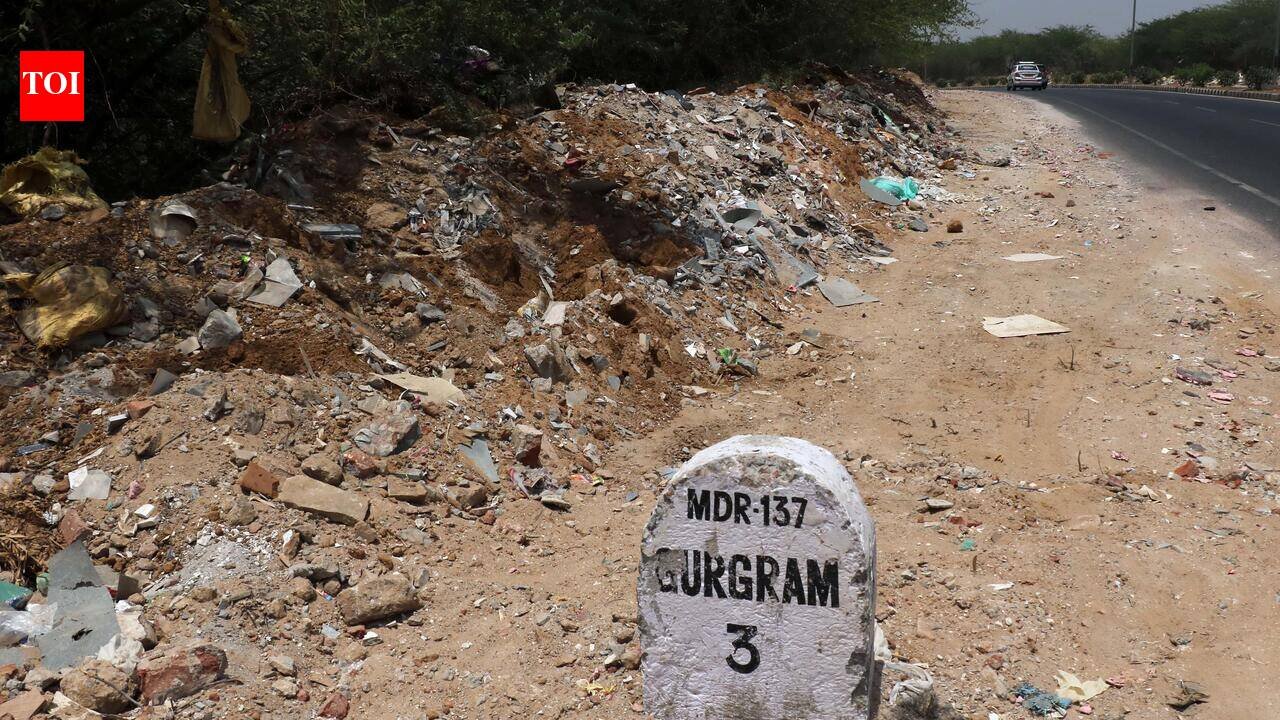
Gurgaon: Haryana is short of 29 secondary collection centres (SCCs) for construction and demolition (C&D) waste.Only 23 of the 52 SCCs mandated across seven urban local bodies (ULBs) had been established as of June 30, with the city alone accounting for 16 of the pending centres, HSPCB data reviewed by TOI shows.Among the seven ULBs covered in the presentation, the city has the largest infrastructure gap. While the city requires 20 SCCs, only four have been established so far, with the remaining 16 proposed to be completed by Dec 31.SCCs are a critical part of the state’s waste management network meant to channel construction debris to recycling facilities and curb illegal dumping.The shortage in collection infrastructure comes despite the city generating by far the highest volume of construction waste in Haryana. According to the presentation, the city produces 1,500 tonnes of C&D waste every day, accounting for nearly three-fourths of the total waste generated by the seven urban local bodies covered in the review.Faridabad has established five of the required 12 SCCs, leaving a shortfall of seven. Rohtak has set up two of six required centres, Karnal two of three and Manesar three of four. Sonipat and Panipat have already established the number of SCCs prescribed under the state plan.Faridabad generates 300 TPD, followed by Rohtak (95 TPD), Manesar (50 TPD), Sonipat (40 TPD), Panipat (32 TPD) and Karnal (5 TPD).An HSPCB official told TOI, “SCCs are designated locations where C&D waste generated from construction, renovation and demolition activities is deposited before being transported to recycling plants. The centres are intended to prevent debris from being dumped on roadsides, vacant plots, drains and environmentally sensitive areas while improving the recovery and reuse of construction material.”The data indicates that the city currently collects and processes the entire quantity of C&D waste generated every day through its existing recycling facility. However, an additional 400 TPD processing plant has been proposed to augment capacity. The city is expected to process about 5.47 lakh tonnes of C&D waste during 2026, while govt agencies have been assigned a target of utilising 36,500 tonnes of recycled material during the year.In contrast, most other urban local bodies are yet to operationalise C&D waste processing facilities despite collecting the waste generated within their jurisdictions. Processing plants are proposed to be commissioned in Sonipat by Dec 31, Manesar and Karnal by March 31, 2027, Panipat by May 1, 2027, Faridabad by Sept 30, 2027, and Rohtak by Dec 31, 2027.The data also outlines steps taken by the state to strengthen monitoring of C&D waste. These include the launch of a web portal for C&D waste management on July 17, geo-tagging of collection, storage and processing facilities, and GPS tracking of vehicles transporting construction debris.The expansion of collection centres and processing capacity is aimed at improving compliance with Construction and Demolition Waste Management Rules, which require urban local bodies to establish systems for scientific collection, transportation, recycling and utilisation of construction waste instead of allowing it to be dumped indiscriminately.


