



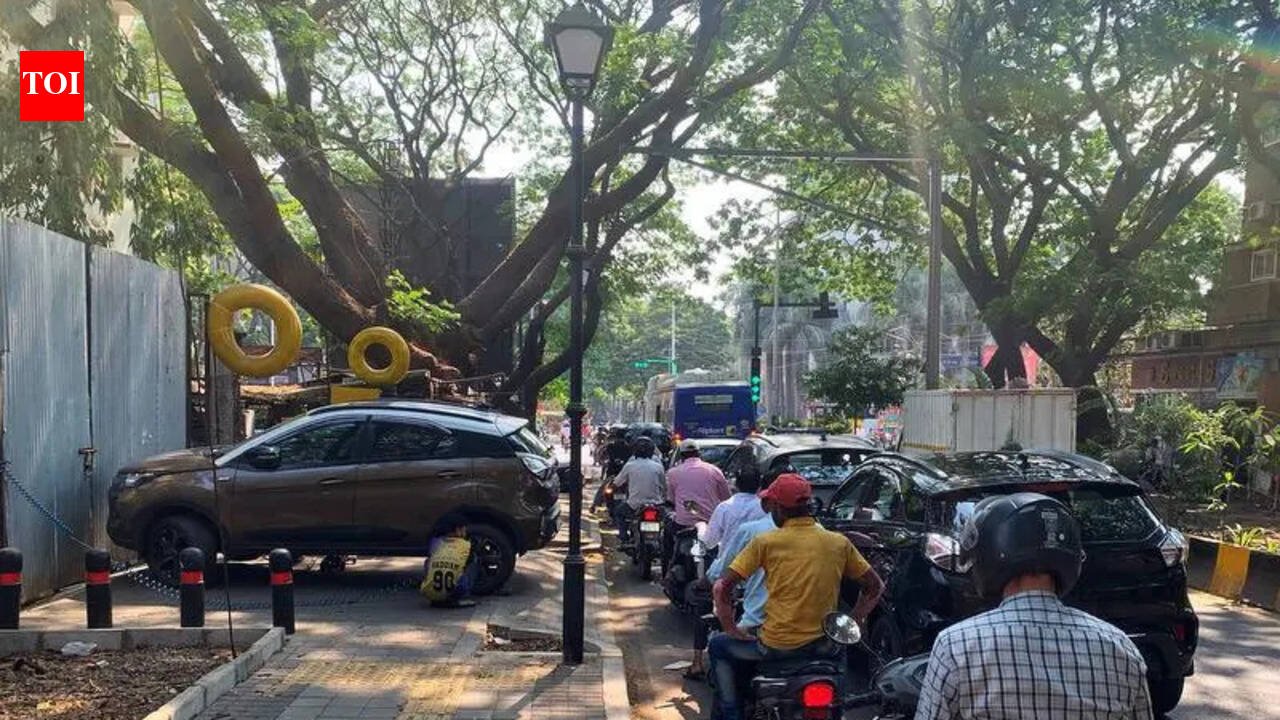
Pune: The ambitious ‘Harit Setu’ project of Pimpri Chinchwad Municipal Corporation (PCMC), aimed at street development and building a sustainable integrated road network, took off in 2024 after four long years of planning. Wider pavements, walkable neighbourhoods, prioritizing pedestrians and cyclists over private vehicles, and enhancing connectivity via eco-friendly infrastructure were the catchwords bandied about, raising expectations of citizens living in the targeted areas.However, in just two years, residents of the areas where the project has been implemented have expressed dissatisfaction with how their surroundings have altered. Pointing to narrow roads paving the way for increased traffic congestion, coupled with complaints of waterlogging and rising encroachment, residents are now questioning the need for such a project in the first place. Many are demanding to know why citizens were not involved in the planning stage by authorities. Those who invested in houses in Pimpri Chinchwad localities like Nigdi years ago said the wide, relatively traffic-free roads were a major draw for them then — today, the same homeowners who have lived here for decades said they are either battling daily traffic congestion or risking their lives to walk just a few metres down the road. Smaller carriageways, more users “We are not against development but oppose projects that put our lives in danger,” said Neelesh Shinde, who has lived in Nigdi Pradhikaran for 40 years. “This area was built on the foundation that there would be wide roads and bungalow inhabitants could park their vehicles outside. Now, the civic administration has implemented a project without looking at it holistically. After the Unified Development Control and Promotion Rules (UDCPR) came into effect in 2020, a lot of bungalows underwent redevelopment to become multi-storeyed buildings. The population of the area increased considerably. So, how will further narrowing roads serve locals?” asked Shinde, a business owner. “For flat owners in buildings, one parking spot is provided. But families have grown, and most households own multiple vehicles. Where should they be parked? Footpaths are wider than roads. They host innumerable encroachments, pushing pedestrians into the way of oncoming traffic. This defeats PCMC’s aim to make the streets pedestrian-friendly,” Shinde pointed out. “There is a need to upgrade electricity services, water lines, drainage and stormwater networks, rather than spending hundreds of crores of rupees on beautification,” he added. Pavements not for pedestrians Several residents highlighted that the newly constructed footpaths have nameboards and decorative elements extending around two feet onto the road. “Trucks or buses find it most cumbersome to turn on these narrow roads. When a bus halts to pick up or drop off school students, it blocks an extra lane, causing a bottleneck. Traffic adds to air and noise pollution and also increases travel time,” said Pradhikaran resident Pratibha Joshi Dalal. The Pimpri Chinchwad New Town Development Authority (PCNTDA), popularly known as ‘Pradhikaran’ (meaning authority), was officially merged into PCMC in June 2021. Dalal, who has lived in the area since 1984, said, “After the merger, we hoped for better facilities, like uninterrupted electricity, proper water supply, pothole-free roads and designated parking spaces. Instead, things have taken a turn for the worse. PCMC has not considered the plight of common people while planning this project. Sometimes, the roads are so jam-packed that even a small car can’t take a U-turn. If footpaths are meant for walkers, why are they dominated freely by hawkers?” said Dalal, a lawyer. Another major concern is the lack of space to park vehicles. “Several residents park on the slope in front of their house. Then, the traffic police fine them for parking on footpaths; secondly, the parked vehicles act as obstacles for pedestrians,” said Chandrakant Kothari, a business owner who has lived in the locality for 20 years, adding, “Visitors also get no space to park, so several businesses are facing the brunt.” Even staffers frequenting the Pune Metropolitan Region Development Authority (PMRDA) building nearby are forced to park on pavements. To make things worse, the large and raised footpaths are causing waterlogging in bungalows when it rains, as the run-off flows inwards. “The extended footpaths are further blocking fire engines and even some ambulances while navigating,” Kothari highlighted. Many complaints, no results Civic officials told TOI that the Harit Setu plan, which began in of Nigdi, Akurdi and Ravet, keeps in mind “the next 20 years”. The civic body raised Rs200 crore via green municipal bonds in June 2025 to fast-track the project. In 2020, while working on the master plan for the project, the civic body had called for citizens’ suggestions. And yet, many residents alleged that their recommendations were never taken into consideration. Hemant Mishra, executive chairman of the Pradhikaran Traders Association, told TOI, “This multi-crore project being executed using taxpayers’ money should be halted immediately. It will simply introduce and increase the number of accidents that happen here.” He and other residents feel they were not taken into confidence about this initiative. “PCMC must hold a meeting with all stakeholders and prominent engineers to better manage and plan the impact of their project,” said Mishra, who has lived in the neighbourhood for over three decades. A uniform design approach may not be suitable for all locations, said some residents. “We have tried meeting with all commissioners of PCMC since the project was announced but were never given the opportunity. A protest was also held in Dec last year. It was one of the issues on which the elections were fought in this area. But nothing has changed on the ground. Most recently, Pimpri Chinchwad mayor Ravi Landge did a recce here. Hopefully, we can now see something change,” Dalal said. When TOI contacted PCMC executive engineer Bapusaheb Gaikwad, he countered, “The Harit Setu plan was developed after talking to multiple stakeholders and keeping in mind the fact that we want to encourage non-motorized transport for all. The goal is that people can travel short distances, especially to run errands, on cycles or on foot, pushing for the initiative to be a sustainable one, too. Our aim is to better the health of the neighbourhood and its residents.” He added, “Pedestrians are the most vulnerable road users, so their safety is our priority. Citizens have gotten used to free parking and so, they are upset about footpaths being made bigger. But this is wrong. As far as the encroachments are concerned, the commissioner has asked us to ensure that footpaths are cleared, and regular drives will be conducted for the same.” OFFICIAL SPEAK I am aware of the project and the fact that there has been some resistance to it. However, I am not aware of the details at the moment. I have been meeting various department officials since I joined this post at the end of March this year, and will meet the Harit Setu team in the coming days as well. I will also ask the team to visit the site and meet residents to listen to their issues. The idea behind the project is great and it’s a very ambitious initiative. But, if the citizens have concerns, we will look into addressing those as well — Vijay Suryawanshi | PCMC commissioner EXPERT SAYS Harit Setu is a landmark ‘streets for all’ redesign initiative, prioritising the 40–50% of daily users who walk, cycle, or use public transport. It aligns with SC’s recognition of safe walking under Article 21 of the Constitution. The issue of encroachment is a concern, as is illegal parking. These cannot be resolved with design, but would need strict enforcement and police support. This is true with all street design projects in India. Regular rounds by police, behavioural change programmes, and sensitisation are very important — Pranjal Kulkarni | Programme manager, ITDP India


